How 3 Phase Rack PDUs Improve Energy Efficiency and Reliability
A 3 phase rack PDU boosts energy efficiency, supports higher power density, and ensures reliable load balancing for modern data center operations.


+86 15867381241

PDUs and UPS units are both core parts of rack power infrastructure, but they serve completely different functions — and people often confuse the two. Both mount inside server racks and have power outlets, but a UPS provides backup power and conditioning, while a PDU distributes power to individual devices.
An uninterruptible power supply sits between the utility feed and downstream equipment, with three core functions:
When mains power fails, the UPS instantly switches to internal battery power with zero transfer time, so connected equipment sees no interruption. This bridges the gap until a backup generator starts, or provides enough runtime for an orderly, clean shutdown to prevent data loss. Total backup runtime depends on load size and battery capacity.
A UPS also cleans incoming power year-round, not just during outages. It absorbs voltage sags, spikes, and line noise, and delivers a steady, regulated output to sensitive IT hardware. This reduces unexplained equipment faults and extends component service life.
UPS units provide a second layer of surge defense, but should never be used as primary surge protection. For full safety, use a cascaded design: an upstream surge protective device (SPD) handles large incoming surges, the UPS reduces remaining energy, and final let-through voltage drops to ~200V — below hardware damage thresholds. For long cable runs between UPS and load panels, add an additional SPD at the panel to suppress internally generated surges.

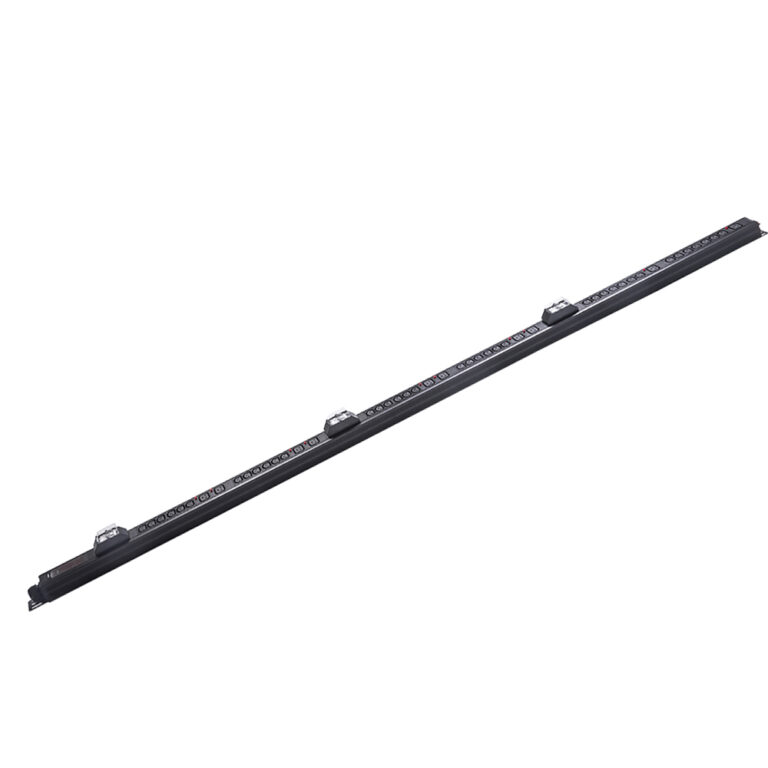
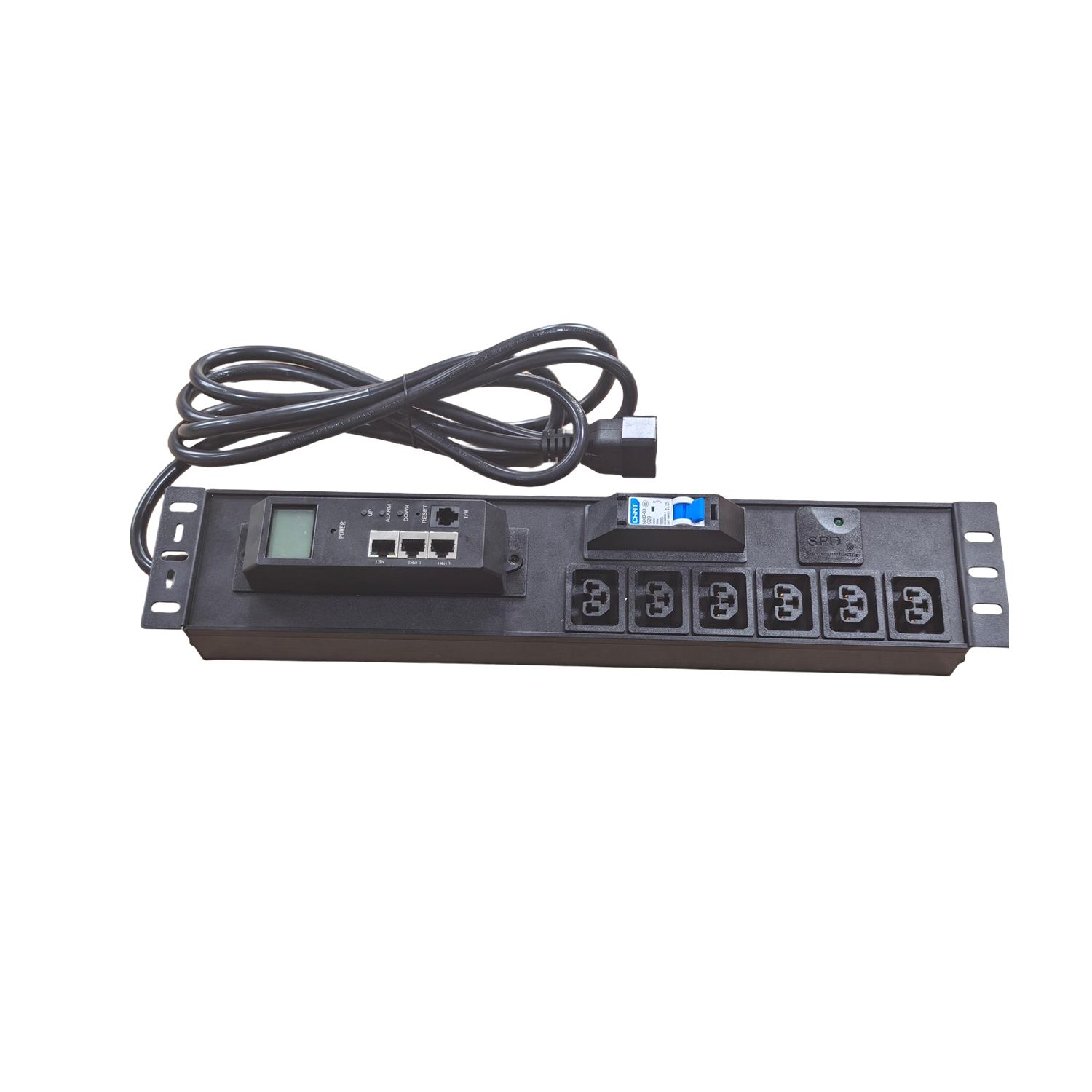
A power distribution unit takes one or a few incoming power feeds and splits them into many individual outlets for servers, switches, storage, and other rack equipment. It does not generate or store power — it only distributes it. Rackmount PDUs fit standard 19/23-inch racks, and come in horizontal (8–16 outlets) or vertical (up to 54 outlets) form factors.
There are four standard PDU grades, each with different management capabilities:
| PDU Type | Monitoring & Control | Best Use Case |
|---|---|---|
| Basic | None | Small, stable server rooms with no remote management needs |
| Metered | Local display for current/voltage/power | At-a-glance load checking and basic capacity planning |
| Monitored | Remote network monitoring + threshold alerts | Centralized fleet visibility and proactive maintenance |
| Switched | Remote per-outlet on/off/reboot + monitoring | Unattended racks, remote sites, and power cycling needs |
Higher-tier models also include features like locking outlets, color-coded phase circuits, and watchdog auto-reboot sequences.
| Feature | UPS | PDU |
|---|---|---|
| Core function | Battery backup + power conditioning | Power distribution from feed to outlets |
| Energy storage | Yes, internal battery bank | No onboard energy storage |
| Power conditioning | Voltage regulation, spike/sag absorption | Pass-through power (no conditioning on standard models) |
| Outlet count | Limited, sized to power rating | High outlet count for full rack equipment |
| Primary management focus | Battery health, runtime, input power quality | Per-circuit load, outlet state, energy usage |
| Typical form factor | Rack, floor, or wall mount | Standard rack/cabinet mount |
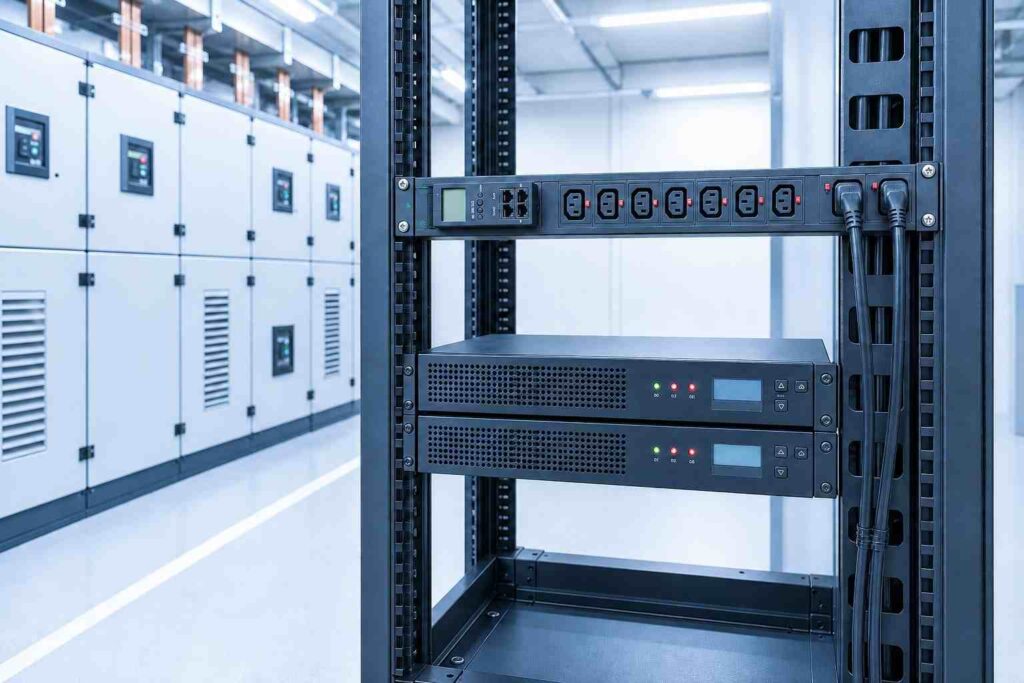
In standard rack power architecture, power flows in one direction:
Utility feed → UPS → PDU → IT equipment
The UPS cleans incoming power and provides ride-through during outages. The downstream PDU then distributes that conditioned, backed-up power to every device in the rack. This layered design delivers both continuity and organized distribution.
No. A PDU only distributes power from an input to multiple outlets and has no energy storage. A UPS provides battery backup and power conditioning. Full power continuity requires both devices.
For very small setups, yes. But UPS units have very few outlets, and a rack PDU organizes power distribution across a full cabinet neatly, with better cable management and load visibility.
Both do, for different reasons. The UPS must support the full load through an outage. The PDU must stay under NEC 80% circuit limits for safety. Proper sizing of both is required for reliable operation.
Partially. A UPS reports load level and battery status. A metered PDU tracks circuit- or outlet-level current, voltage, power, and energy consumption. Together they provide a complete view of rack power health and usage.
Yes. A single UPS output can supply multiple PDUs, each serving a separate rack or circuit group. Always match voltage and phase across all connections, and keep total draw within the UPS rated capacity.