


© Copyright – 2010-2023 : All Rights Reserved. Sitemap
Power Distribution Unit PDU, rack mount PDU, PDU data center, Smart PDu, intelligent PDU
Power Distribution Unit PDU, rack mount PDU, PDU data center, Smart PDu, intelligent PDU


+86 15867381241
IEC PDU
We build IEC PDUs around the connector system the project already uses: IEC 60320 C13 and C19 outlets, or IEC 60309 industrial inlets up to 63 A. Every order is configured from the rack drawing to the outlet layout, then quoted within 24 hours.
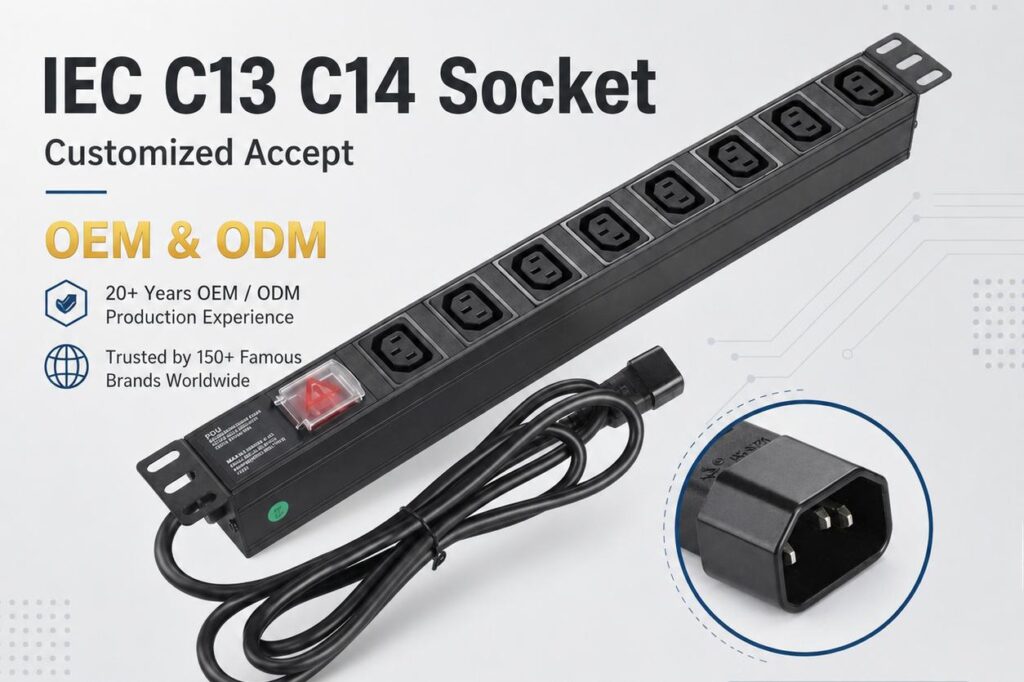

An IEC PDU takes one input feed and distributes it to C13, C19 or IEC 60309 outlets inside a rack. The connector system defines the family rather than the enclosure: IEC 60320 covers appliance couplers up to 16 A, IEC 60309 covers industrial plugs up to 125 A. We build both on one copper busbar platform rated from 10 A to 125 A, so the difference sits in the interface, not in the build.
Inputs are C14, C20, or IEC 60309 in 16 A, 32 A and 63 A, single-phase or 3P+N+E. Outputs are C13 at 10 A, C19 at 16 A, C15 for 120 °C cords, and 60309 sockets where the load is industrial. We match the input and the output as one set, because the inlet rating caps everything downstream of it.


A C20 inlet carries 16 A at 250 V, while a 32 A IEC 60309 plug feeds 22.2 kVA on a 400 V three-phase supply. IEC 60309 keys the voltage twice, by colour and by the clock position of the earth contact, so a 230 V blue plug cannot enter a 400 V red socket. IEC 60320 keys only the coupler shape, which is why a C13 cord seats in any C14 outlet regardless of the load behind it.
| Connector system | Interfaces we fit | Rated current | Where it belongs |
| IEC 60320 | C14 or C20 inlet; C13, C15, C19, C21 outlets | 10 A and 16 A | Servers, switches and PSU cords inside the rack |
| IEC 60309 | 16, 32, 63 A plugs and sockets, 3-pin to 5-pin | 16 A to 125 A | Three-phase feeds, industrial and outdoor cabinets |
NEMA 5-15 and L6-30 interfaces serve North American 120 V and 208 V circuits, while IEC interfaces serve 230 V and 400 V markets and imported IT equipment. A rack built for global deployment needs both, because the servers arrive with C14 inlets while the branch circuit is NEMA. We build NEMA PDU and IEC ranges on the same chassis, so a mixed fleet keeps one mounting pattern.
Not sure whether your project requires IEC 60320 or IEC 60309 connections?
Contact our team with your electrical requirements for product selection assistance.
Electrical compatibility is one of the most important factors when selecting an IEC PDU.
A PDU must be compatible with the available power supply, connected equipment, upstream protection, and installation environment.
We offer different IEC PDU electrical configurations to support a variety of project requirements.
Single-phase builds run 230 V at 10 A or 16 A through a C20 inlet, and 32 A through a 60309 blue plug. A 16 A feed is 3.68 kVA on paper and 2.94 kVA at the 80% continuous limit. Our single phase PDU range covers 4 to 24 outlets on that feed.
A 400 V 3P+N+E feed at 32 A gives 22.2 kVA, three times the 7.4 kVA of a 230 V 32 A single-phase feed. Load balance across L1, L2 and L3 decides whether that capacity is usable, so each build ships with a per-phase outlet map. Our three phase PDU range runs 24 to 48 outlets on 32 A and 63 A inputs.
The inlet rating caps the whole unit: a 16 A inlet stays at 16 A whether it feeds 4 outlets or 16. Continuous load is limited to 80% of that rating under NEC 210.20(A), so a 16 A unit carries 12.8 A of servers. The 63 A size is the step up when one rack passes 22 kVA, and 125 A is the busbar limit, not a catalogue limit.
230 V covers European and Asian single-phase racks, 400 V covers 3P+N+E distribution in the same markets, and 480 V covers North American three-phase. The smart platform accepts 90–250 VAC and 380–415 VAC inputs, so one controller serves single-phase and three-phase builds. A 480 V build is confirmed per project, because the inlet, the outlet set and the certification scope change together.
| Input | Voltage and phase | Rated current | Continuous at 80% | Capacity |
| C20 inlet | 230 V, 1-phase | 16 A | 12.8 A | 3.7 kVA |
| 60309 blue, 3-pin | 230 V, 1-phase | 32 A | 25.6 A | 7.4 kVA |
| 60309 red, 5-pin | 400 V, 3-phase | 16 A | 12.8 A | 11.1 kVA |
| 60309 red, 5-pin | 400 V, 3-phase | 32 A | 25.6 A | 22.2 kVA |
| 60309 red, 5-pin | 400 V, 3-phase | 63 A | 50.4 A | 43.6 kVA |
Have a specific voltage, current, or phase requirement?
Share your electrical specifications with our team to evaluate a compatible IEC PDU solution.
Different equipment uses different power inlet types, so selecting the correct outlet combination is essential for compatibility and efficient installation.
We supply C13, C15, C19, C21 and 60309 sockets as one matched set with the inlet, cut to the ratio the rack actually needs.
C13 is the 10 A, 250 V coupler behind most server and switch cords, rated for 70 °C at the pin. It is the default outlet on every IEC 60320 build, and the outlet we fit with a latch where the rack sits in a high-vibration room. Density decides the form factor: a 0U strip carries 24 or more, while a 1U panel stops at 12 in our range.
C19 is the 16 A, 250 V coupler used by blade chassis, UPS outlets and higher-power supplies. It shares the panel with C13 at a ratio set by the load mix, and 12 C13 plus 4 C19 covers a rack with two blade chassis and ten 1U servers. C19 outlets sit on the same busbar as C13, so mixing them does not change the inlet rating.
C15 keeps the C13 body with a notch and is rated 120 °C, while C21 is the 16 A coupler rated 155 °C. They exist for equipment that runs its inlet hot, such as projector lamps, heaters and appliance supplies. We fit both on request and confirm against the appliance inlet, because a C15 cord will not seat in a C14 outlet.
A mixed panel is one part number with a fixed ratio, not two strips bolted together. The ratio is written into the model name, such as 30 C13 plus 6 C19 on a 0U chassis, so it can be checked against the rack bill of materials. Ratios outside the standard list are cut to order on the same chassis.
Outlet count per U is a thermal limit before it is a mechanical one, because 48 C13 outlets share one 32 A feed. Our high density PDU builds reach 48 outlets on a 400 V 32 A input, which is 0.46 kVA per outlet at full load. Above that the next step is a second feed, not a longer strip.
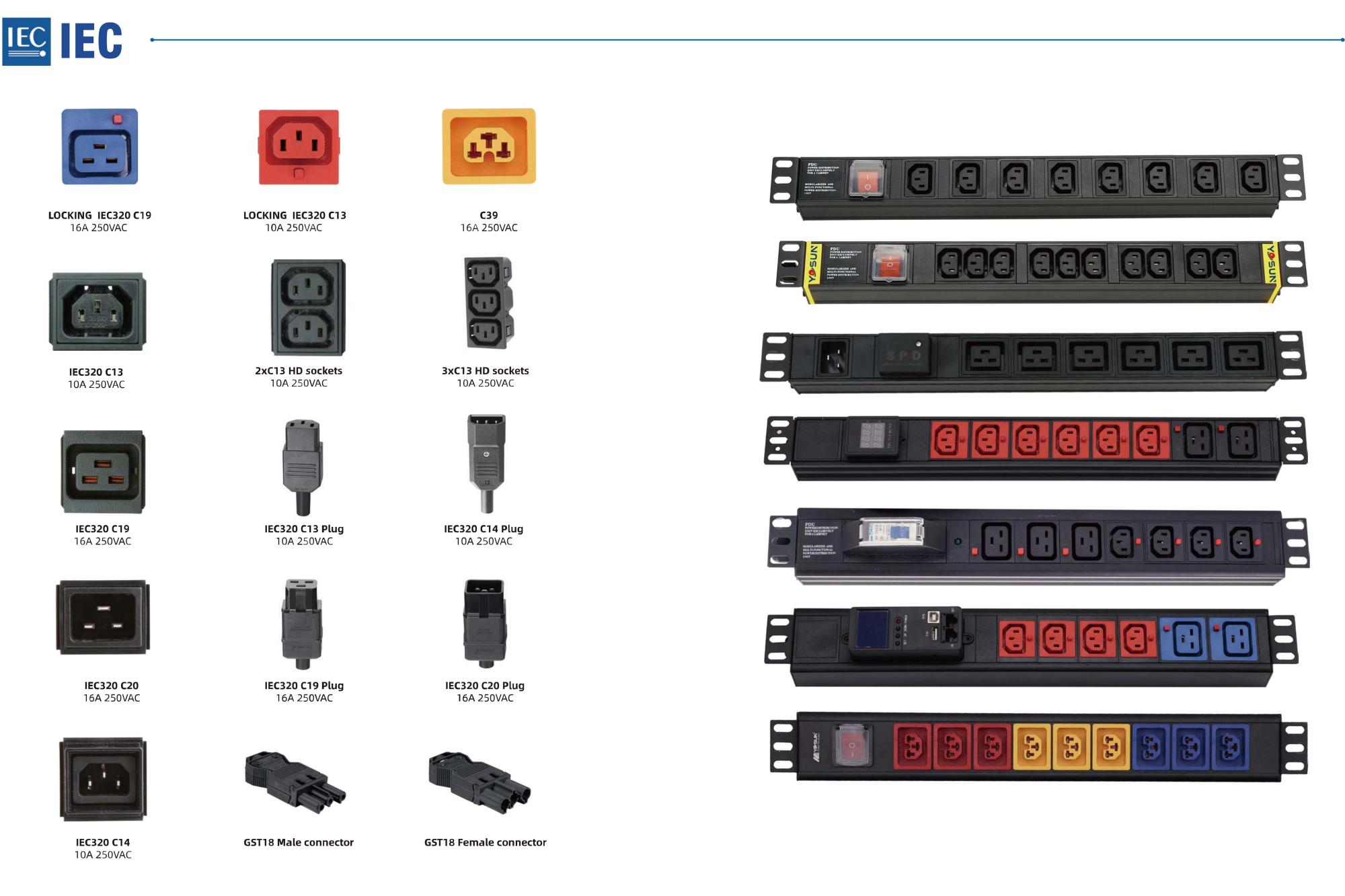
Need a specific outlets ratio or an industrial IEC 60309 configuration?
Send us your outlet requirements for a customized product evaluation. We return the panel layout drawing with every outlet position numbered against the U grid.
Rack space, cable routing, and outlet accessibility all influence the selection of an IEC PDU mounting configuration.
We offer horizontal and vertical IEC PDU designs to accommodate different rack layouts and installation requirements.
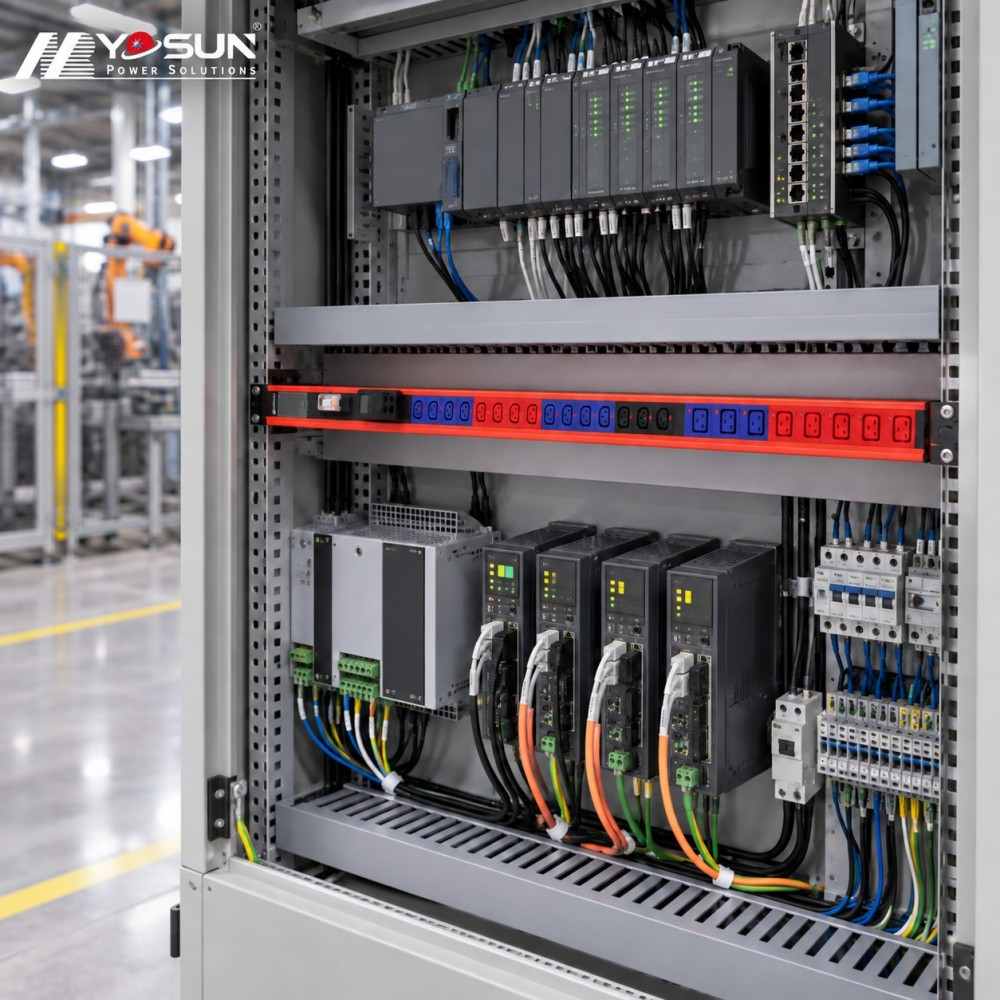
A 1U unit fixes to a 19-inch post pair and puts the outlets at eye level in the rear of the cabinet. It suits racks up to 16 outlets per feed, and cabinets where the side channel is taken by cable management. We build 1U panels in 4, 6, 8 and 12 outlet layouts, and 2U up to 24.
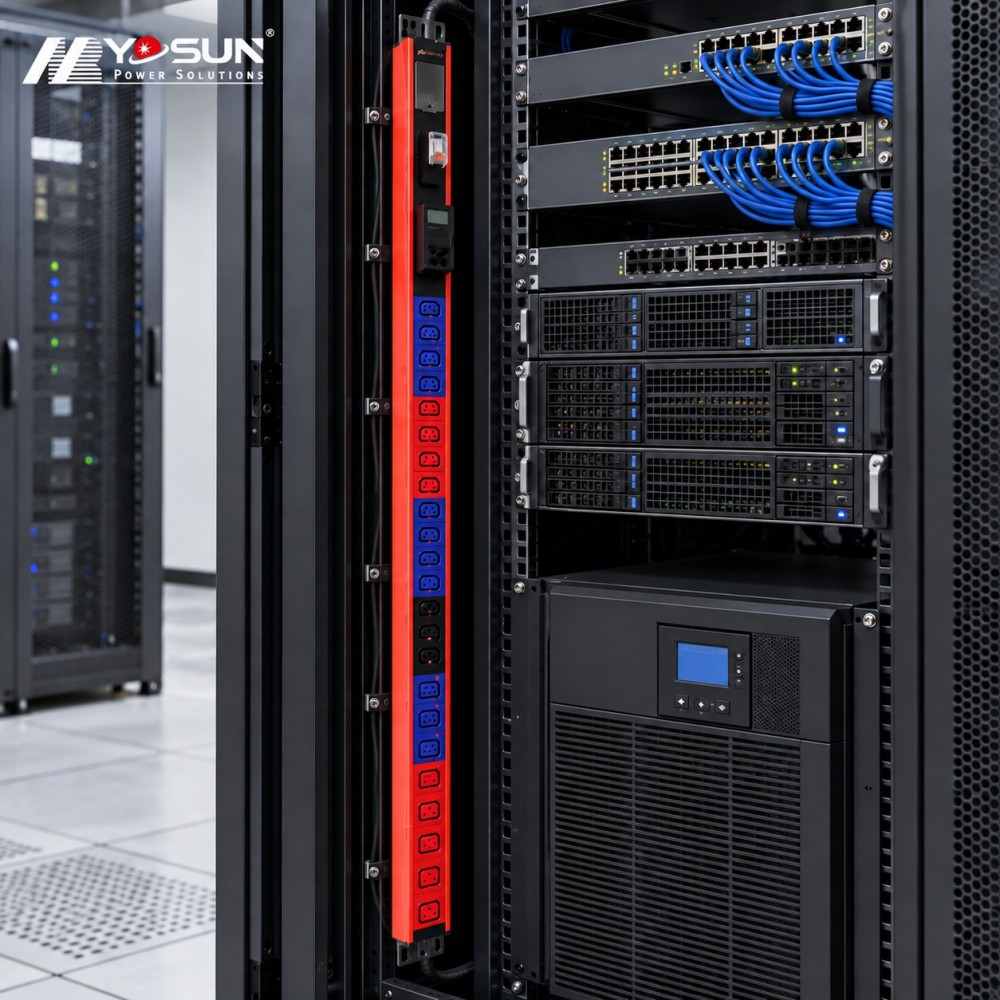
A 0U unit mounts on the side post and takes no U space, which is how 36 to 48 outlets fit a 42U cabinet. Outlet spacing follows the U pitch, so each C13 lines up with a server PSU, and the display rotates 90° for either mounting direction. Our vertical PDU builds run 24, 30, 36, 42 and 48 outlets on one strip.
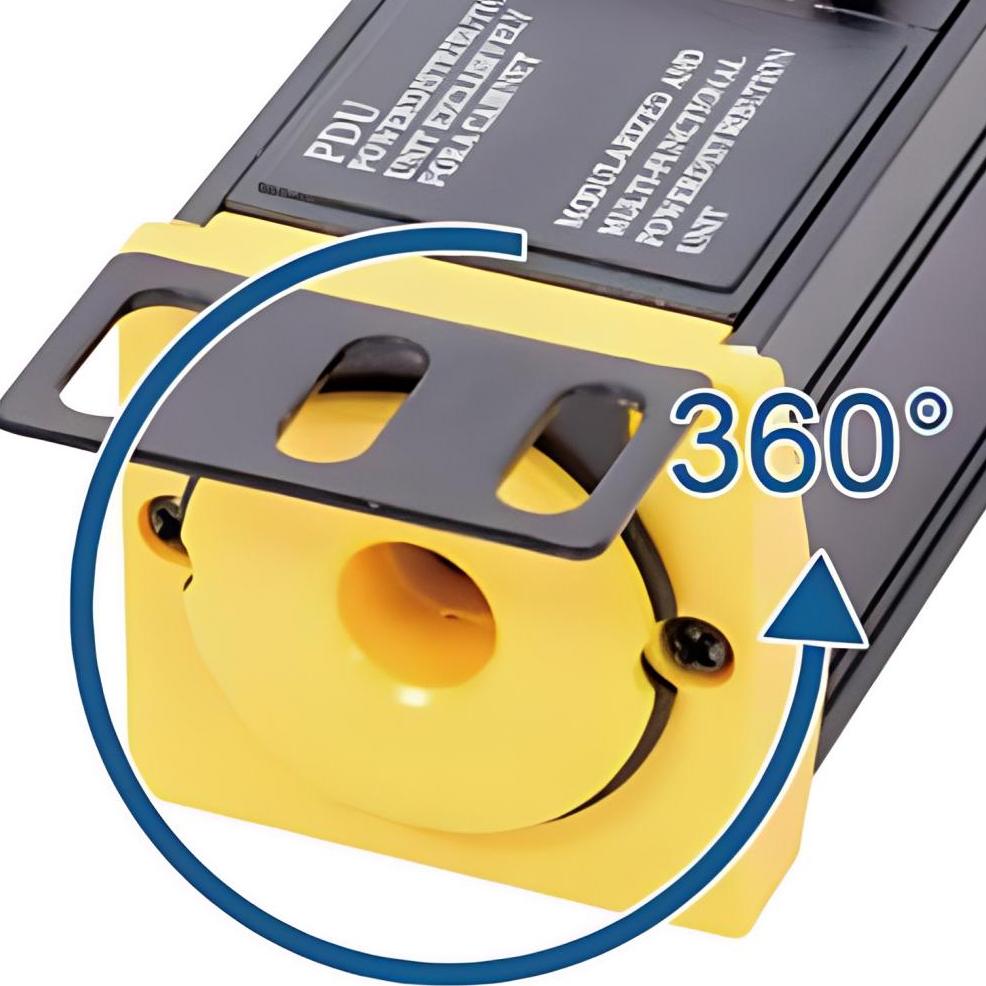
Bracket depth, hole pitch and the input gland position change with the cabinet, so we cut them to the drawing rather than to a standard. Send the cabinet drawing and the reply is a mounting plate with the fixing points marked. Cable entry can be top, bottom or rear, and the outlet panel rotates 360° on the chassis.
Need a Specific Rack Mounting Configuration?
Send us your rack dimensions, preferred mounting position, and outlet requirements. We can help evaluate a suitable 1U, 2U, or 0U IEC PDU design.
The function tier decides what the rack can report and what you can switch without a site visit.
From straightforward power distribution to intelligent outlet management, IEC PDUs can be configured to meet a wide range of operational requirements.
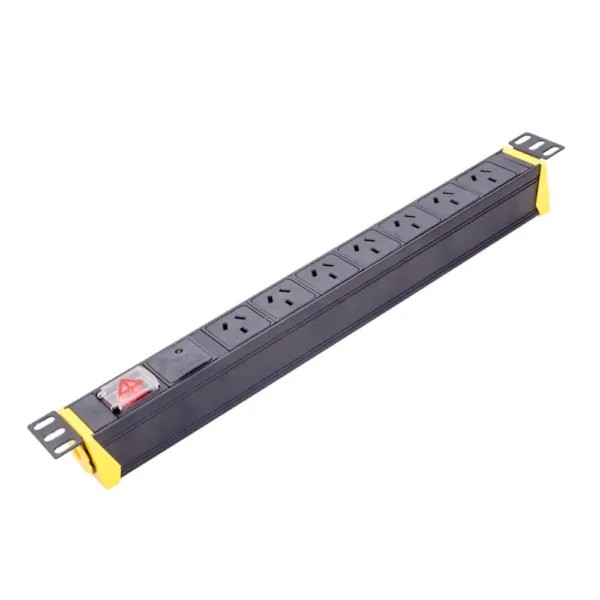
A basic IEC PDU distributes power and carries no meter, so the upstream breaker is the only protection. It suits racks with stable loads and no metering requirement, and it is the lowest-cost way to add outlets to a 1U space. We build it with an optional breaker, master switch or fuse, on basic PDU wiring that stays inside the inlet rating.
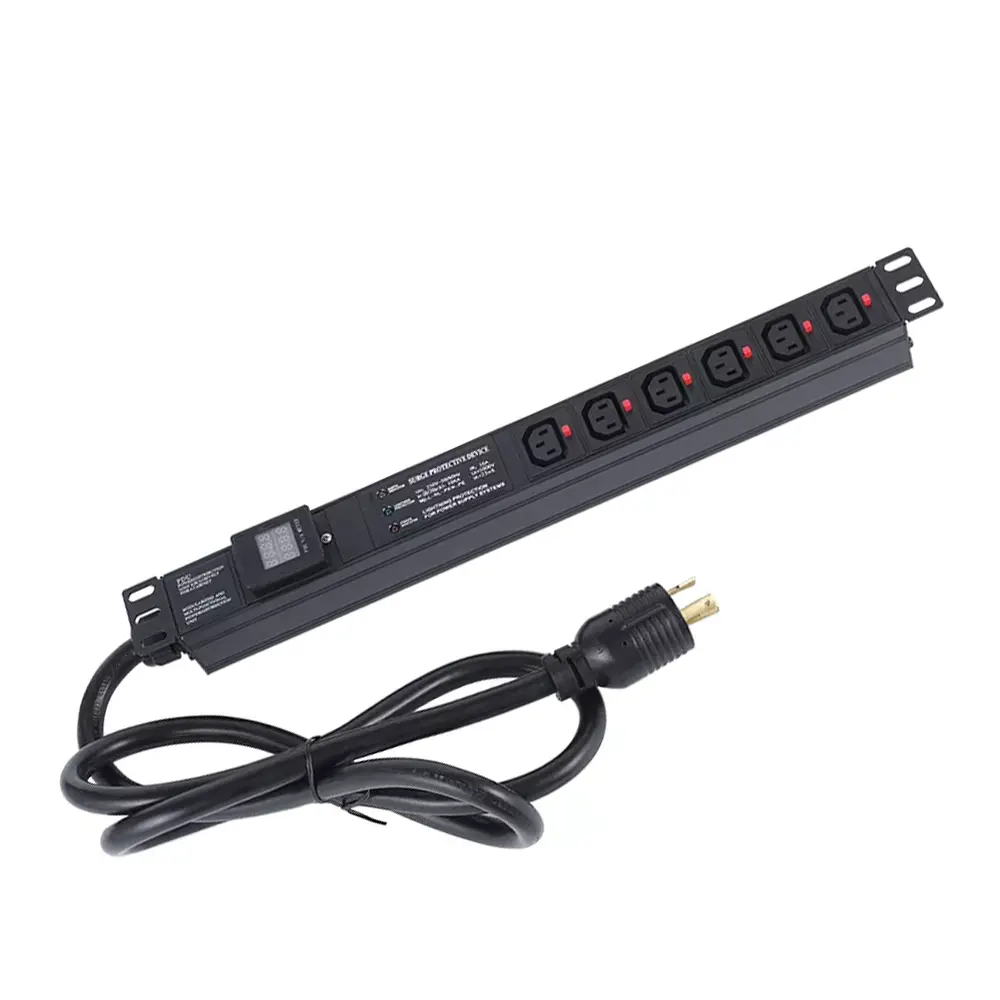
A metered unit adds a local display: an LED ammeter, or an LCD showing voltage, current and power factor. Reading at the inlet gives the whole rack load, which is what keeps a feed under its 80% continuous limit. Our metered PDU builds share the chassis with the basic unit, so the U height does not change.
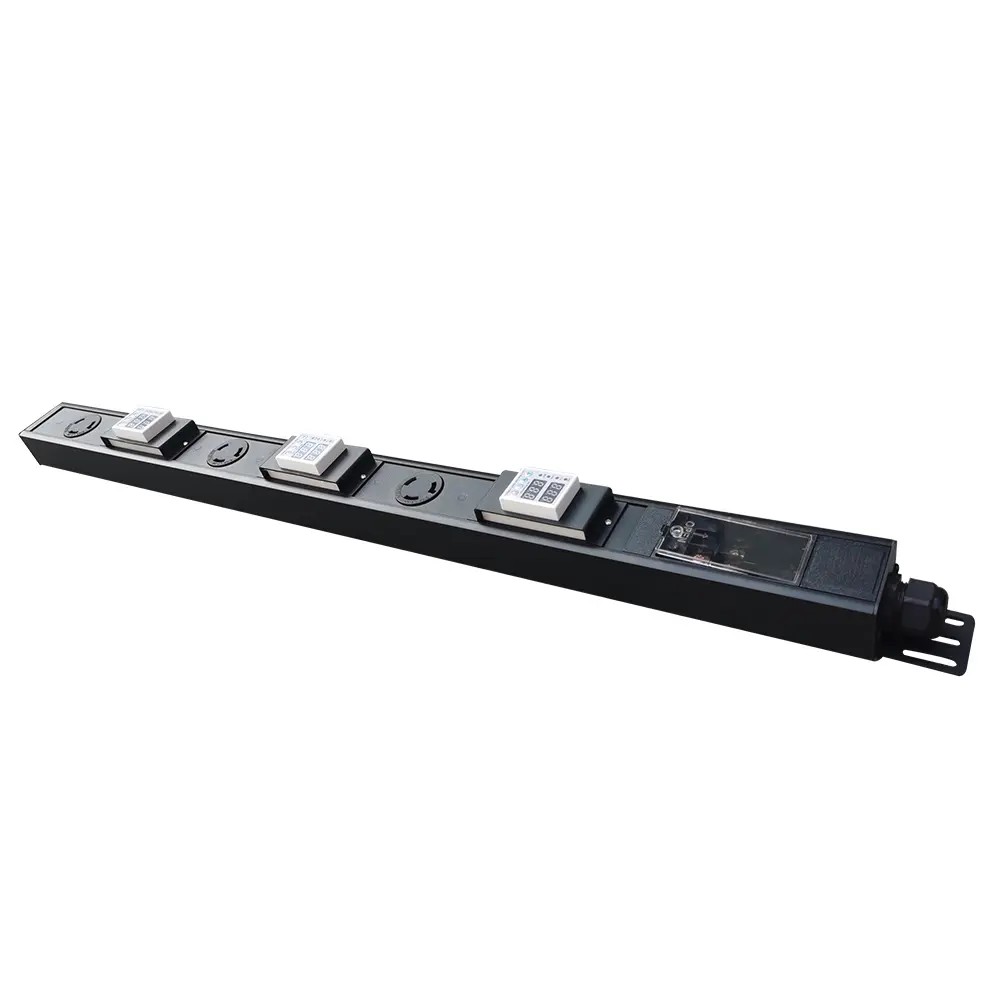
Per-outlet metering turns a rack into a billing record, because each C13 reports its own current. Colocation tenants are billed on measured energy, so a unit-level reading is not evidence for a single circuit. Our metered outlet PDU range covers 8 to 48 outlets in 1U and 0U.
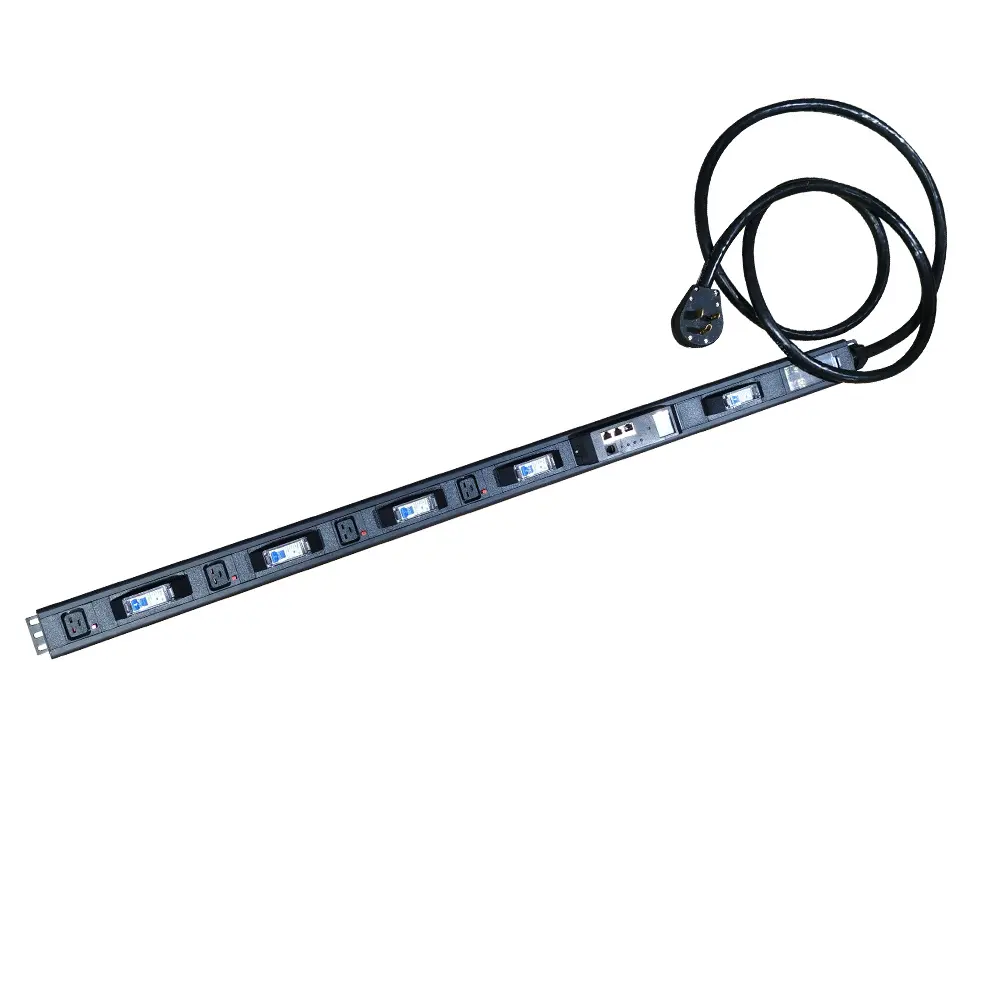
A monitored unit puts the inlet reading on the network: SNMP v1/v2c/v3, Modbus RTU over RS-485, HTTP/HTTPS, MQTT and a REST API. Measurement accuracy is ±1% on our smart platform, and up to 32 units cascade on one RS-485 bus. This is the tier for a rack nobody walks to, not for a rack that needs a front-panel number.
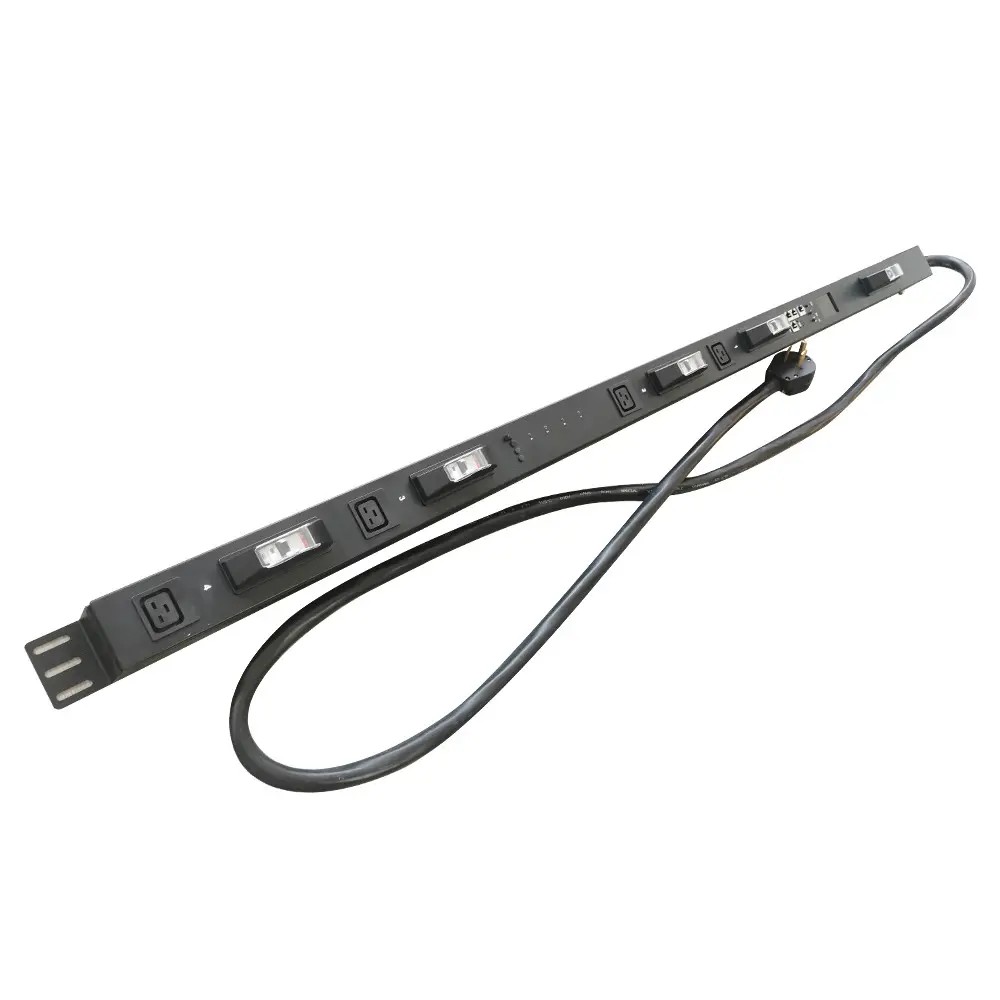
A switched unit adds a relay per outlet, so a hung server is power-cycled without a site visit. Power sequencing delays set the order outlets come up, which avoids the inrush of a full rack starting at once. Outlet-level switching and per-outlet metering are ordered together on switched PDU builds when the tenant needs both.
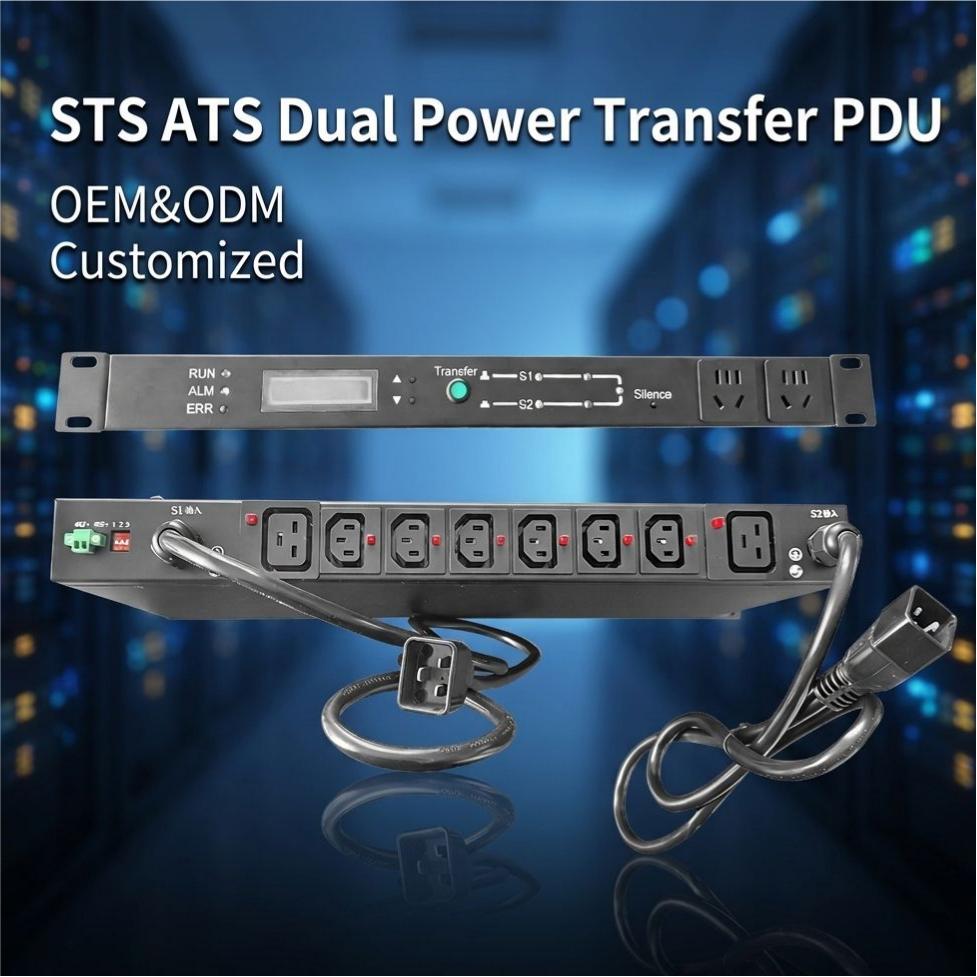
An ATS takes two feeds and transfers on loss of one, an STS transfers in under a quarter cycle, and a bypass unit lets you service the PDU without dropping the load. The difference shows at the load: ATS has a break in transfer, STS does not, and bypass is a maintenance path rather than a redundancy path. Compare ATS PDU and hot swap PDU builds before the redundancy topology is fixed.
Choose the tier by what the rack must report, not by price.
Compare Basic, Metered, Monitored, Switched, ATS, and STS configurations. Contact us to identify the right functional design for your application.
The same chassis serves a colocation cage and a factory floor; what changes is the inlet, the protection and the monitoring tier.
We support different IEC PDU configurations for professional applications.
A data hall rack needs metering at the inlet and a second feed, so the PDU is chosen with the upstream topology rather than after it. We build data center PDU units with A and B feeds, inlet metering and branch breakers sized to the rack load. An 8 kW cabinet takes a 32 A three-phase 0U build, and 20 kW takes 63 A or two 32 A feeds.

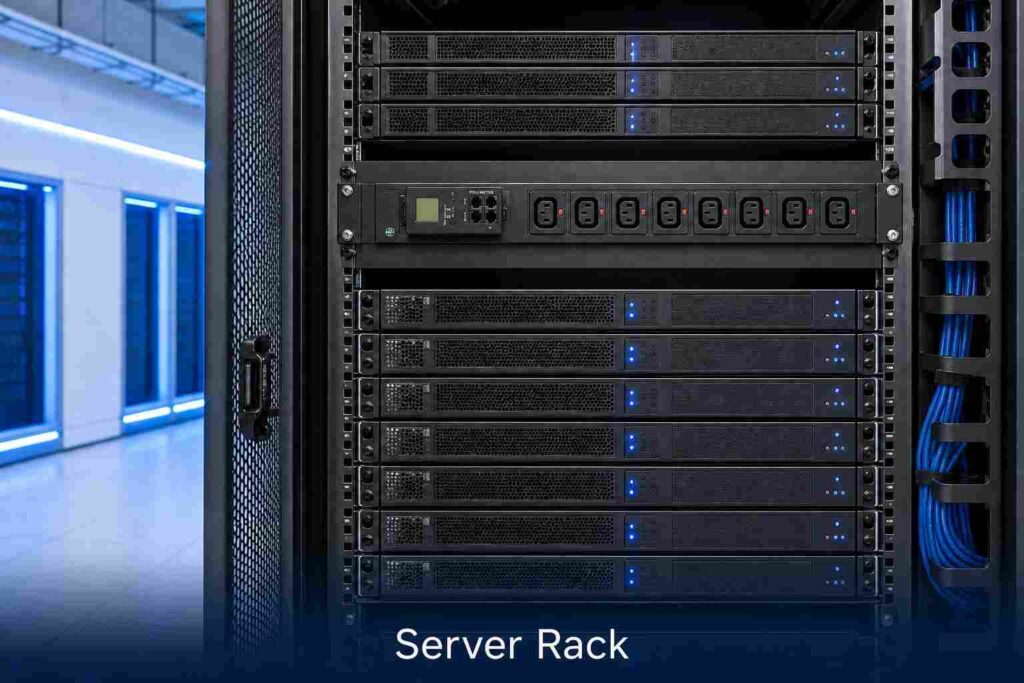
A network cabinet draws far less than a server rack, and a 24-port PoE switch sits under 1 kW, so a 16 A single-phase build is enough. What matters there is outlet type and cable dressing, because the C13 count follows the number of switches and routers. We build 1U panels with 8 or 12 C13 and a C20 or C14 inlet for those cabinets.
In a colocation cage the tenant pays for measured energy, so metering has to be per outlet and the reading has to be exportable. We build colocation PDU units with per-outlet metering, SNMP and Modbus, and a REST API for the billing platform. A 48-outlet 0U build on a 32 A three-phase feed gives 0.46 kVA per outlet, which is the density limit of that feed.


An industrial cabinet needs a 60309 inlet, a splash-proof enclosure and outlets that survive a machine shop. We build industrial PDU units with IP44 or NEMA 4X enclosures, RCD protection and 60309 outlets for machine tools. The inlet is the constraint: a 63 A red plug fixes the feed, and the outlet set follows the machines on that line.
An edge cabinet is unmanned, so the PDU has to report and reboot without a site visit. A 1U build with 8 C13 outlets, ATS input and SNMP covers a two-post cabinet in a roadside shelter. See edge PDU for the cabinet sizes we quote most, and telecom PDU where the feed is -48 VDC.
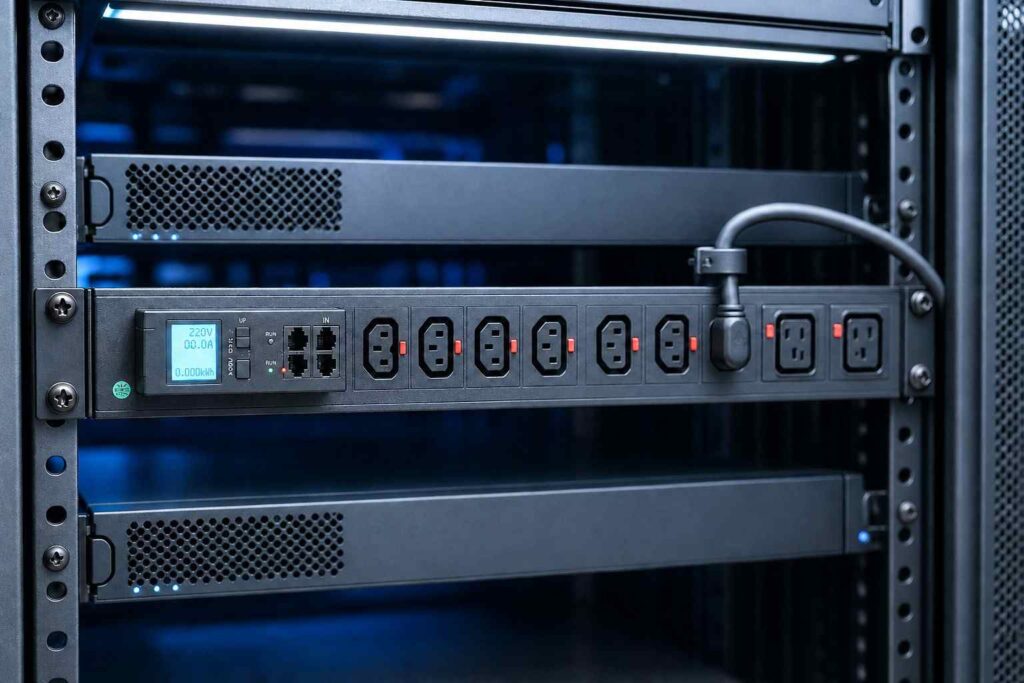

AV racks need a switched outlet per device, because a mixer and an amplifier must come up in a fixed order. We build 1U units with individual switches, EMI filtering and C13 outlets for that rack. Laboratory instruments ask for the same, with a leakage current low enough for a bench supply.
Tell us the room, the load and the feed.
Our team can help evaluate a suitable IEC PDU solution for your project.
We offer a range of IEC PDU configurations covering basic power distribution, local metering, remote monitoring, outlet control, and power transfer applications.
Our product range includes both IEC 60320-based and IEC 60309-based configurations. Explore the following product families to identify a suitable starting point for your project.
Can't find the exact IEC PDU model you need?
Browse our IEC PDU product range or send us your required specifications. If you cannot find the exact configuration, ask our team about customization possibilities.
We run production, moulding and testing in our own plant, which is why a drawing change is a schedule change and not a negotiation with a subcontractor.
Six assembly lines, in-house injection moulding and laser processing keep the chassis and the colour in one plant. Bulk lead time runs 30 to 45 days after specification sign-off, with samples in a few weeks. We ship to North America, Europe, Russia, the Middle East, India, South Asia, Australia and Africa.
Support starts before the quotation: inlet matching, phase balance, breaker coordination and protocol selection. A 10-person R&D team answers the drawing questions, and the sales engineer answers the commercial ones. A complete specification gets a quotation within 24 hours.

Custom work is quoted from the clarification table, not from a catalogue page. Electrical, mechanical, functional and brand changes are priced separately, so a buyer can drop the part that does not pay for itself. The confirmed specification is kept per SKU, which is what makes a re-order repeatable.
Core intelligent and three-phase models are certified to UL 62368-1 and CE under the LVD and EMC directives, with RoHS compliance. For other markets we support BIS for India, PSE for Japan, INMETRO for Brazil and SASO/Saber for Saudi Arabia on order. A certificate covers the model it names, so it travels with the model number rather than with a general claim.
We run OEM and ODM projects from the rack drawing to a branded product line.
Electrical, mechanical and functional choices are reviewed together, because a change in one moves the certification scope of all three.
Every electrical change is a new configuration, and every configuration is a new model with its own label. We confirm voltage, current, phase, inlet and outlet set in one pass, because changing the inlet later reopens the safety review. Cord length and conductor size are fixed at the same time.
Mechanical changes cost less than electrical ones, but they still move the mounting drawing. Panel length, outlet pitch, bracket depth and input position are set from the cabinet drawing. The outlet panel also rotates 360° on the chassis, so cable entry can be moved without a new tool.
Functional modules are confirmed per model, not promised per product family. A monitored unit carries the metering card, the protocol stack and the sensors it was ordered with. Anything absent from the model confirmation sheet is absent from the unit.
OEM puts your brand on our build; ODM starts one step earlier, at the product definition. Both need a locked specification before tooling, because a logo change is free and a chassis change is not. We keep one specification file per brand SKU, so a re-order two years later matches the first batch.
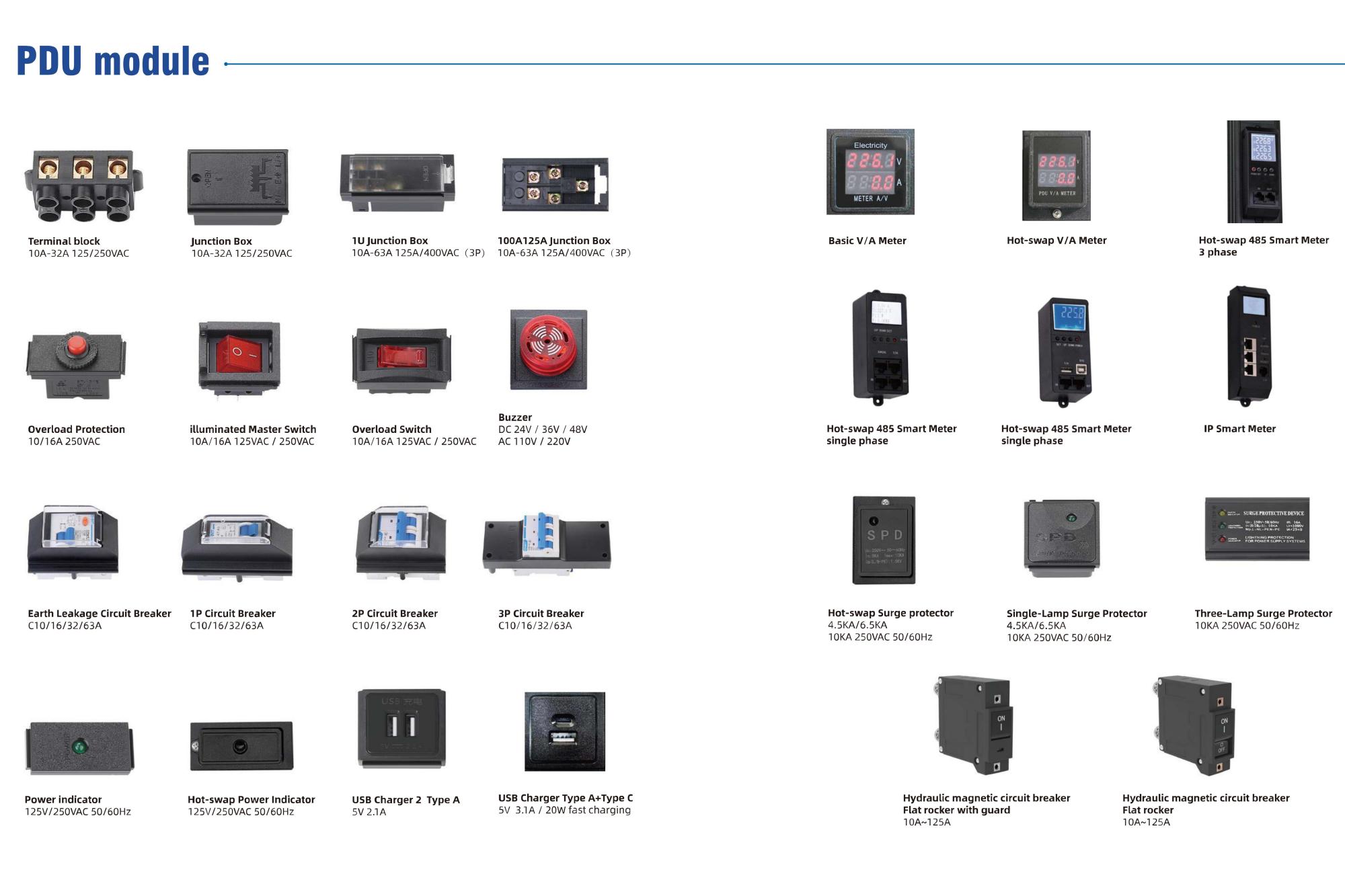
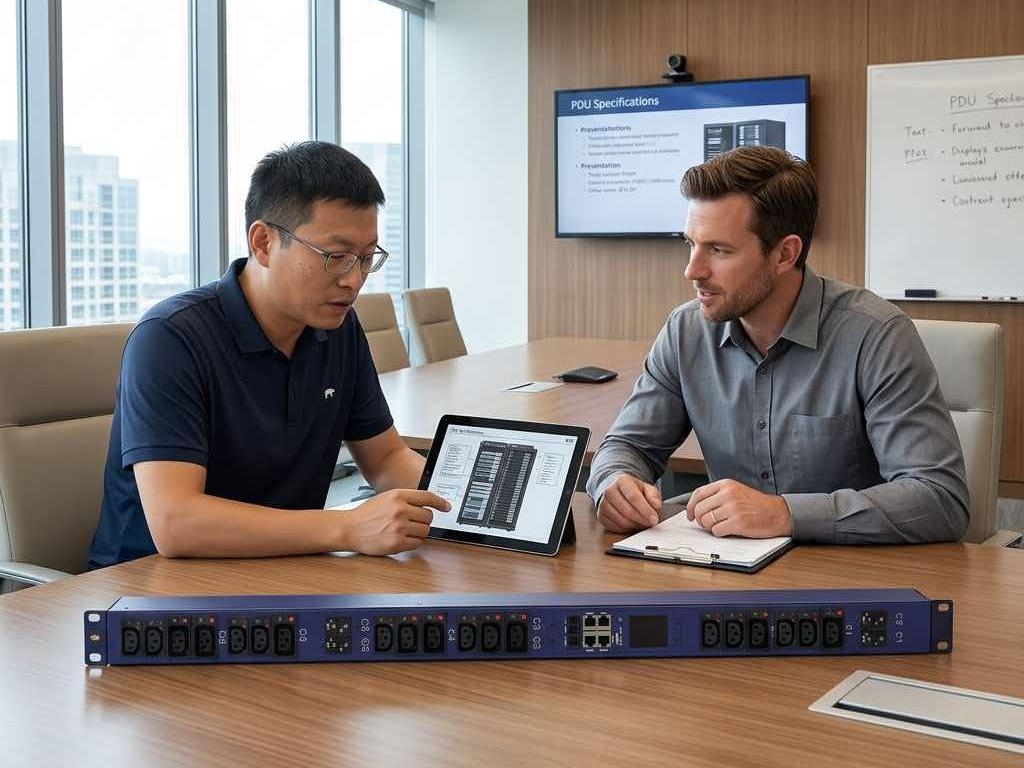
You send the rack spec, drawing or competitor part number.
→ We return a clarification list.

We check phase, load, input, outlets and protection.
→ 2D drawing and configuration sheet.

We build one or two units on the confirmed configuration.
→ Sample with test data, a few weeks.
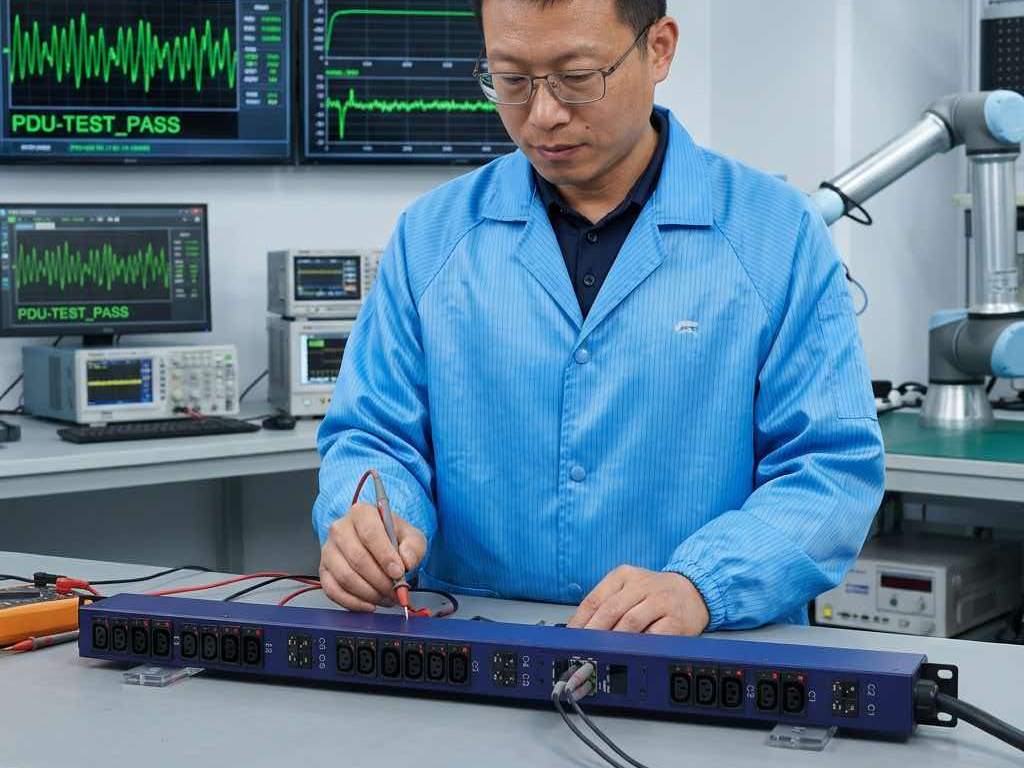
You approve the sample; we run the route for your market.
→ Certificate and DoC.

Bulk build with first-article inspection.
→ 30–45 days, with the document pack.
Have a custom IEC PDU project?
end the specification; the engineering team returns a proposal with the sample plan and the certification scope.
C13 is a 10 A coupler and C19 is a 16 A coupler, both rated 70 °C at the pin; the body size is what changes. C13 covers servers and switches, C19 covers blade chassis and high-power supplies. A c13 c19 pdu panel mixes them at a fixed ratio.
Yes. Mixed panels are cut to a fixed ratio, such as 30 C13 plus 6 C19 on a 0U chassis. The ratio is checked against the inlet rating and the internal branch design, which is why a high density PDU quote starts from the rack BOM.
Yes. Single-phase builds run 230 V at 10 A to 32 A, and three-phase builds run 400 V 3P+N+E at 16 A to 63 A. Confirm the phase, the neutral and the load before the outlet count, because a three phase PDU splits load across three branches.
Yes. The inlet is C14, C20 or a 60309 plug; the outlet set is C13, C15, C19, C21 or 60309; cord length, colour, chassis and brackets are set at order. An industrial PDU feed is confirmed against the wall socket first.
Yes. OEM puts your brand on our build, and ODM starts at the product definition. Logo, nameplate, packaging, manual and interface are confirmed per project, and a smart PDU build adds the firmware and protocol list to that confirmation.
Core intelligent and three-phase models carry UL 62368-1 and CE under LVD and EMC, with RoHS. BIS, PSE, INMETRO and SASO are supported on order. A certificate applies to the model it names, which is what a data center PDU buyer should check first.
Yes. A sample order is part of the process: samples take a few weeks, and bulk runs 30 to 45 days after sign-off. The sample is what confirms the outlet layout, the inlet and the finish, so a metered PDU pilot is read against the final build.
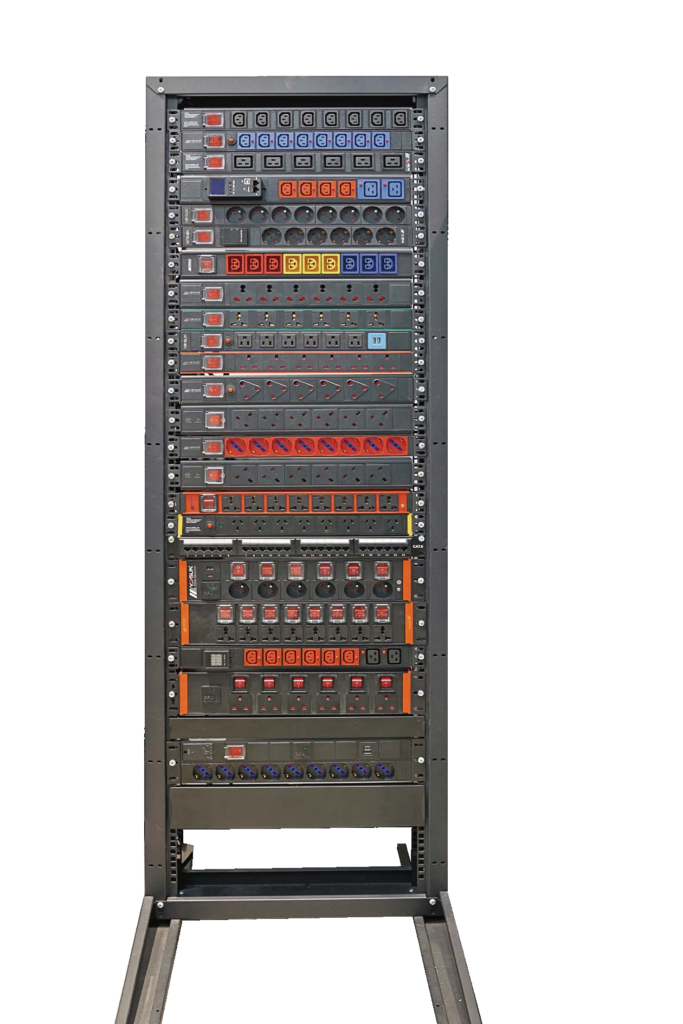
A Professional And Leading Manufacturer
For OEM
& ODM Power Distribution Unit (PDU)
You Can Trust
CONTACT
Ningbo YOSUN Electric Technology Co., LTD
Leading Professional Manufacturer in PDU Power Solutions
Contact Info.
Leave Your Message