


© Copyright – 2010-2023 : All Rights Reserved. Sitemap
Power Distribution Unit PDU, rack mount PDU, PDU data center, Smart PDu, intelligent PDU
Power Distribution Unit PDU, rack mount PDU, PDU data center, Smart PDu, intelligent PDU


+86 15867381241
NEMA PDU
Looking for a reliable NEMA PDU manufacturer and supplier for your data center, server rack, or IT infrastructure project?
We provide US-standard rack power distribution solutions designed to meet different input connection, electrical, mounting, and power management requirements.
From standard NEMA 5-15P and 5-20P connections to locking NEMA L5 and L6 series configurations, we help distributors, system integrators, data center operators, and OEM customers source rack PDUs that match their specific power infrastructure.
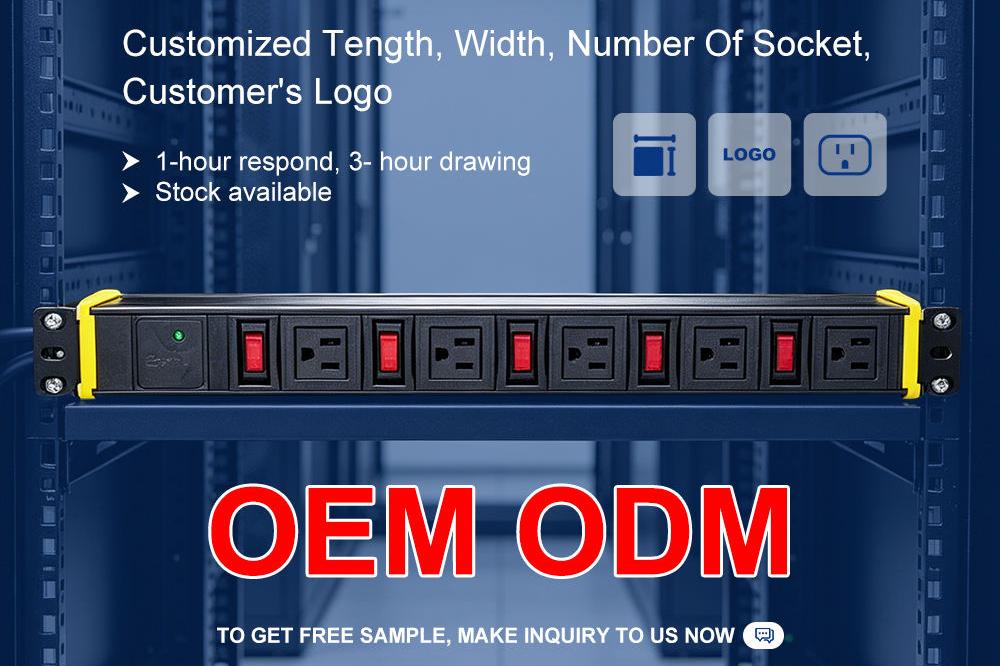
A NEMA PDU is a rack-mount power distribution unit whose inlet, and in most builds its outlet bank, follows NEMA WD 6 configurations: 5-15, 5-20, L5-20, L6-20, L6-30, L14-30 and L21-30. The letter L marks a locking shell, so 5-20P and L5-20P share a 20A 125V rating but not a mating profile. The rating of the assembly is set by the weakest link among inlet, cord, breaker and outlet bank, so a 30A inlet feeding a 20A bank is a 20A PDU.
| Assembly element | What it fixes | Value in this range |
| Inlet plug | voltage, current, shell | 5-15P to L6-30P, 15A to 30A |
| Cord | conductor size and length | 14 to 10 AWG, length per order |
| Breaker | trip curve and rating | C10 to C63, or 10A to 125A hydraulic-magnetic |
| Outlet bank | receptacle, count, pitch | 5-15R and 5-20R, C13 and C19, 6 to 36 |
| Mounting | U space and bracket | 1U, 2U, 0U |
A power strip is a relocatable power tap under UL 1363, built to be moved rather than bolted into a cabinet or fed from a 30A branch circuit. A rack PDU is IT and AV equipment under UL 62368-1, with fixed mounting, a defined inlet and an outlet bank sized to the branch. An IEC 320 PDU changes the connector family to C13, C19 and C20, which changes the market and the outlet mix, not the electrical function.
| NEMA rack PDU | Power strip | IEC 320 PDU | |
| Inlet | 5-15P to L6-30P | 5-15P, integral cord | C14, C20, CEE 7/7 |
| Outlet bank | 5-15R, 5-20R, C13, C19 | 5-15R only | C13, C19 |
| Mounting | 1U, 2U, 0U brackets | none | 1U, 2U, 0U |
| Governing standard | UL 62368-1 | UL 1363 | UL 62368-1 |
| Typical market | North America | retail and office | EU, UK, Asia |
NEMA PDUs sit in 120V and 120/208V estates: enterprise server rooms, network closets, colocation cages and edge cabinets across North America. The split is practical, with 5-15P and 5-20P feeding 120V wall-corded loads and L6-30 feeding denser cabinets from the same wye service. Any site whose wall receptacle is already NEMA can be served without touching branch wiring, which is why the inlet table starts a specification.
| Setting | Typical inlet | Outlet bank | What drives the choice |
| Enterprise server room | 5-20P | 10 to 12 x 5-20R | devices per cabinet |
| Network closet | 5-15P | 6 to 8 x 5-15R | switch stack plus a few servers |
| Data hall | L6-30P | 24 to 36 x C13 | kW per cabinet |
| Colocation cage | L6-30P | 24 x C13 or C19 mix | contract written in amps |
| Edge cabinet | 5-20P or L6-20P | 8 to 10 outlets | remote reboot, not density |
Looking for a reliable US-standard power distribution solution?
Contact our team to discuss your NEMA PDU requirements and application needs.
The input plug is one of the most important specifications when selecting a NEMA PDU. A compatible input connection ensures that the PDU can connect to the intended power source. However, the plug designation alone does not determine the complete electrical compatibility. Voltage, current, conductor configuration, grounding, and circuit protection must also match. We offer NEMA PDU configurations covering several common North American input connection types.
| Inlet | Rating | Poles / wires | Supply system | Outlet bank we pair | Where it fits |
| NEMA 5-15P | 15A 125V | 2P 3W | 120V | 5-15R | network closet |
| NEMA 5-20P | 20A 125V | 2P 3W | 120V | 5-20R | server room |
| NEMA L5-20P | 20A 125V | 2P 3W | 120V | 5-20R | vibration, cleaning |
| NEMA L6-20P | 20A 250V | 2P 3W | 208V or 240V, no neutral | C13 | small dense cabinet |
| NEMA L6-30P | 30A 250V | 2P 3W | 208V or 240V, no neutral | C13 and C19 | data hall |
| NEMA L14-30P | 30A 125/250V | 3P 4W | split-phase or two legs of wye | 5-20R and 6-20R | mixed 120V and 208V loads |
5-15P is the 15A 125V straight-blade inlet, the same shell as a domestic plug, and it pairs with a 5-15R bank. NEC 210.21(B)(2) limits cord-and-plug load on a 15A receptacle to 12A, so the planning figure at 120V is 1.44 kVA rather than 1.80 kVA.
5-20P adds a T-slot to the same 125V shell and raises the branch rating to 20A. It mates with 5-20R, which also accepts 5-15P plugs, so a 20A PDU can feed 15A cords without an adapter. The cord-and-plug limit on a 20A receptacle is 16A, which is 1.92 kVA at 120V.
L5-20P is the locking form of 5-20 at 20A 125V, and the shell twists to seat so a brush against the rack cannot walk the plug out. It mates only with L5-20R, so the wall receptacle is a change order rather than an adapter purchase.
L6-20P is 20A 250V, two ungrounded conductors plus ground, and it carries no neutral. On a 120/208V wye it is fed from two legs and the load sees 208V, so the 250V marking is a ceiling rather than the site voltage. A cabinet that needs 120V outlets cannot be served from an L6 inlet, because there is no neutral to return.
L6-30P carries 30A at up to 250V and is the default dense-cabinet inlet in North American colocation. 30A at 208V is 6.24 kVA, and NEC 210.20(A) sizes the upstream device at 125% of continuous load, so planning runs against 4.99 kVA.
NEMA L14-30P is a 30A, 125/250V locking connector configuration. It provides two hot conductors, a neutral conductor, and a grounding conductor.It is suitable for compatible split-phase power systems where both 120V and 240V distribution requirements may apply.
Not sure which NEMA input plug matches your power infrastructure?
Send us your existing outlet type, voltage, and current requirements. Our engineering team can help identify the right PDU configuration.
Rack space is an important consideration when designing a server cabinet power distribution system.
NEMA rack PDUs are commonly configured in horizontal and vertical mounting styles to accommodate different cabinet layouts and equipment densities.
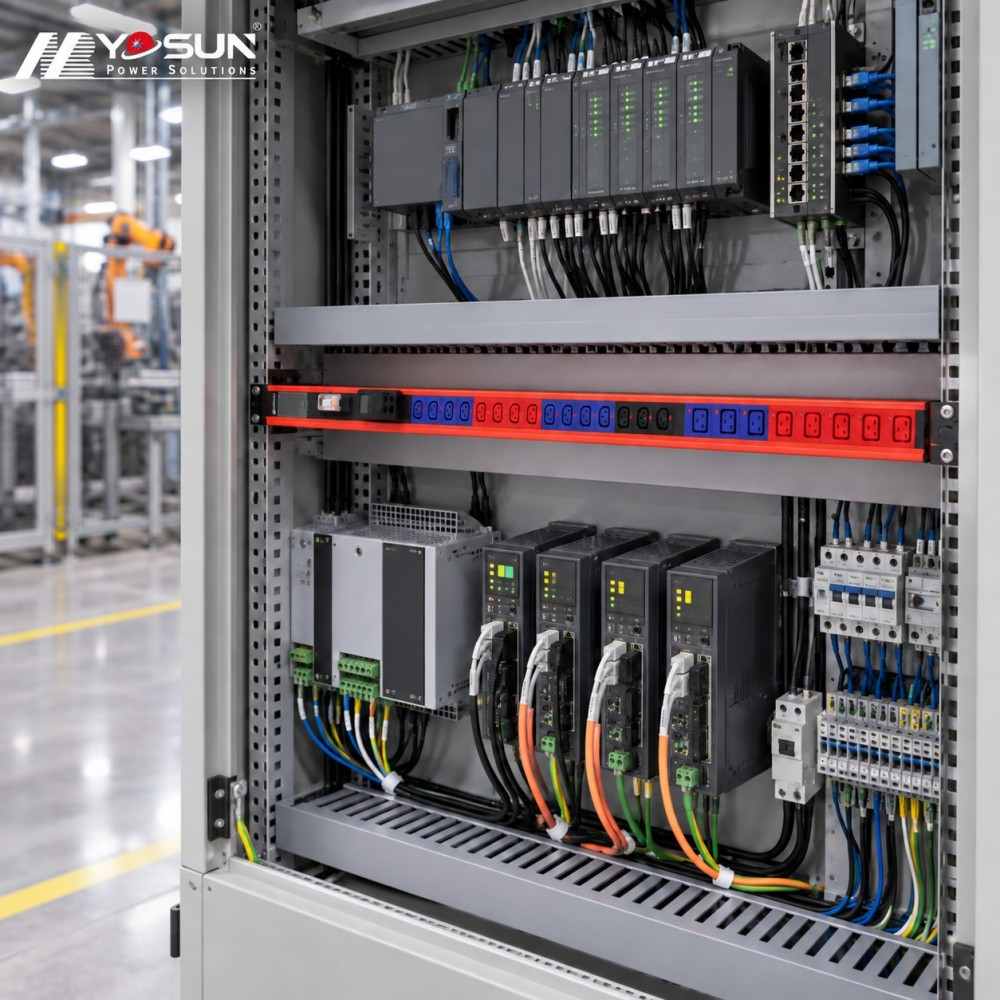
A 1U PDU body carries 6 to 12 outlets across 19 inches and costs one U of rail. A 2U body doubles the bank and makes room for a display, a breaker or a master switch. Horizontal NEMA PDUs are often selected for network cabinets, small server racks, and equipment installations where front or rear horizontal mounting is preferred.
A 0U PDU body mounts on the rear posts or the side panel and takes no front U at all. Our vertical builds run 24 and 36 outlets, with the cord entering at one end so the run stays inside the rear channel. Tool-less brackets are standard, and the outlet panel rotates through 360 degrees on the modular range.
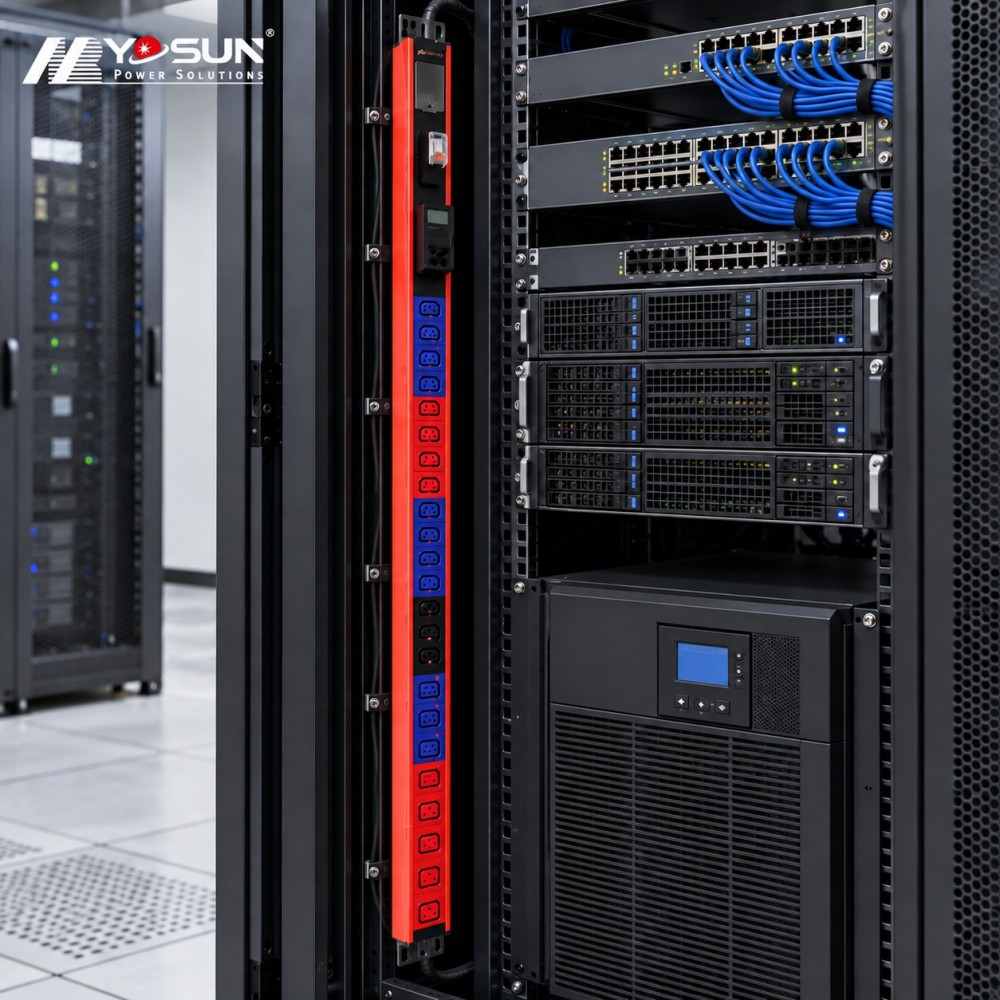
Choose by what the cabinet cannot give up: front U space, rear depth or outlet count. A cabinet with a rear cable channel and 42U of servers has no U to spend on a body. A two-post network rack has no rear post to clamp, so the body has to be horizontal.
| Decision | Horizontal 1U / 2U | Vertical 0U | Check before ordering |
| Mounting position | front or rear rail, across the width | side panel or rear posts, down the height | rail depth and post type |
| Rack space used | 1U or 2U | none at the front | whether every U is committed |
| Outlet count | 6 to 20 | 24 to 36 | devices per circuit |
| Cable path | front to rear, one bend | along the rear channel | bend radius at the inlet |
| Best fit | network closet, small rack | data hall, dense cabinet | door swing and side clearance |
Need a space-efficient NEMA rack PDU?
Share your cabinet dimensions and installation preferences. We can recommend horizontal or vertical configurations for your project.
Different IT environments require different levels of power monitoring and control.
Some installations only need reliable power distribution, while others require real-time electrical monitoring, individual outlet measurement, or remote power switching.
Our NEMA PDU product range covers several functional configurations to support different rack power management requirements.
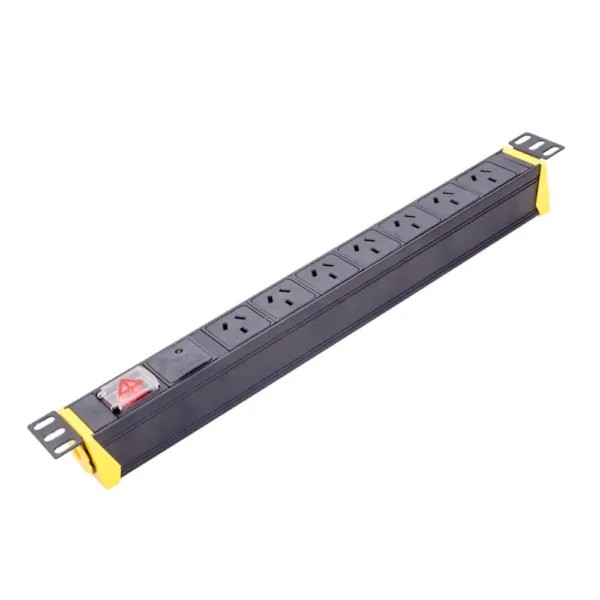
A basic PDU delivers reliable power distribution without metering, relying on upstream protection or optional integrated breakers and SPD. Available in 6–36 outlets across 1U, 2U and 0U configurations.
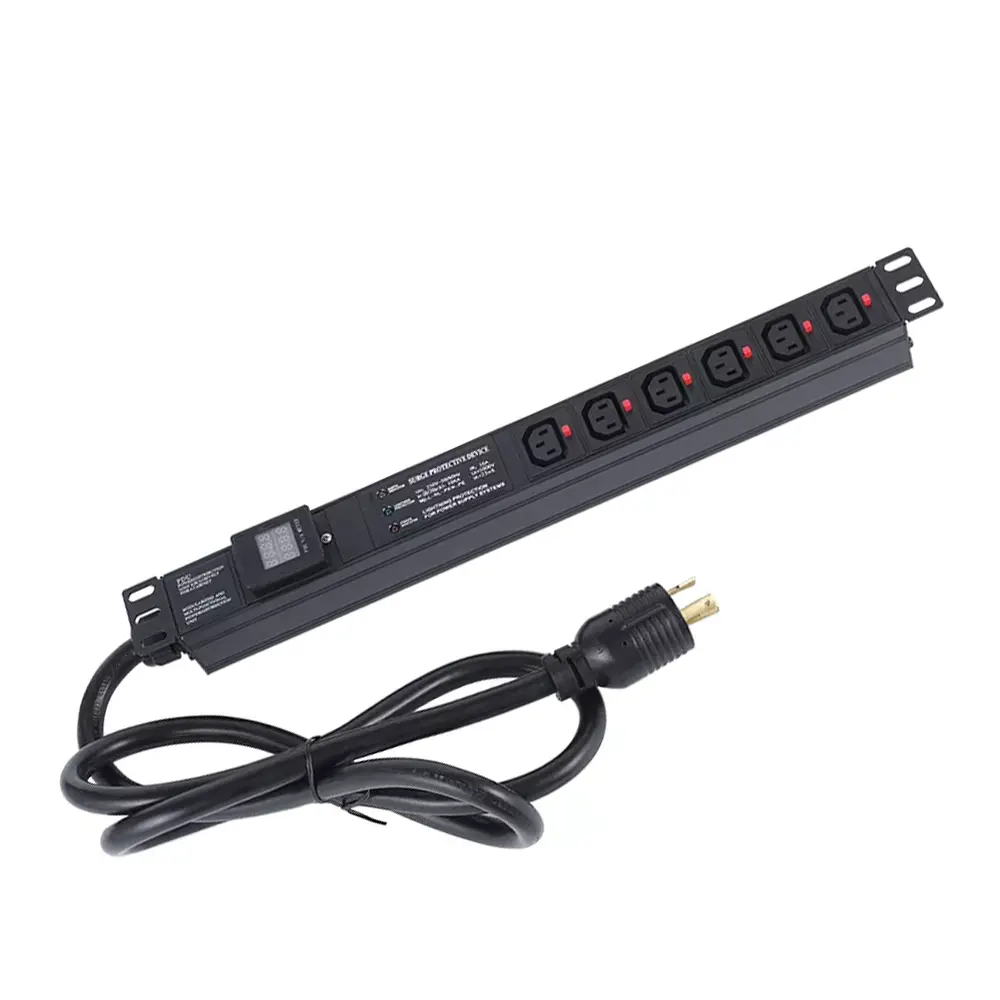
A metered PDU provides real-time local voltage and current readings through a digital display, with ±1% measurement accuracy. Ideal for on-site load checks without remote reporting or alarms.
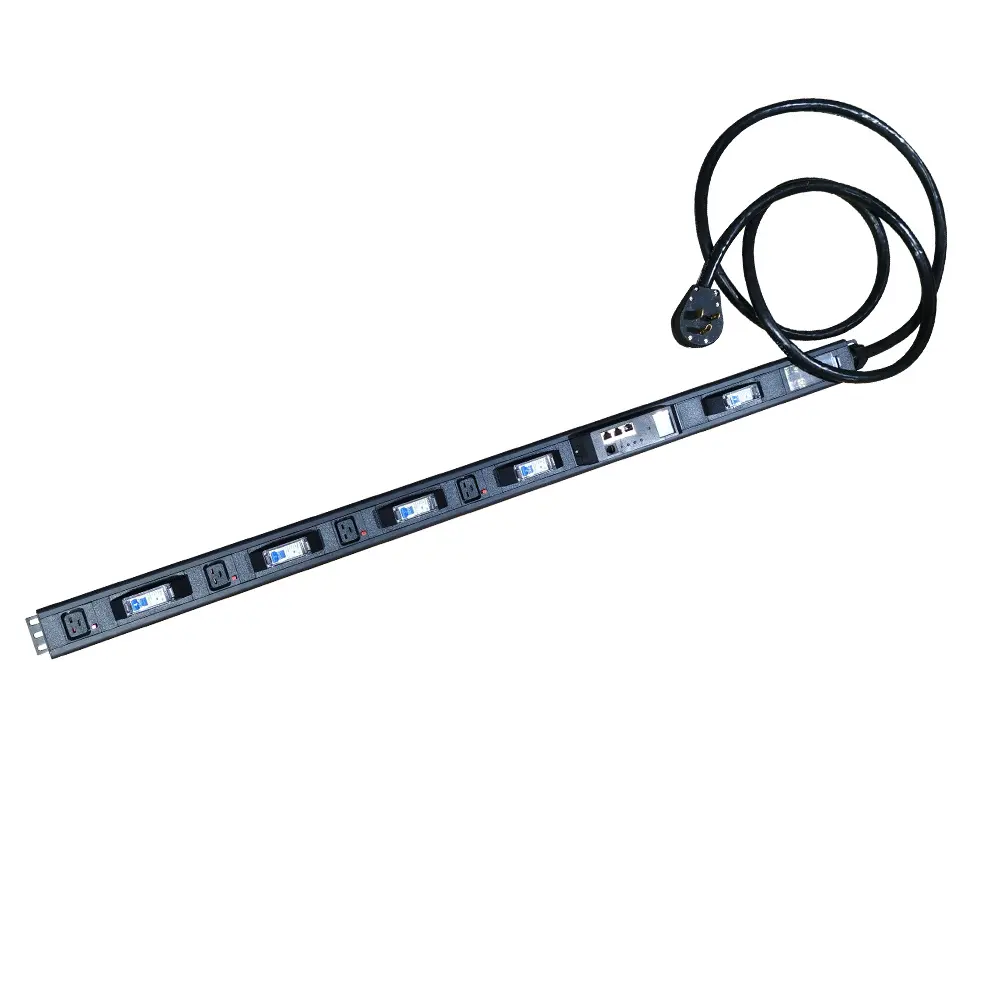
A monitored PDU enables network-based power monitoring via SNMP or Modbus RTU over RS-485, supporting remote reporting, alarms and environmental sensors. Cascading supports up to 247 three-phase PDUs.
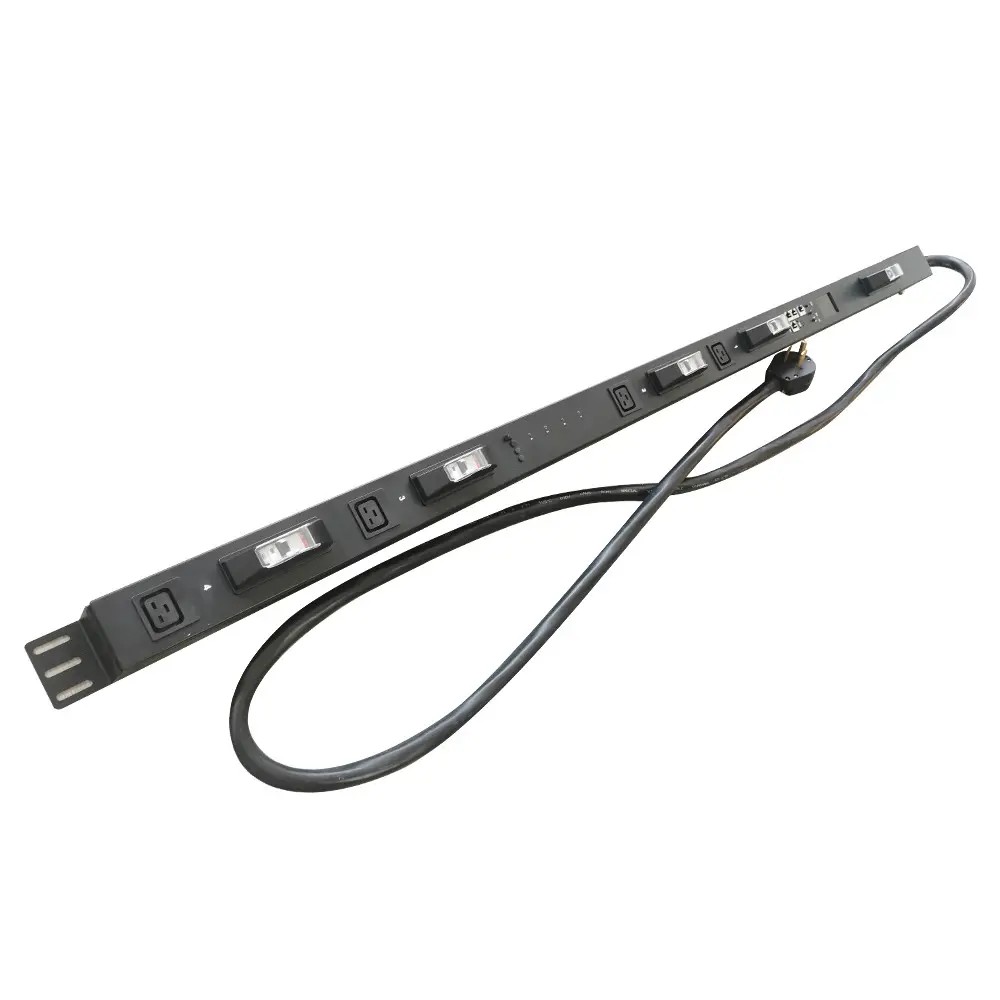
A switched PDU enables remote outlet or bank-level power control, including reboot scheduling and sequential startup. Its controller supports SNMP v1/v2c/v3, SSHv2 and open API integration.
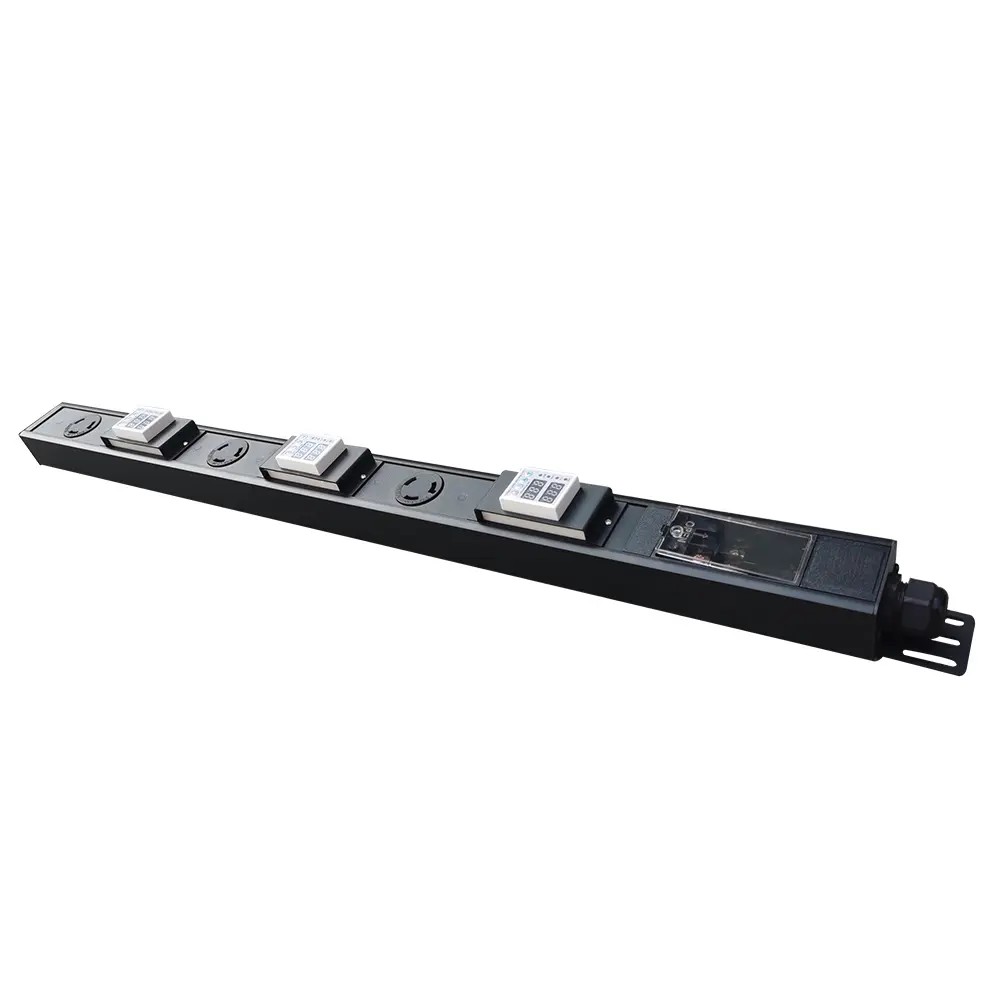
A metered-by-outlet PDU tracks energy consumption for each connected device, enabling accurate tenant billing and capacity planning. Measurements follow individual outlets, so device relocation may interrupt historical consumption records.
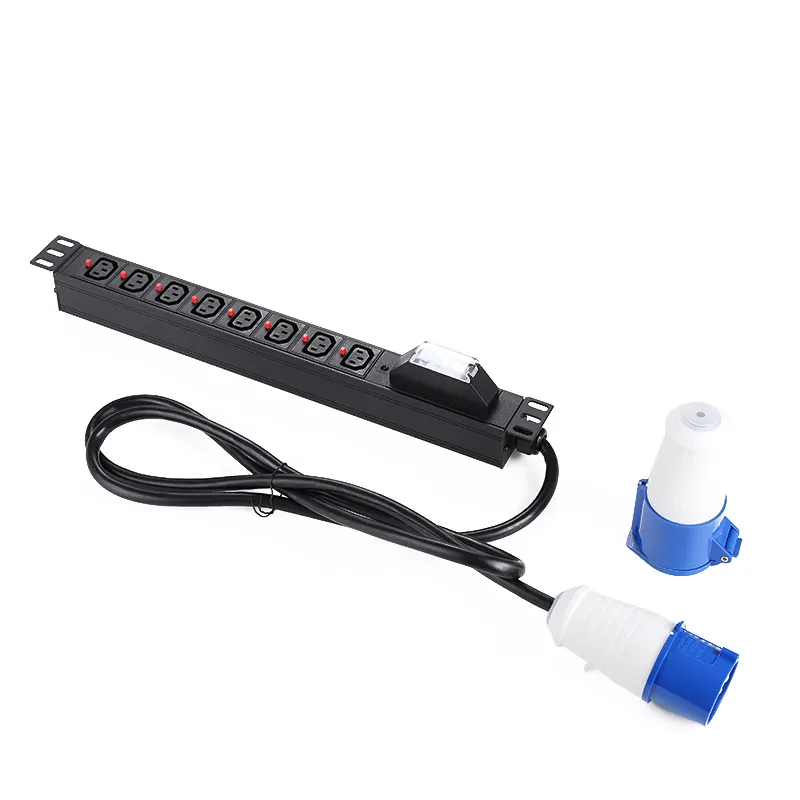
ATS and STS PDUs automatically transfer loads to a secondary power source during primary feed failure. Transfer time, input compatibility and neutral handling vary by model. Maintenance bypass enables manual load transfer for servicing.
Need more than basic power distribution?
Tell us whether you require local metering, remote monitoring, outlet control, or automatic source transfer. We’ll help match your project with the right NEMA PDU type.
Different IT environments have different power distribution requirements.
A small network cabinet may only require a basic 1U NEMA PDU, while a high-density data center rack may require a vertical 0U model with advanced power monitoring.
Our NEMA PDU product range supports different rack power distribution requirements across professional IT applications.
A data hall buys density and metering, so the 0U L6-30 body with 24 or 36 outlets is where most projects start. Two feeds per cabinet means two PDUs, one per side, so each unit carries half the cabinet load. Per-outlet metering is what turns a rack into a billable or plannable unit.

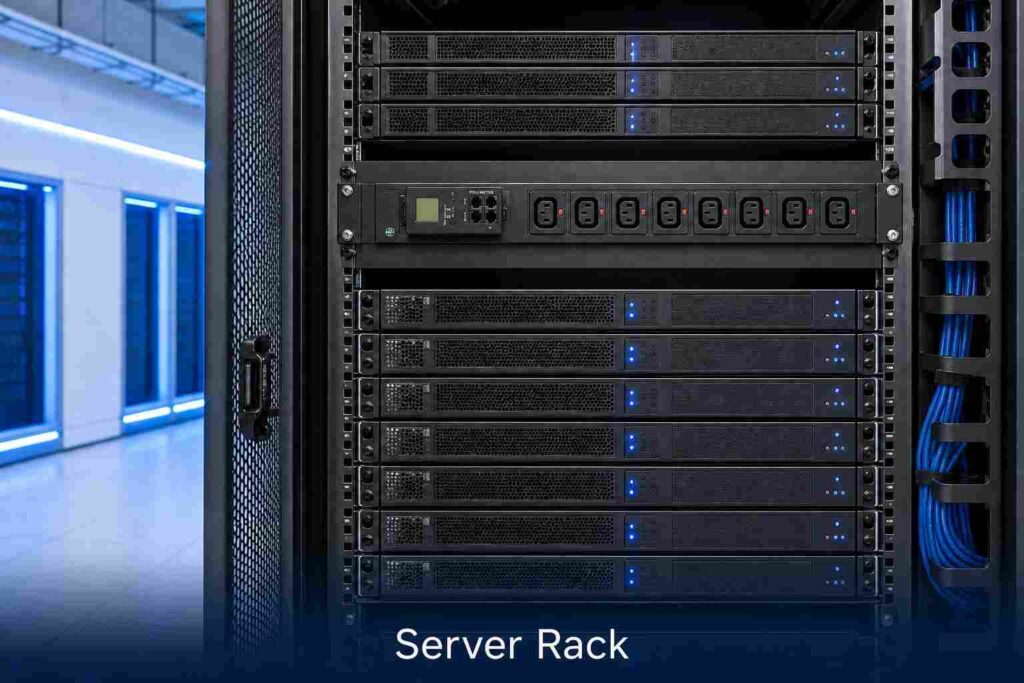
A network closet buys simplicity: a server rack PDU in 1U with 6 to 12 outlets covers a switch stack and a few servers. Local metering is enough in most closets, because somebody is on site when the load changes. The inlet is a 5-15P or a 5-20P in most closets, which means no branch work.
A colocation PDU buys evidence: per-outlet metering, a network path the tenant can query and a record that survives a billing dispute. L6-30 inlets dominate because the cage contract is written in amps per circuit. A controller that talks SNMP keeps the reading inside the operator’s own DCIM.
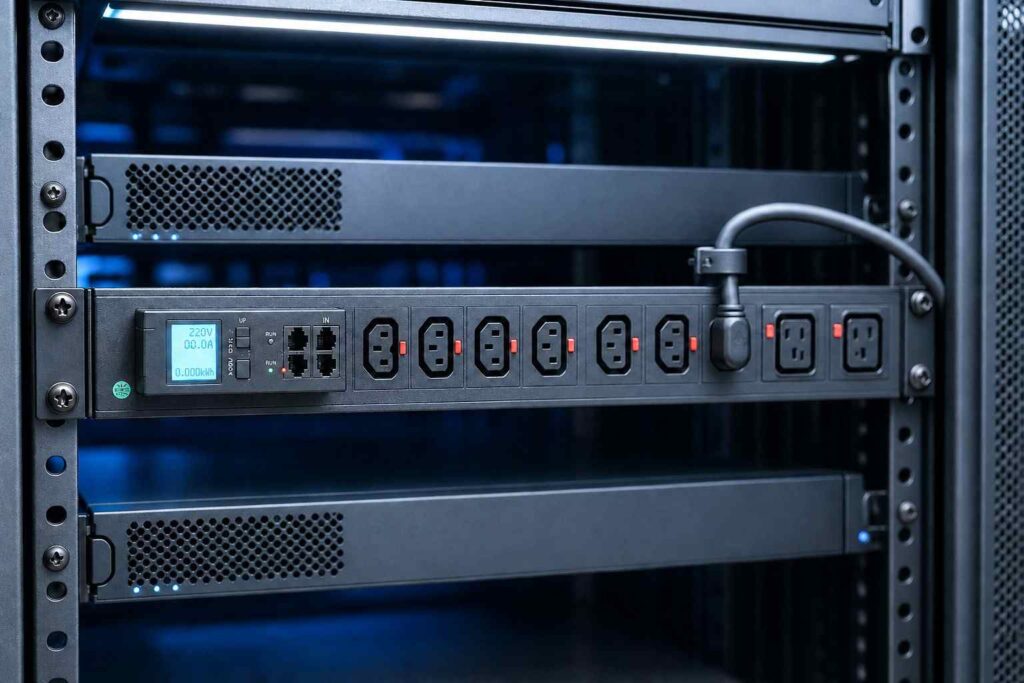

An edge PDU buys remote control, so switched outlets and a watchdog matter more than outlet count. Power sequencing keeps inrush from tripping a small upstream breaker when the site recovers from an outage. A 485 cascade lets one IP address cover a row of cabinets in an unmanned room.
Planning a data center, server room, or multi-site IT deployment?
Tell us your application scenario and deployment scale. We can help configure NEMA PDUs for your infrastructure.
Can't find the exact NEMA PDU model you need?
Browse our product range or send us your technical specifications. We can help identify a standard model or develop a customized solution for your project.
We run production, moulding and testing in our own plant, which is why a drawing change is a schedule change and not a negotiation with a subcontractor.
We build power distribution only, on six assembly lines with in-house injection moulding and laser processing. The busbar is one-piece copper, spot-welded without solder, so there is no joint to reflow under load. Custom colours and housing lengths come off our own moulds rather than a subcontractor.
An OEM order fixes what you specify and leaves the rest to us, while an ODM order starts from a product architecture we propose. We hold the drawing, the BOM and the packaging specification against a SKU, so the second order matches the first. Branding covers the housing print, the rating label and the carton.

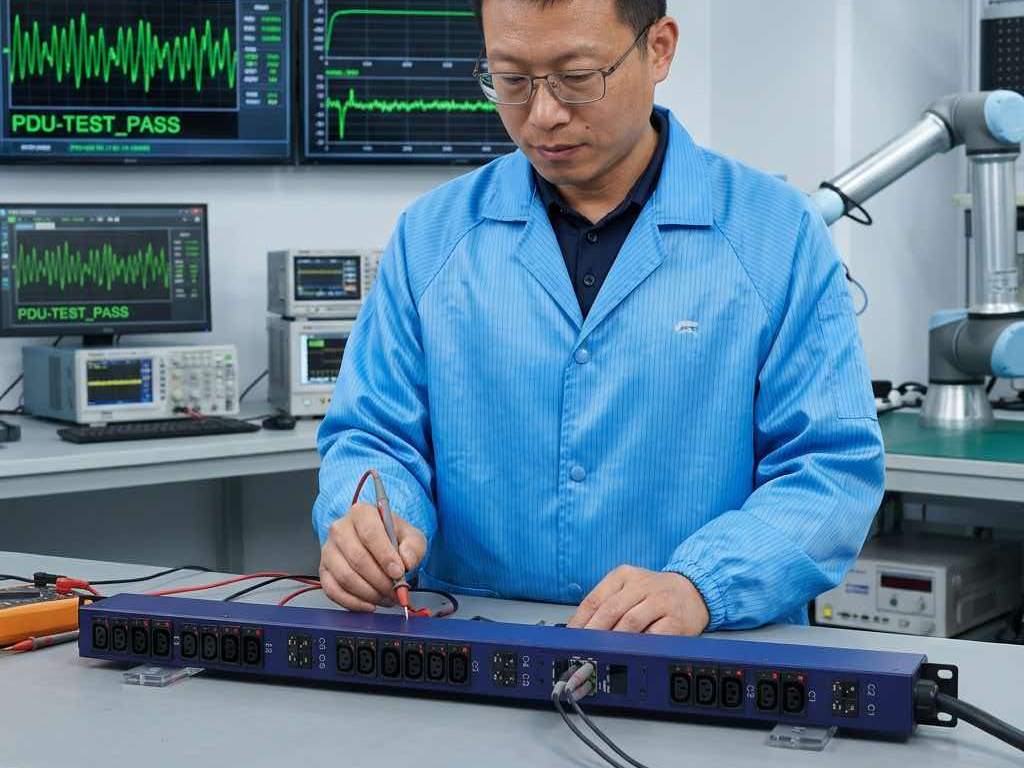
Every unit passes electrical test, a high-current load test, an aging run and a metering calibration before packing. ISO 9001 covers the process rather than the product, and the product evidence is the test record plus the datasheet. Warranty runs 24 to 36 months by model.
Our core intelligent and three-phase models are certified to UL 62368-1 and to CE for LVD and EMC, with RoHS declarations, and we release certificate numbers and test reports. UL 62368-1 conformity is not the same as UL Listed, and neither covers a model we have not submitted. For India, Japan, Brazil and Saudi Arabia we run BIS, PSE, INMETRO and SASO programmes on order.
Standard NEMA PDU models may not meet every project requirement.
Different rack dimensions, power systems, connected devices, and management requirements can require customized product configurations.
We support NEMA PDU customization discussions covering electrical specifications, mechanical structures, functional modules, and branding requirements.
Outlet type, count, pitch and order are build variables, and the limit is chassis length rather than a catalogue page. A 5-15R, a 5-20R, a C13 and a C19 occupy different panel widths, so the mix sets the count. A mixed bank is checked against the breaker and the neutral before we quote it.
1U, 2U and 0U share one electrical platform, so a format change does not restart the electrical design. Bracket, handle and cord exit are drawn against the cabinet, not against a template. The housing is aluminium alloy by default and PC/ABS where the specification calls for it.
Breaker type and rating, SPD module, local meter, per-outlet metering, switching, protocol and sensor set are chosen independently of one another. A protection change can move a model into a different certificate scope, so it is reviewed before quoting.
Logo, housing print, rating label, carton and barcode are set per SKU. Private label keeps your model naming, and we keep the drawing and the BOM behind it. Firmware interface and language can be branded on the intelligent range where the hardware supports it.
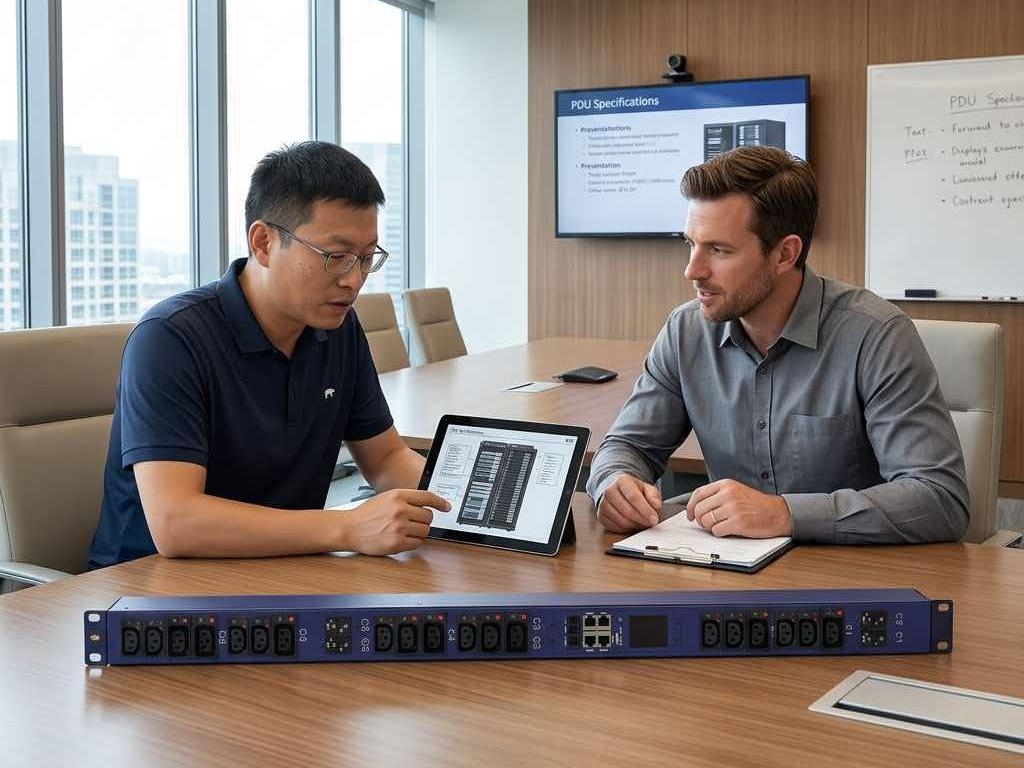
You send the rack spec, drawing or competitor part number.
→ We return a clarification list.

We check phase, load, input, outlets and protection.
→ 2D drawing and configuration sheet.

We build one or two units on the confirmed configuration.
→ Sample with test data, a few weeks.
You approve the sample; we run the route for your market.
→ Certificate and DoC.

Bulk build with first-article inspection.
→ 30–45 days, with the document pack.
Have a custom NEMA PDU project?
Send us your drawings, product specifications, or sample requirements. Our engineering team can evaluate your design and provide an OEM/ODM manufacturing proposal.
5-15P is rated 15A 125V and 5-20P is rated 20A 125V, with a T-slot that lets the 20A receptacle accept both plugs. A 20A circuit plans at 1.92 kVA instead of 1.44 kVA. Both are single phase PDU builds.
L5-20P is 20A 125V and L6-20P is 20A 250V, so equal current does not make them interchangeable. L6 carries no neutral, which rules out a 120V outlet bank behind it.
Yes, through an L6-20P or L6-30P inlet fed from two legs of a 120/208V wye. A 30A L6 circuit is 6.24 kVA rated and 4.99 kVA for continuous load under NEC 210.20(A).
Outlet type, count, pitch and order are build variables, limited by chassis length rather than a catalogue page. A mixed bank is checked against the breaker and neutral before quoting. That makes a 24-outlet high density PDU with C13 and C19 a normal order.
Core intelligent and three-phase models hold UL 62368-1 and cUL with certificate numbers and test reports available. That scope does not extend to every model, so ask for the certificate model list. CE and RoHS documents are separate.
Yes, we brand the housing, the rating label and the carton, keep a drawing and BOM against each SKU, and can brand the interface on our smart PDU platform. MOQ is set per specification. Bulk lead time runs 30 to 45 days.
Fix the inlet from the wall receptacle and the panel breaker, then the continuous load in kVA, then whether any device needs a neutral. Outlet type and count follow that. Add metering only if someone will read it, which is the metered PDU step.
Send the target country, a photo of the receptacle, the panel breaker, the outlet types and count, the mounting format and the continuous load. Add the metering or switching level and the quantity. A complete brief gets two rack PDU options within 24 hours.
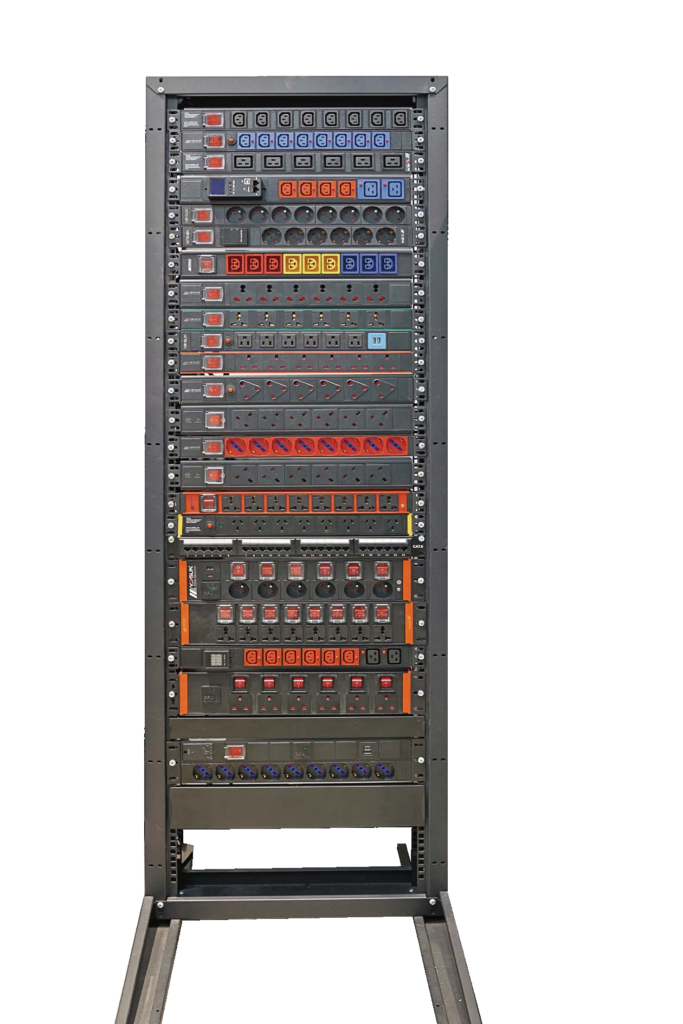
A Professional And Leading Manufacturer
For OEM
& ODM Power Distribution Unit (PDU)
You Can Trust
CONTACT
Ningbo YOSUN Electric Technology Co., LTD
Leading Professional Manufacturer in PDU Power Solutions
Contact Info.
Leave Your Message