



© Copyright – 2010-2023 : All Rights Reserved. Sitemap
Power Distribution Unit PDU, rack mount PDU, PDU data center, Smart PDu, intelligent PDU
Power Distribution Unit PDU, rack mount PDU, PDU data center, Smart PDu, intelligent PDU


+86 15867381241
AI Rack PDU
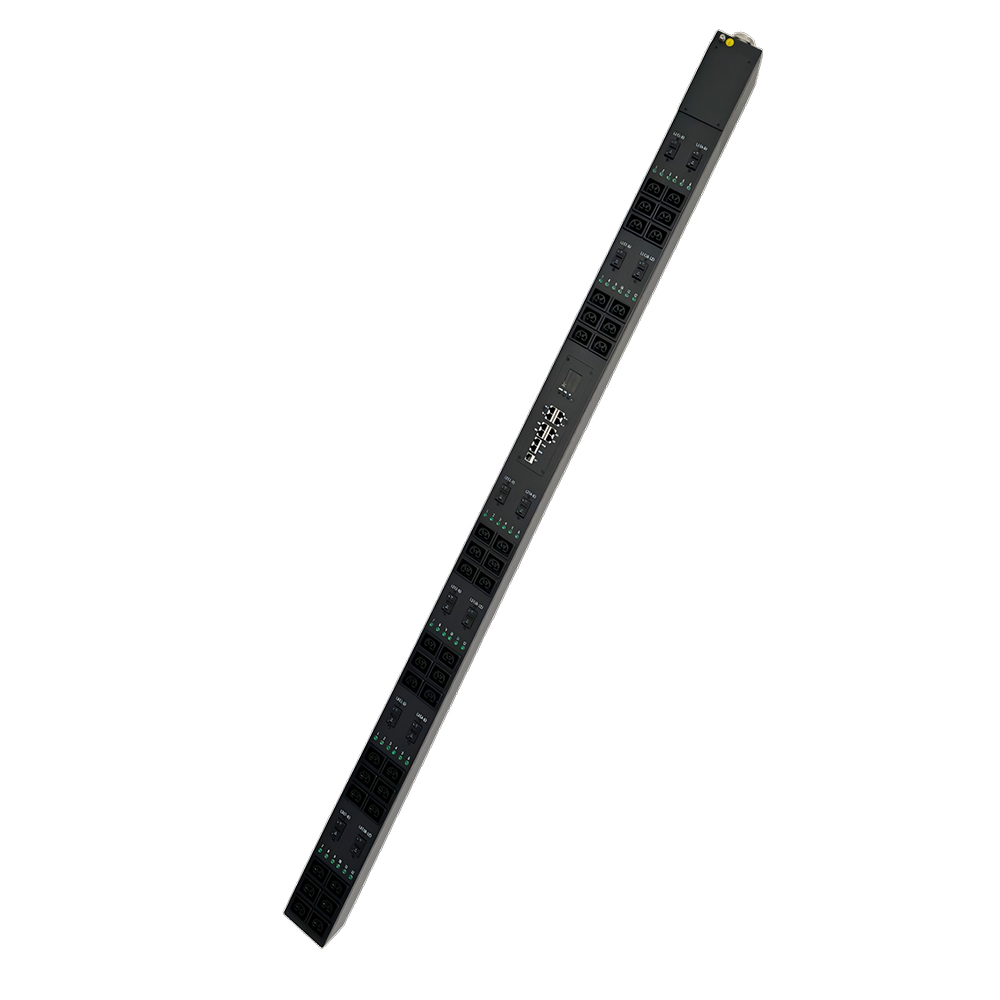
We build AI rack PDU configurations from 32A to 100A three phase, in 0U vertical and 1U horizontal form, with metering from inlet to outlet. Each build is quoted against your rack schedule, your destination market and the certificate that market requires.
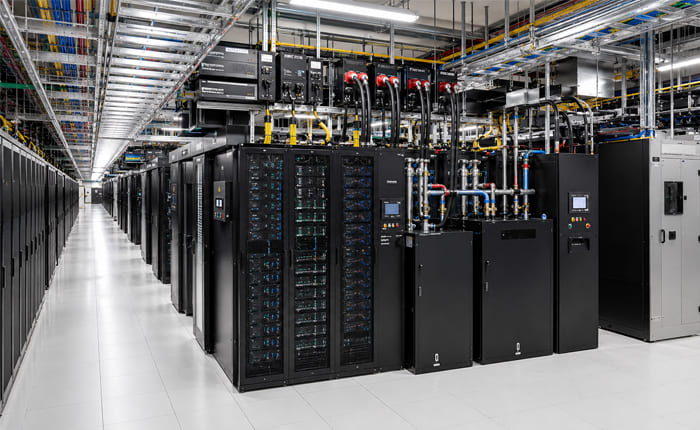
An AI cabinet is a power project before it is an outlet project. We size the feed, the breaker and the monitoring level from the rack draw, then lay out outlets inside that envelope. AI and HPC racks now reach 50kW to 300kW, where a general server rack draws a fraction of that. At 400V three phase a 50kW rack draws 72A per phase, and a 300kW rack draws 433A. We start from that current, so the rack PDU you end up with is decided by the feed and not by the outlet count on the drawing.
| Detail you send | Why it changes the answer |
| Destination market | Sets the plug, the voltage and the certificate |
| Phase and rack load | Sets the current per phase and the breaker rating |
| Input type | Hardwired, 60309 or C20 changes the end plate |
| Outlet layout | The C13 and C19 ratio sets the 0U panel length |
| Monitoring level | Inlet, branch or outlet metering sets the controller |
Send the rack schedule, not the outlet count.
One page comes back with the phase, the current and the monitoring level fixed.
AI data centers, GPU training clusters, and HPC facilities have different power supply standards and rack-level energy demands. We provide customized PDU electrical configurations based on input voltage, phase requirements, current capacity, and computing loads, ensuring compatibility with different facility power infrastructures and deployment environments.
We customize PDU input specifications for 208V, 400V, and 480V power systems, accommodating different regional electrical standards and data center infrastructures. Voltage selection is based on the site’s actual power supply and rack distribution architecture.
We provide single-phase and three-phase PDU solutions according to equipment power requirements and rack distribution designs. Three-phase configurations are suitable for high-density GPU training and HPC racks, while single-phase options support lower-power equipment and auxiliary applications.
Available PDU current configurations include 32A, 63A, 80A, 100A, and 125A. We select suitable ratings according to rack power consumption and continuous operating loads. For example, a balanced 50kW rack draws approximately 139A at 208V, 72A at 400V, and 60A at 480V three-phase at unity power factor.

Send the rack kW, the destination market and the PSU count.
We return the per phase current, the breaker rating, the inlet type and the inrush check.
We provide customized rack PDU solutions for AI cabinets, offering flexible 0U vertical and 1U/2U horizontal configurations to match different rack layouts and installation requirements. From overall dimensions and mounting methods to outlet positioning and cable routing, each design can be tailored to optimize space utilization, power distribution, and equipment compatibility.

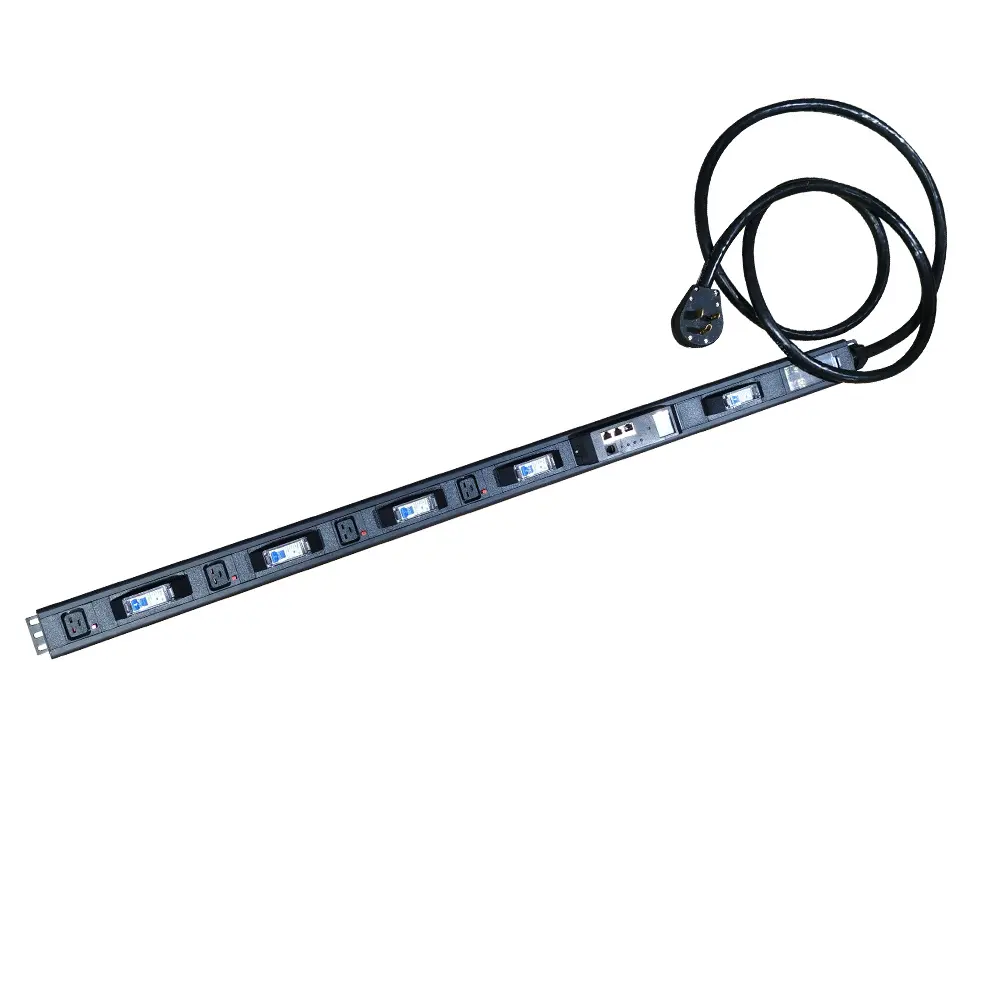
A 0U strip mounts on the rear posts and uses no rack units, so the full 42U stays available for compute. It reaches every node with a short cord and puts the breaker at eye level. Tool-less mounting means a swap does not need a screwdriver in a live aisle.

A horizontal unit puts every outlet on one face, which suits a switch or management rack where cords run sideways. It spends one or two rack units and blocks rear airflow less than a vertical strip on a shallow cabinet. Our horizontal platform covers 1U and 2U with the same controller as the vertical build.

A rear-door heat exchanger takes the space behind the rear rails, and a vertical strip with a 63A cord needs room to bend inside that gap. We publish the strip depth and the cord exit side, so the cabinet maker can check the door swing before the order. Where the gap is too small, the answer is a 1U unit in the network row and a remote feed.
Send the cabinet drawing with the rear rail position.
We mark the strip depth and the cord exit on your drawing and send it back.
Four metering levels answer four different questions.
We match the level to the question your operations team asks, because a higher level costs money and adds an answer you did not need.
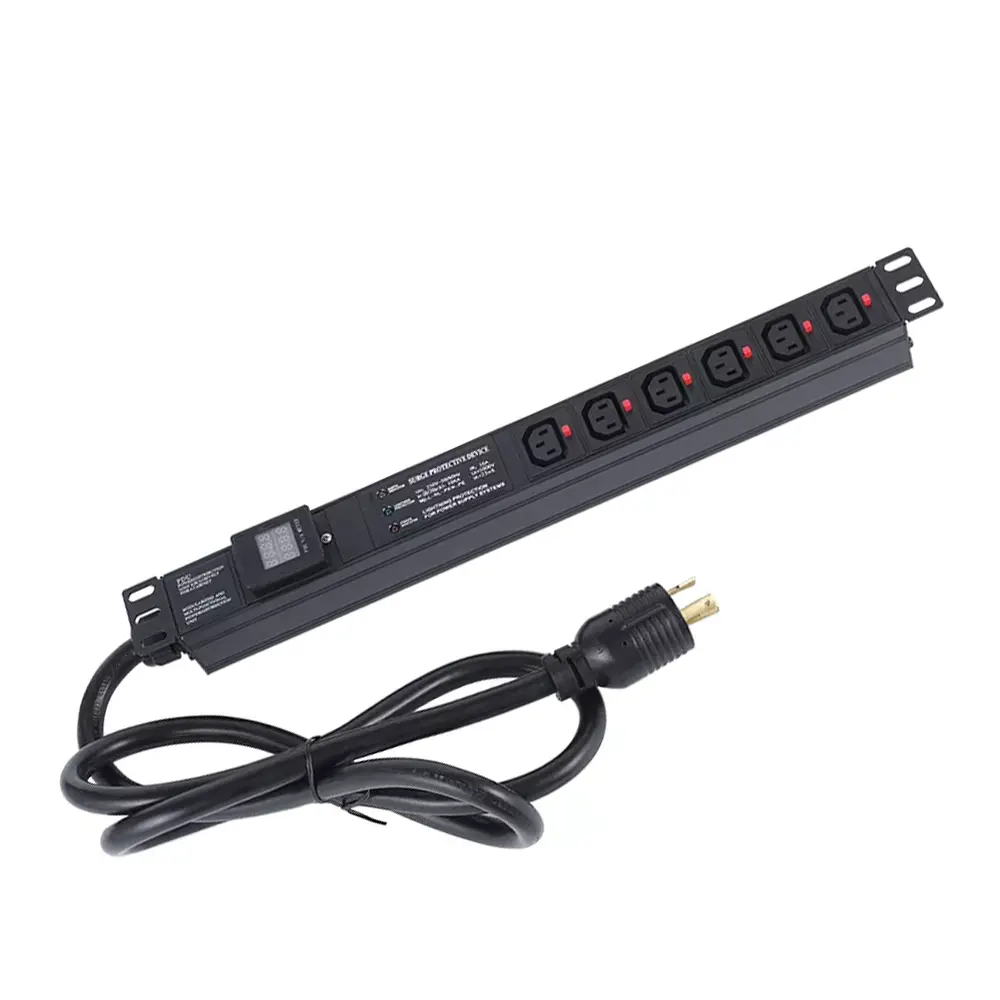
Inlet metering reads voltage, current, power and energy for the whole strip at ±1%. It answers how much the rack draws and whether the feed is close to its breaker. It cannot say which node draws the power or which phase carries the load.
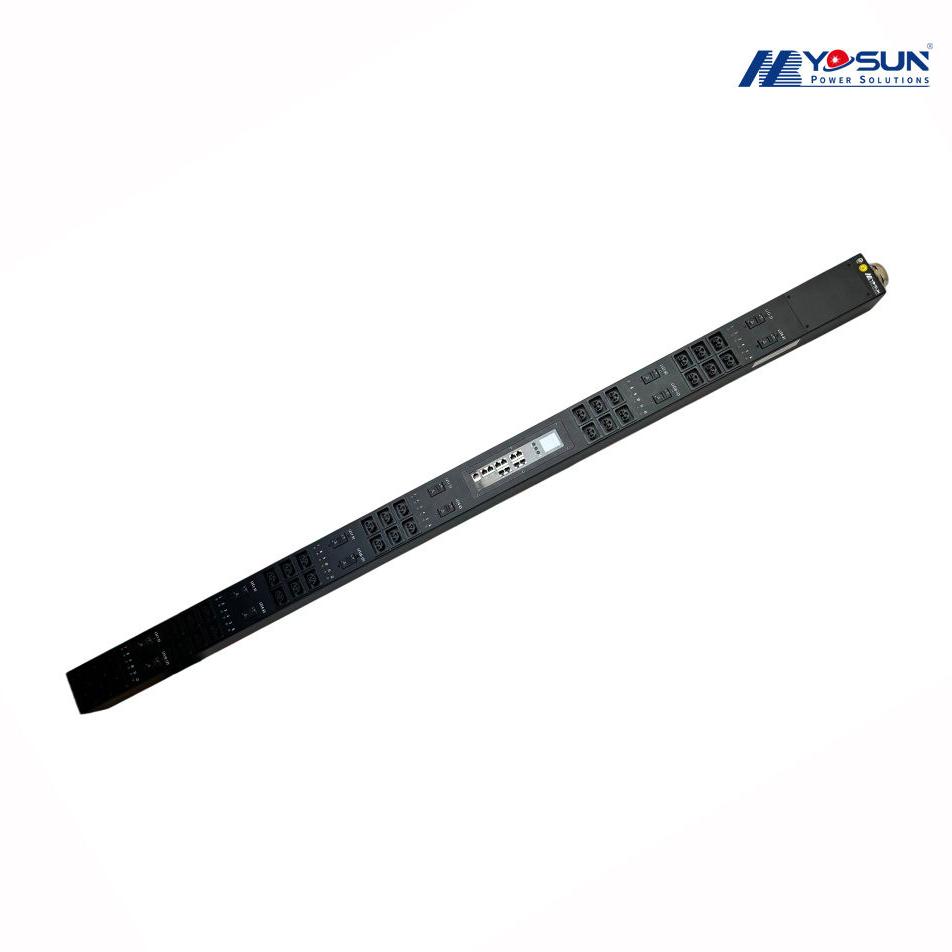
Branch monitoring puts a sensor on each circuit group, so the reading shows which C19 group is loaded and where spare capacity sits. That is the level that finds stranded capacity in a half filled row. It still reports a group of outlets under one number.

Outlet metering makes each C19 a measured point, so a failed node shows as a zero on one line instead of a fall in a total. Outlet switching lets the same panel reboot one node without touching its neighbour. A metered by outlet PDU carries the controller cost that this level needs.
Temperature, humidity, water, smoke and door sensors plug into the same controller and report through the same protocol. At the rear of a GPU cabinet the air temperature is the number that predicts a thermal shutdown. A monitored PDU with sensor ports turns the strip into the cabinet sensor hub.
| Level | Question it answers | Protocol | Where it fits |
| Metered Inlet PDU | How much does this rack draw? | SNMP, Modbus | Every AI rack |
| Branch Circuit Monitoring | Which circuit group is loaded? | SNMP, Modbus | Rows with mixed node types |
| Metered Outlet PDU | Which node draws what? | SNMP v3, API | Training and GPU racks |
| Environment Monitored PDU | Is the cabinet inside its envelope? | SNMP, dry contact | Enclosed and liquid cooled cabinets |
Tell us the question your operations team asks first.
We return the metering level, the protocol and the controller cost as one line.
AI data centers and high-performance computing clusters require reliable power redundancy to support large-scale training, inference, and continuous computing workloads. We provide customized PDU redundancy solutions based on rack power architecture, load capacity, backup power availability, and maintenance requirements. From dual A/B power feeds to ATS/STS transfer and maintenance bypass configurations, we help build power distribution systems that minimize downtime and maintain operational continuity.
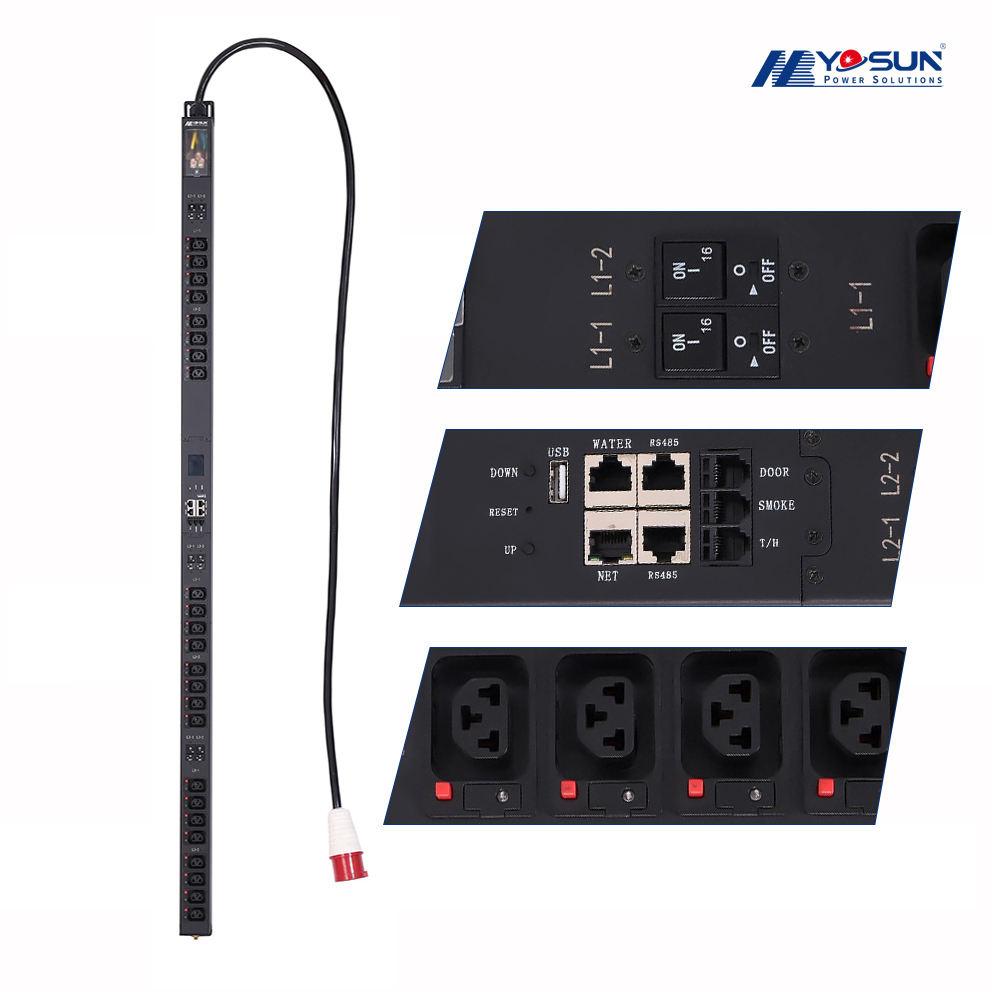
For high-density GPU and HPC racks, we can configure two matched PDUs connected to independent A and B power sources. Servers with dual power supplies receive power from both paths, allowing workloads to continue operating if one power source or distribution path fails, provided the remaining path has sufficient capacity.
We customize PDU ratings, outlet combinations, breaker configurations, and monitoring functions to match the server power architecture and redundancy requirements of each rack.
| Power Event | Redundancy Response | Monitoring Function |
| A-side power failure | B-side supplies continue powering connected servers | Input power loss and alarm |
| Individual breaker trip | Unaffected circuits remain operational | Breaker status and circuit alarm |
| PDU controller failure | Power delivery remains unaffected | Controller communication loss |

For equipment with a single power input, or applications requiring automatic source switching, ATS and STS provide additional power redundancy. Based on the load characteristics, power sources, and transfer requirements, we help select the appropriate transfer configuration.
Our ATS and STS product range covers 10A–32A applications, making these solutions suitable for network equipment, management racks, and other auxiliary loads. For high-power GPU and HPC racks operating at 63A or above, we can design the redundancy architecture around dual-feed PDUs or upstream transfer equipment according to the overall power system design.
| Solution | Available Rating | Typical Application | Redundancy Role |
| ATS PDU | 10A–32A | Network and management equipment | Automatic source transfer |
| STS PDU | 10A–32A | Single-input critical equipment | Fast electronic source transfer |
| Dual-feed PDU | 32A–100A | GPU and HPC racks | Independent A/B power distribution |
Redundancy also needs to account for equipment maintenance and component failures. We offer hot-swappable monitoring controllers that allow controller replacement without interrupting PDU power delivery, helping reduce maintenance downtime.
For UPS maintenance scenarios, we also provide maintenance bypass PDU configurations that allow the connected load to be transferred to an alternative power source while the UPS system is serviced. Available options include 32A three-phase 0U configurations, with customized arrangements based on project requirements.
These solutions can be incorporated into a broader redundancy architecture to support equipment servicing, simplify maintenance procedures, and improve power system availability.


Send the single line diagram you have now.
We mark the single points of failure and the transfer rating each one needs.
Send the spec sheet or data center scale
We return a matched configuration within 24 hours.
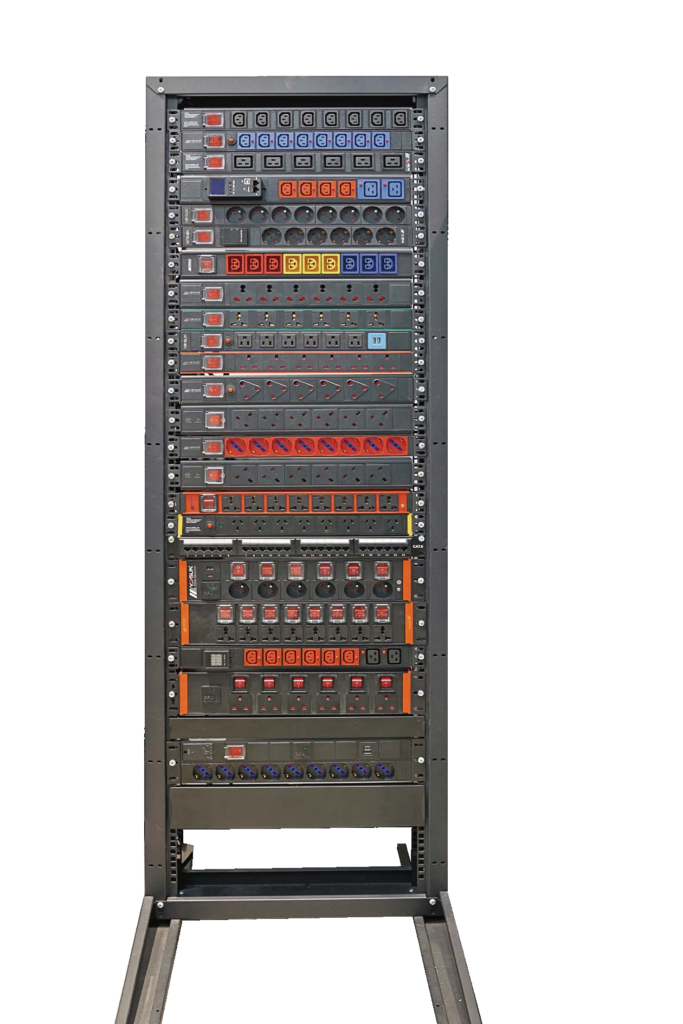
We provide customized C19 PDU solutions for GPU servers and AI training clusters, with flexible outlet combinations, locking options, and three-phase connection configurations. From C13/C19 outlet ratios to C39 socket integration, we tailor each PDU layout to your equipment requirements, power distribution needs, and rack installation space.
A GPU node takes C19 cords into its power supplies, so a panel of 42 C13 outlets serves the switches and leaves the nodes unplugged. We set the C13 and C19 ratio against the rack bill of materials, not against a standard layout. Mixed panels are built to that ratio on the same 0U length.
A 63A PDU feeds nodes that can restart the hall if a cord is knocked out. Locking C13 and C19 outlets hold the cord in place, and the C19 PDU panel marks each circuit so a technician pulls the right one. We fit locking outlets on the AI builds and offer them on any panel.
Three single phase cords per node cost three C19 outlets and three breaker poles. A C39 socket carries 3P+N+E in one housing with an independent breaker, and it accepts C13, C19, C20 and C21 plugs from the same panel. That is the layout we use when the node count is high and the panel length is fixed.


Send a photo of the server inlets and the panel you use now.
We return the outlet mix, the panel length and the lock type in one table.
We provide customized PDU solutions for demanding AI and data center environments, including liquid-cooled GPU halls, industrial facilities, and edge computing sites. From thermal-resistant materials and protective enclosures to integrated sensors, phase identification, and OEM color options, we tailor each PDU to meet specific installation conditions and operational requirements.
An exhaust aisle behind a GPU row runs hotter than the room, and a strip mounted there sees that air for its whole life. Our housing is aluminium alloy for heat dissipation, and the outlet modules use PC/ABS with a thermal deformation point above 120°C and a UL94-V0 flame rating. The data center PDU you compare against should publish those two figures, because a strip is a passive part with no fan.
A factory floor or outdoor AI cabinet needs an enclosure rating, not a better filter. Our range covers IP20 for a closed IT room and IP44, IP54 and NEMA 4X builds for washdown and outdoor positions. The rating applies to the enclosure we ship, and the inlet and door seals are part of that build.

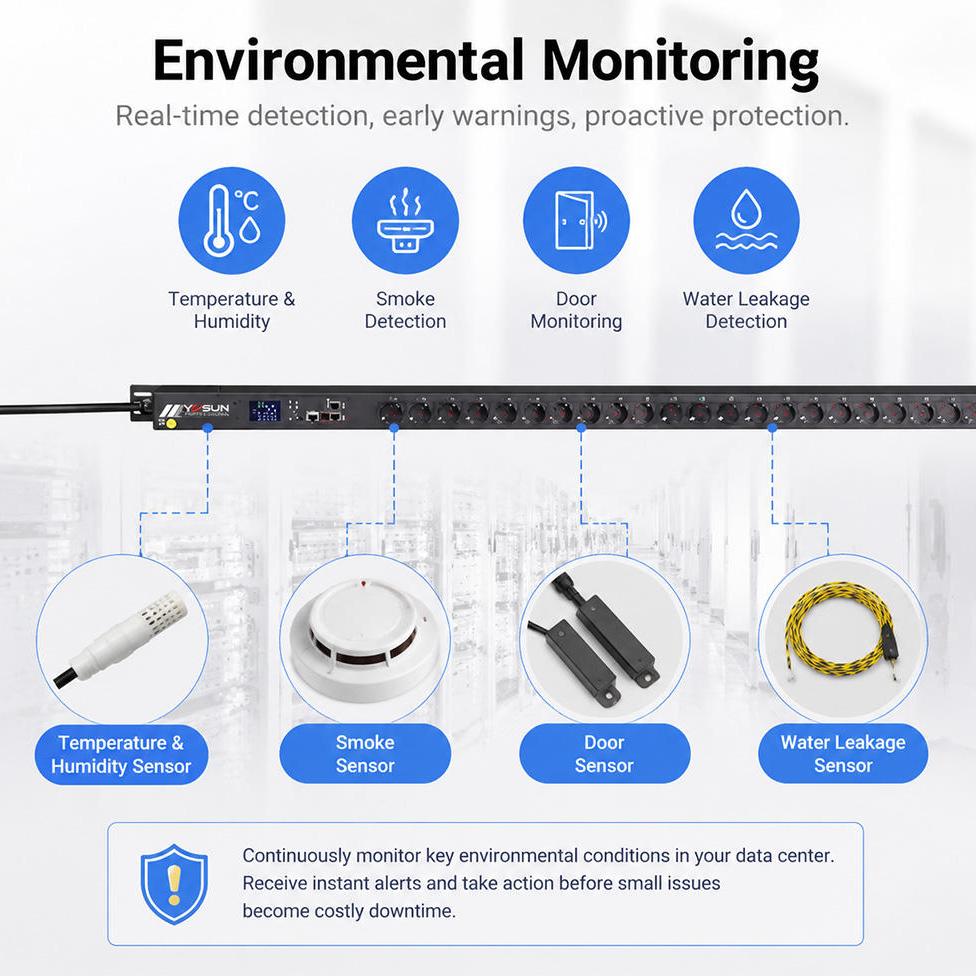
A liquid cooled cabinet adds a leak path that a temperature sensor cannot see. Water immersion, smoke, door contact and gas sensors connect to the same port as the temperature probe. We list the supported sensor set per controller model, because the port count differs between builds.
A three phase panel with three identical rows invites a wrong pull. Phase colour coding and clear circuit marking put the phase where the technician reads it. Colour is also an OEM item, so a branded row carries your palette on the housing.
Tell us the air temperature behind the rack and the room class.
We return the housing, the enclosure rating and the sensor set for that position.
core intelligent and three phase models
EU and EEA builds
all models
on order, by market
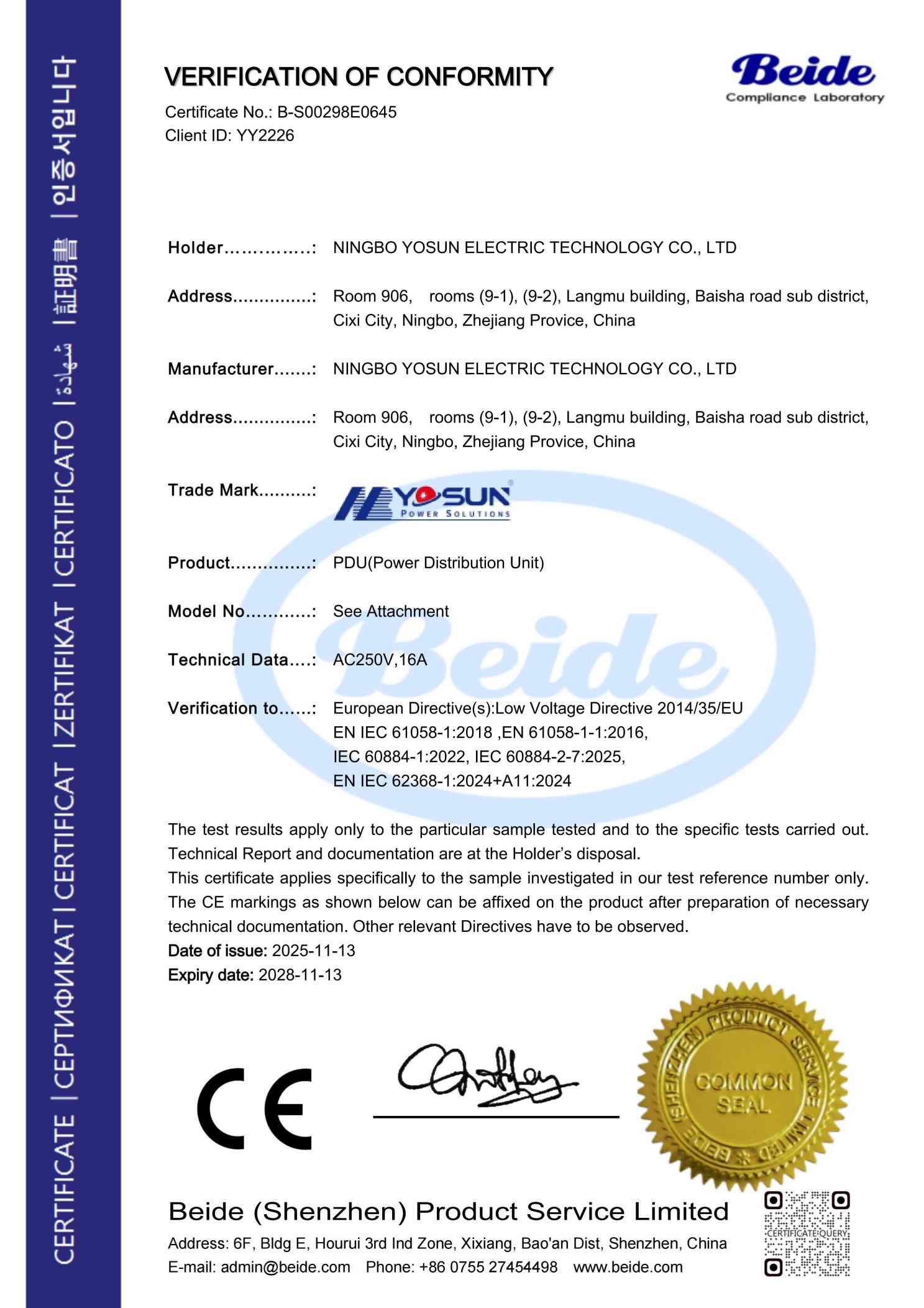
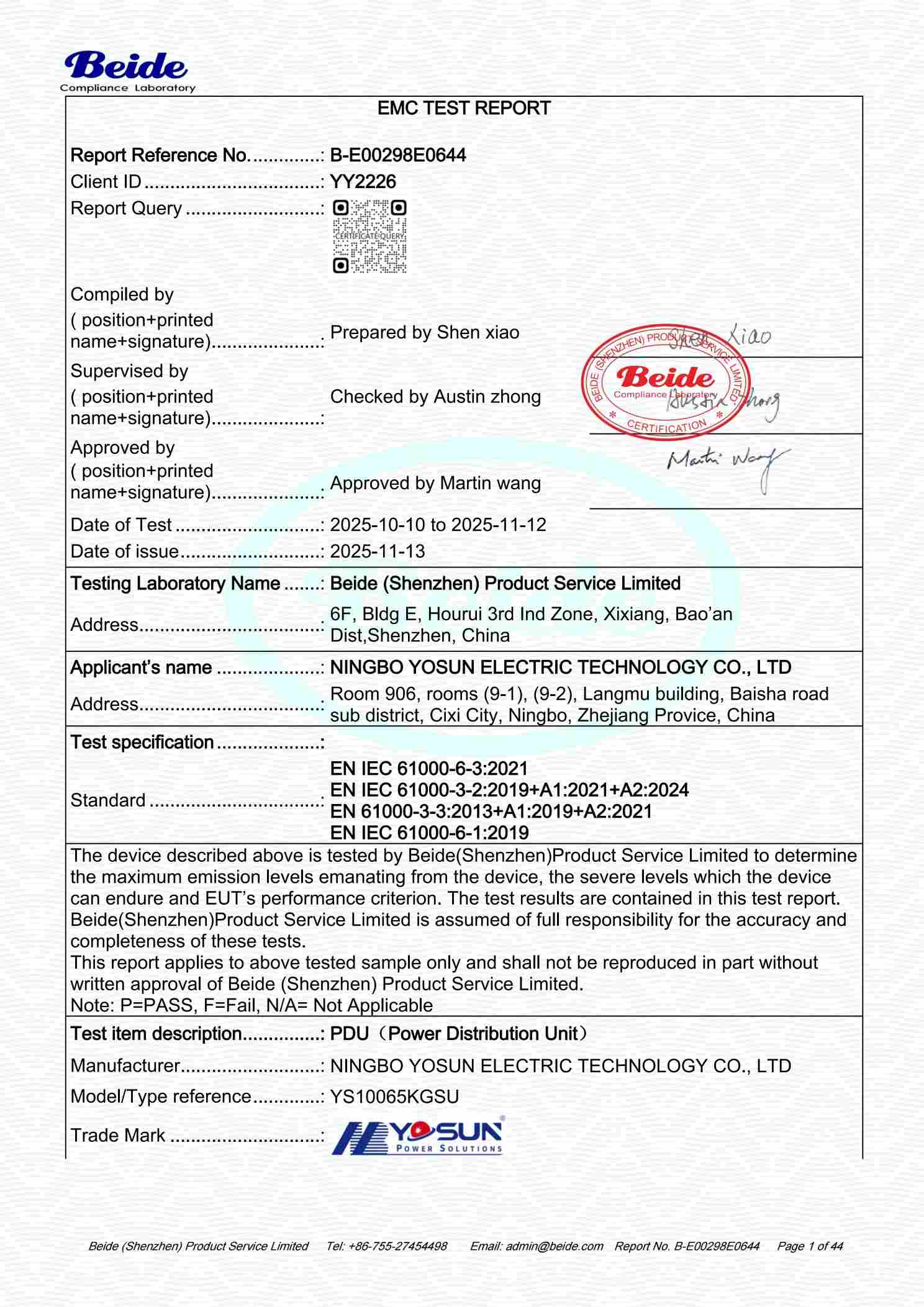
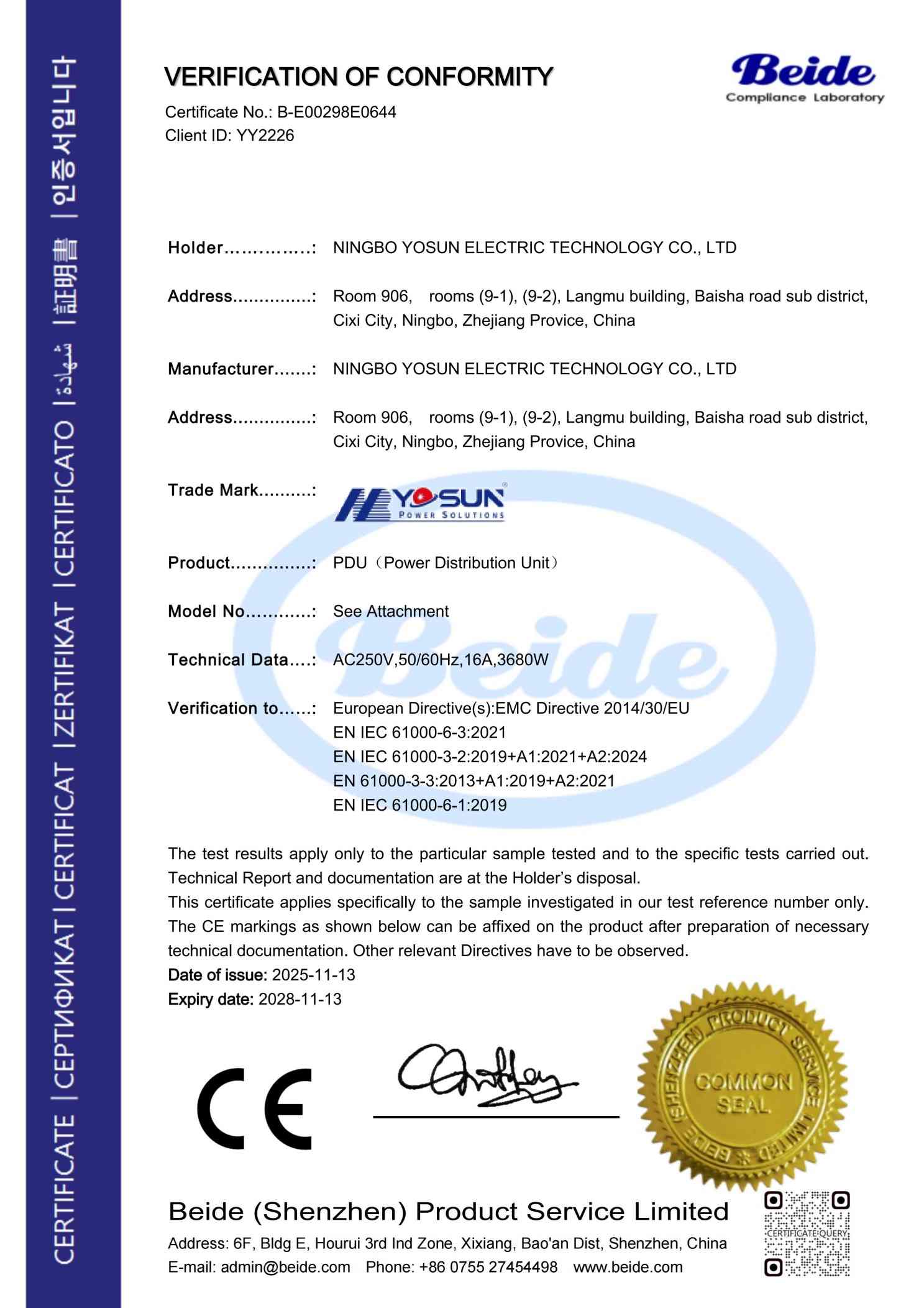
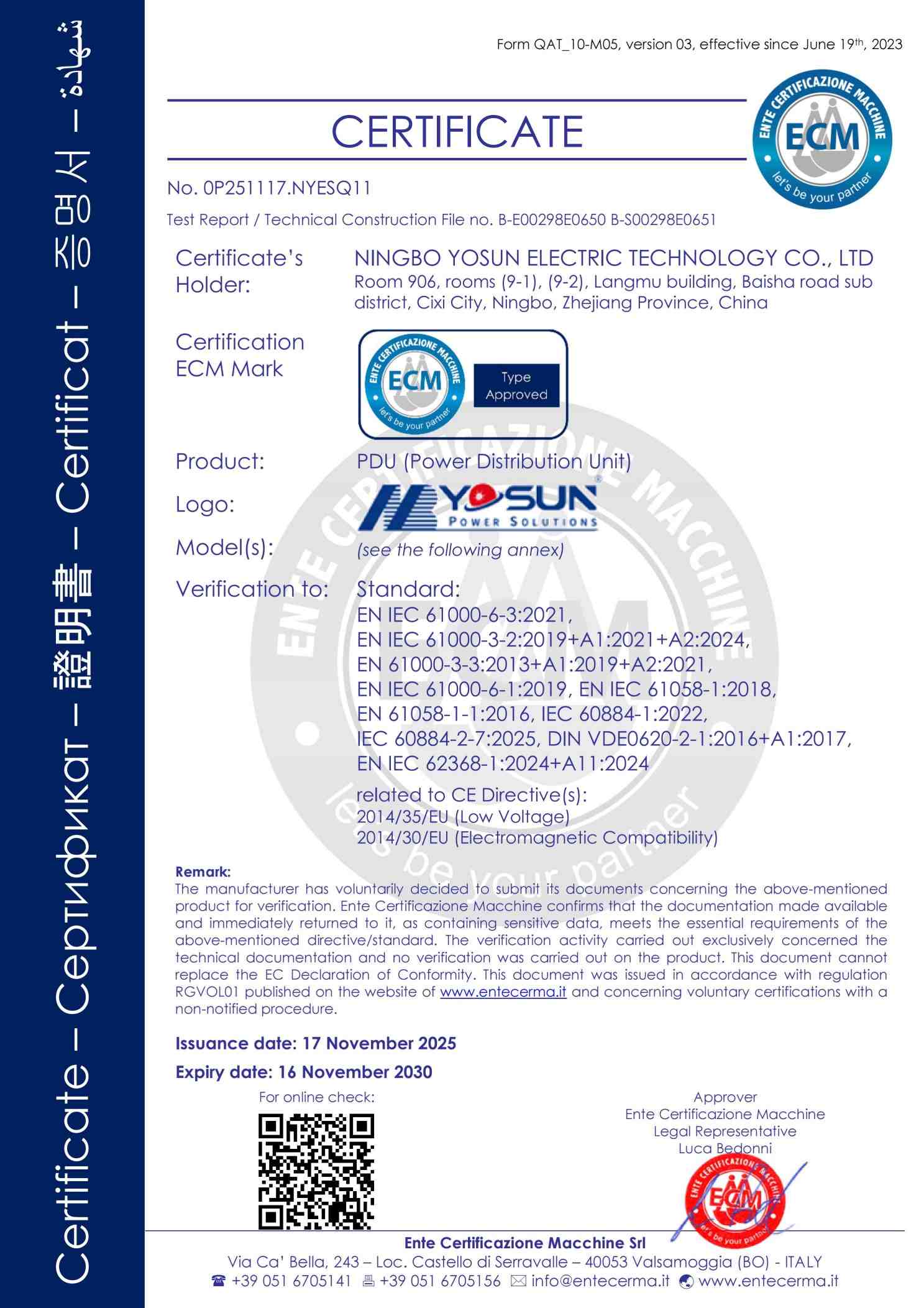
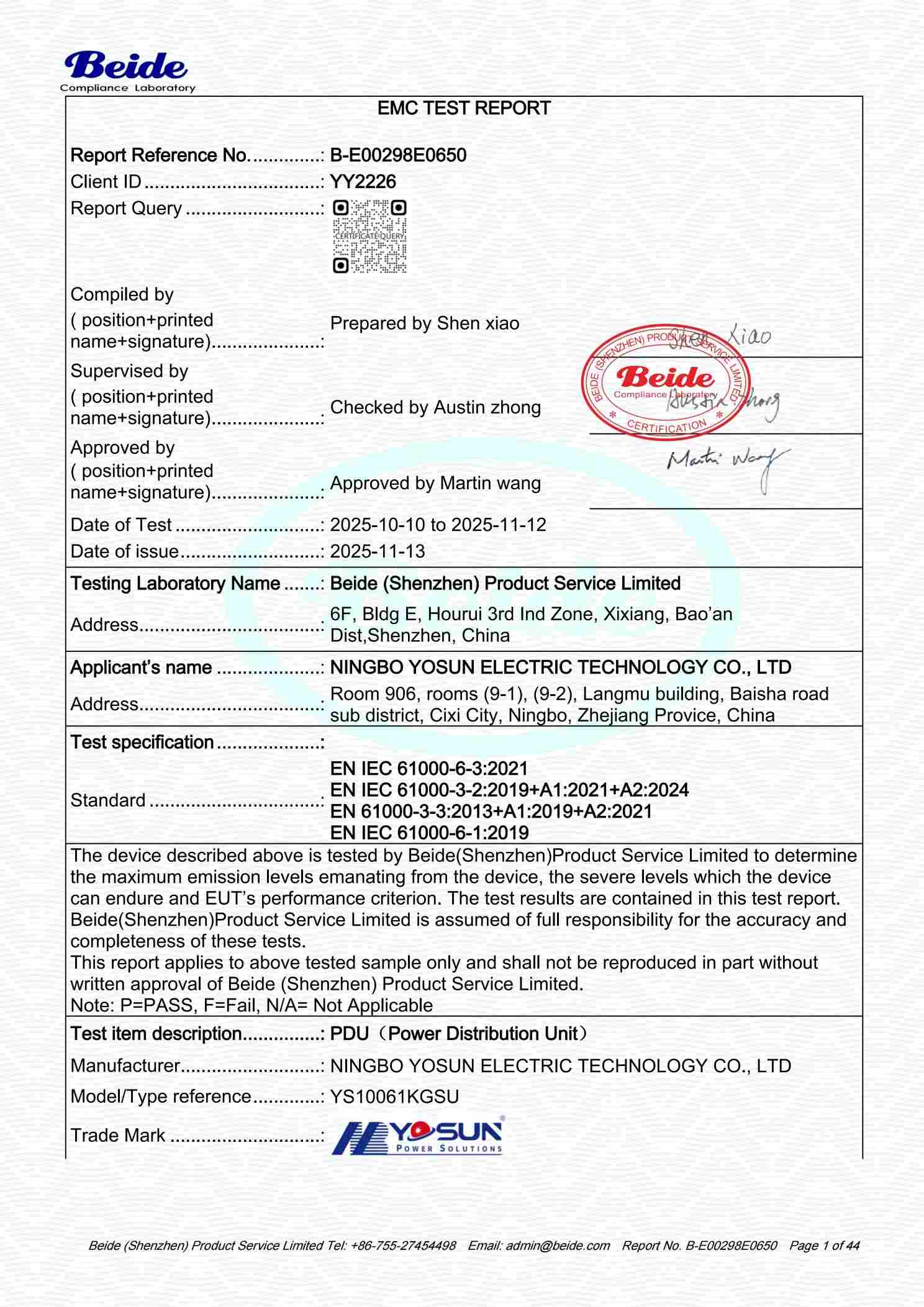
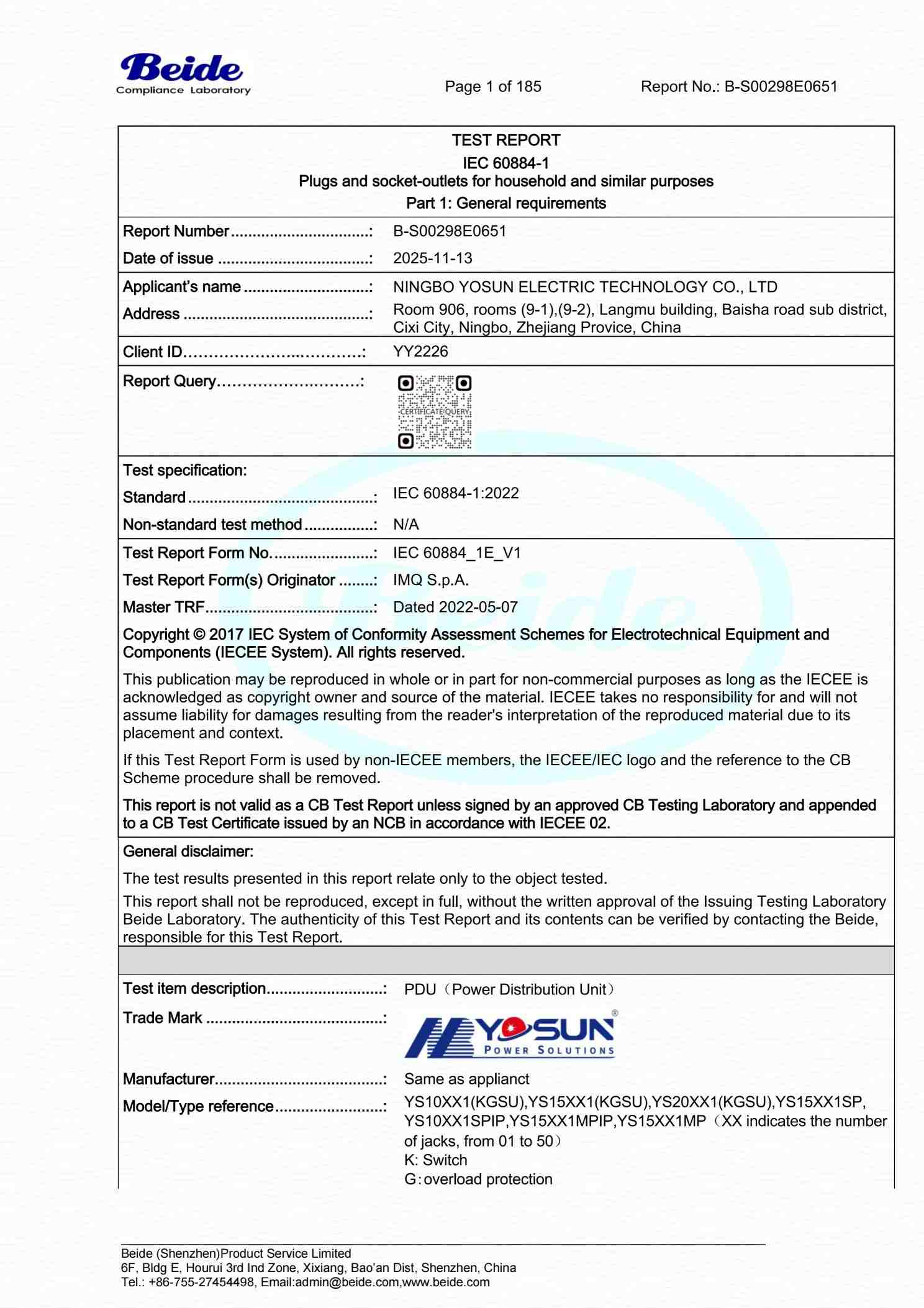
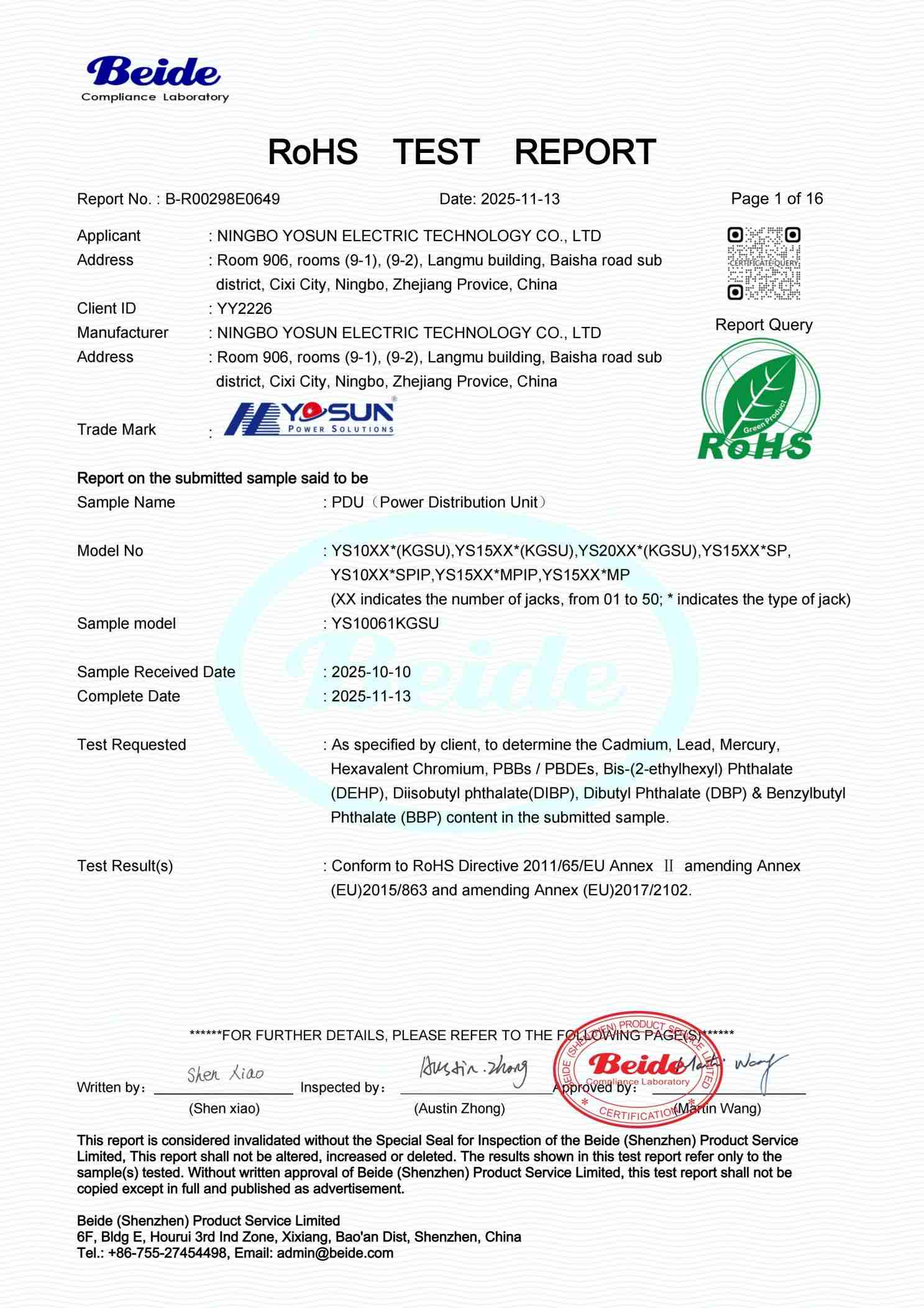
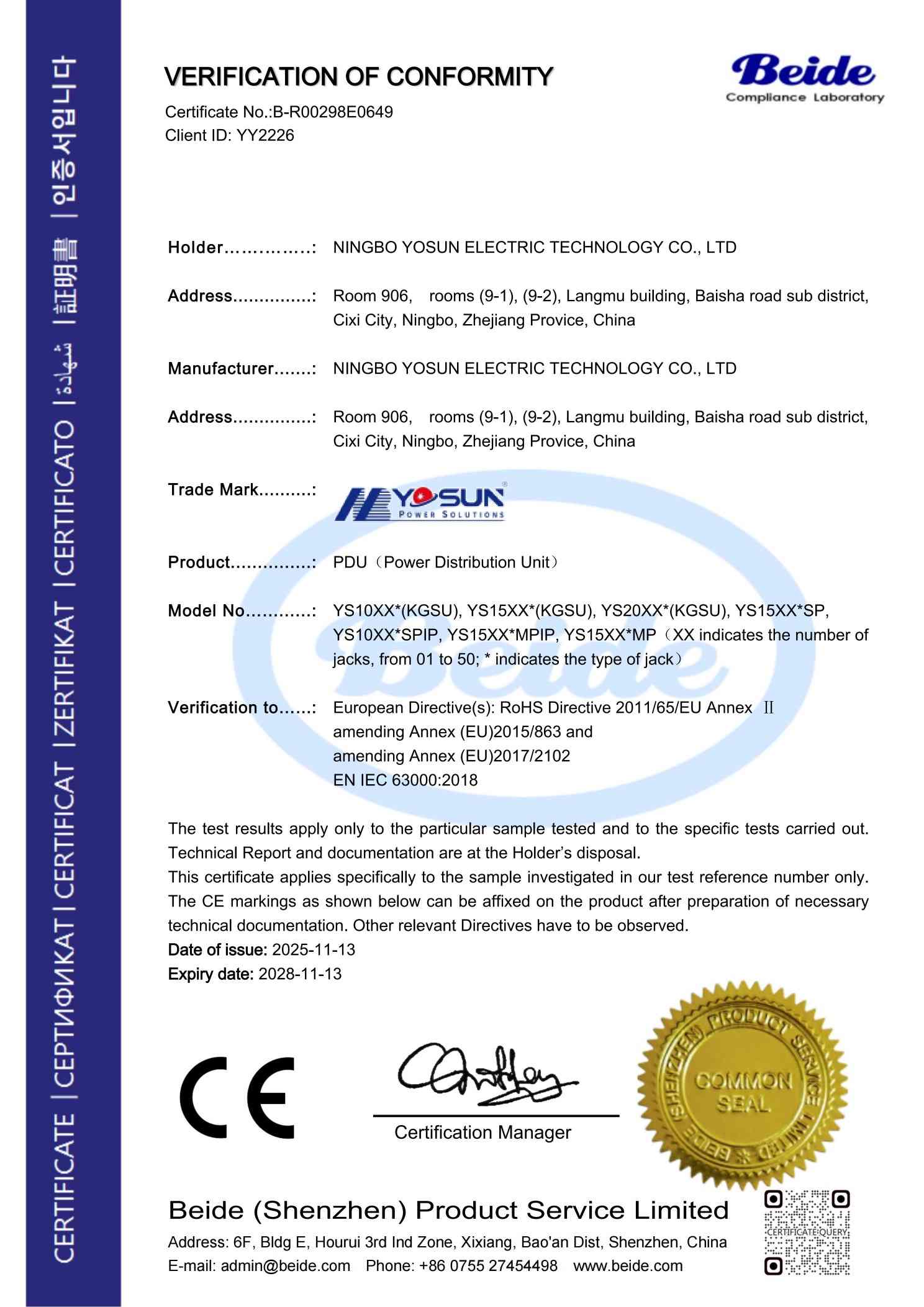
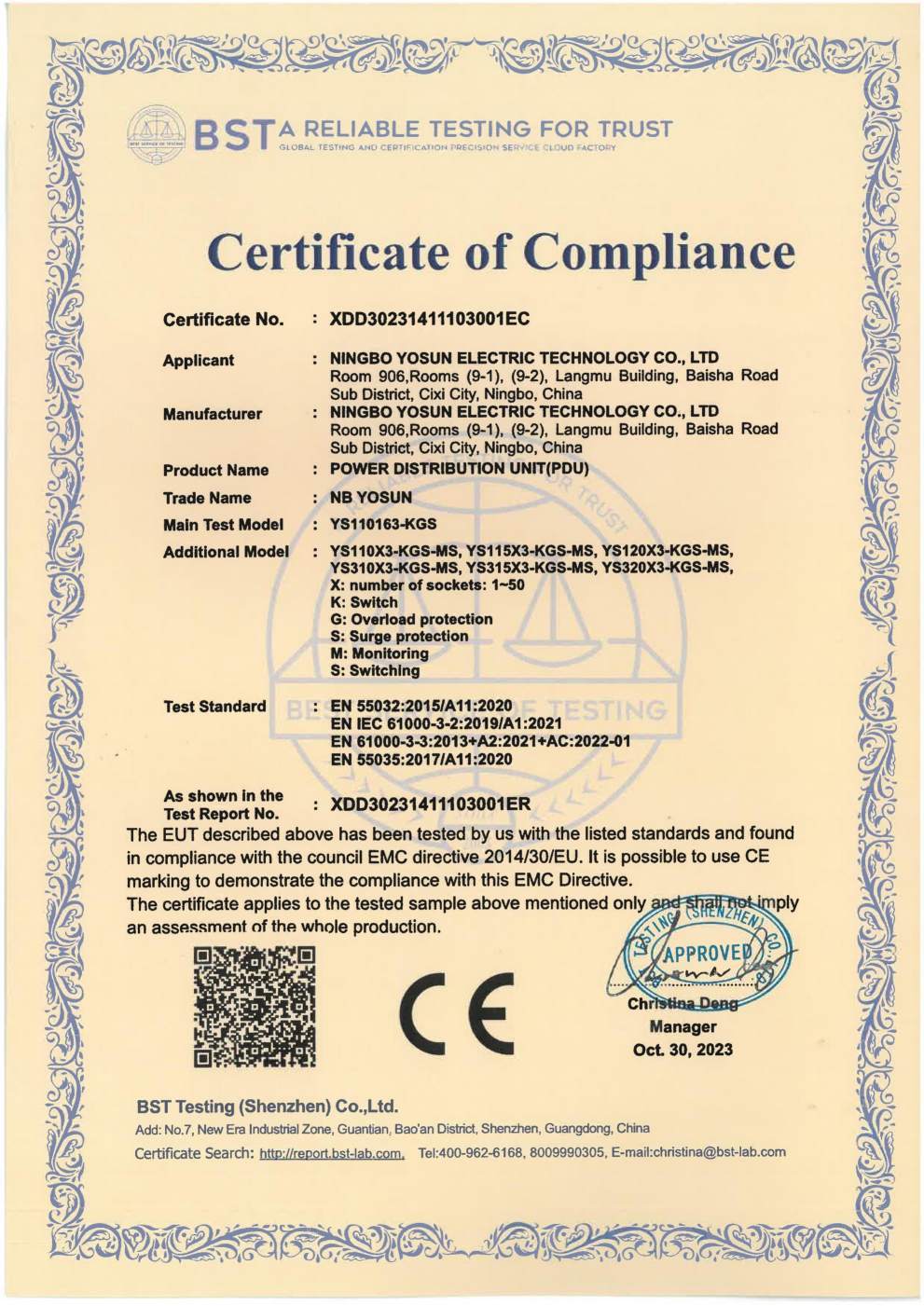
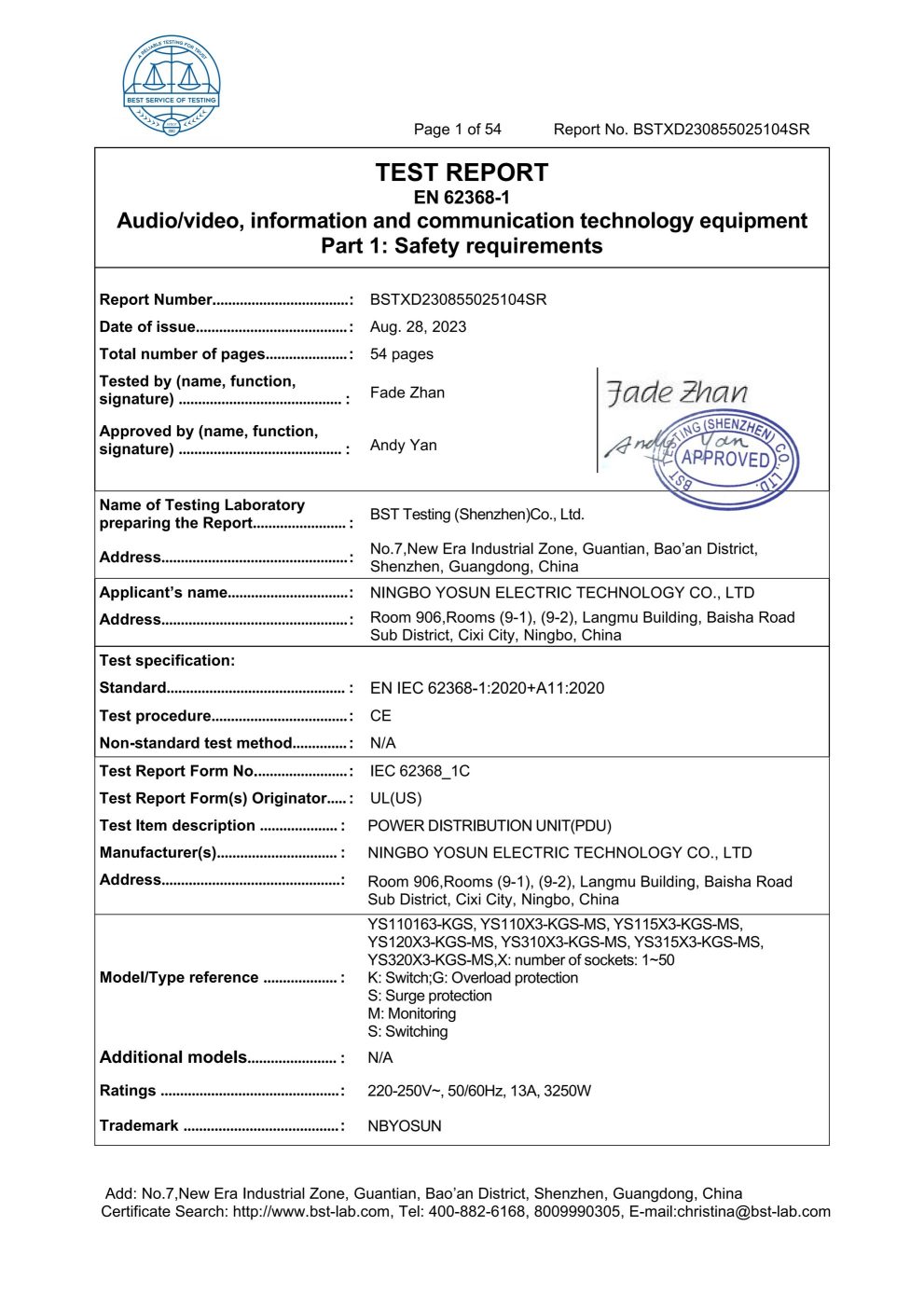
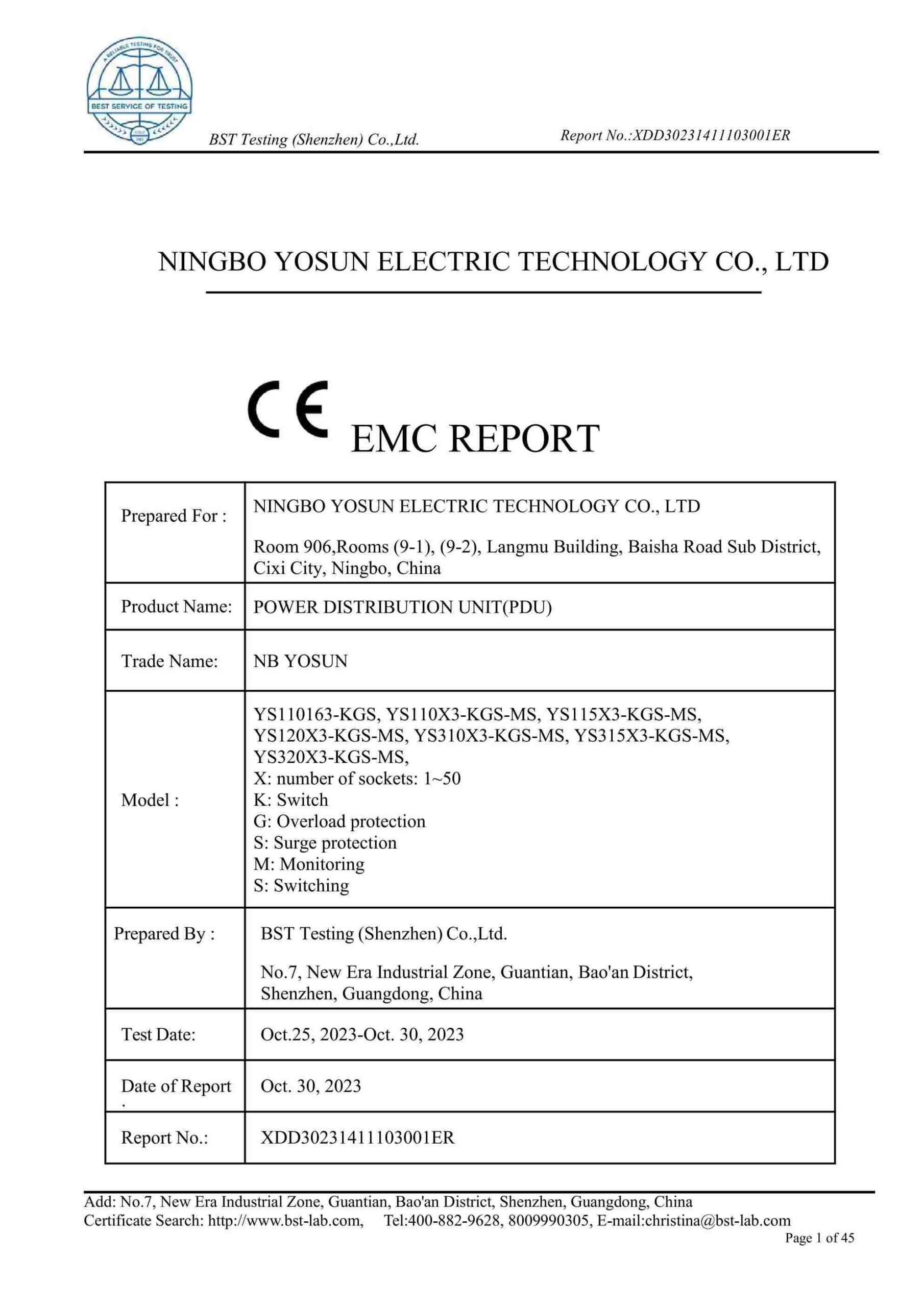
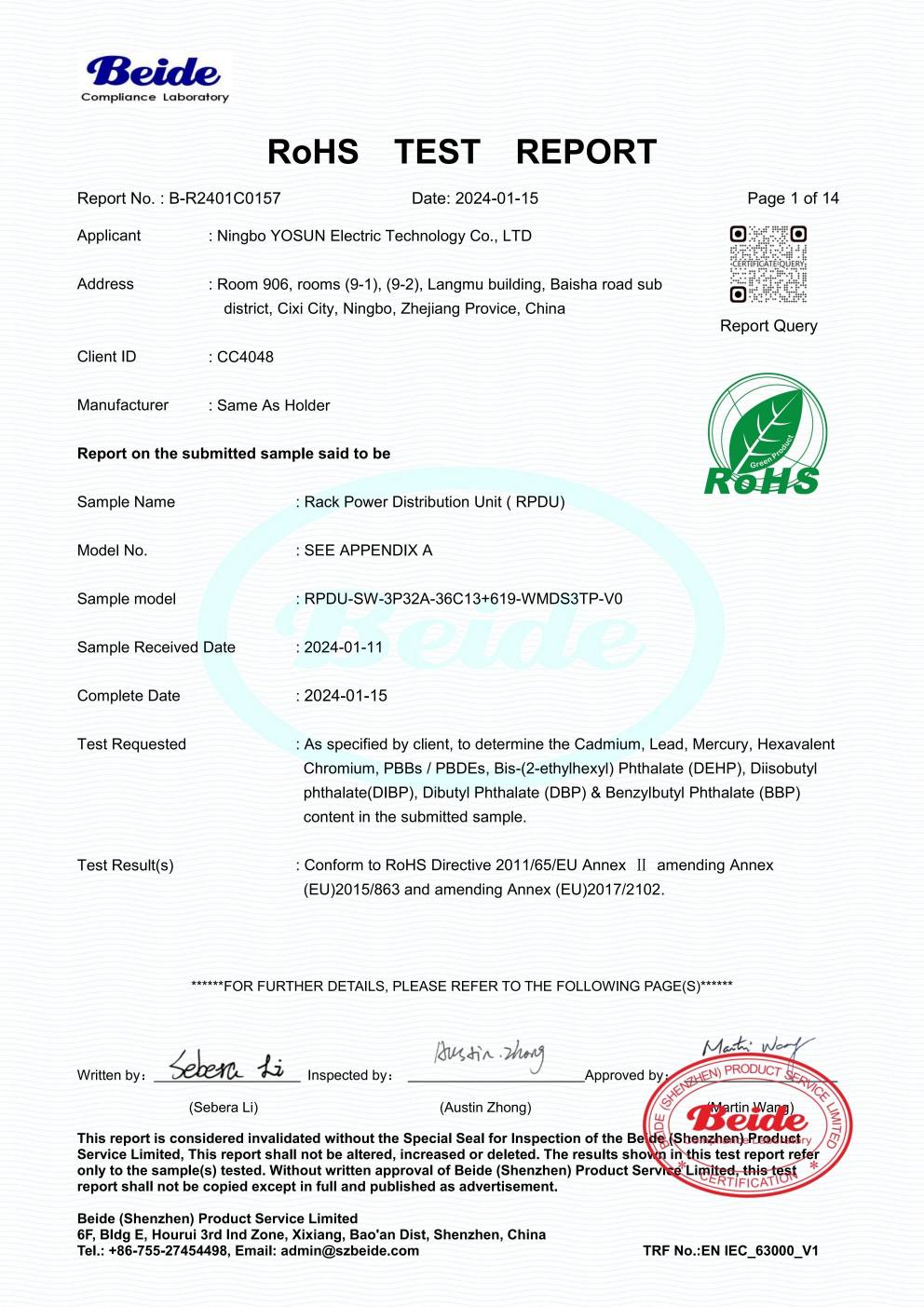
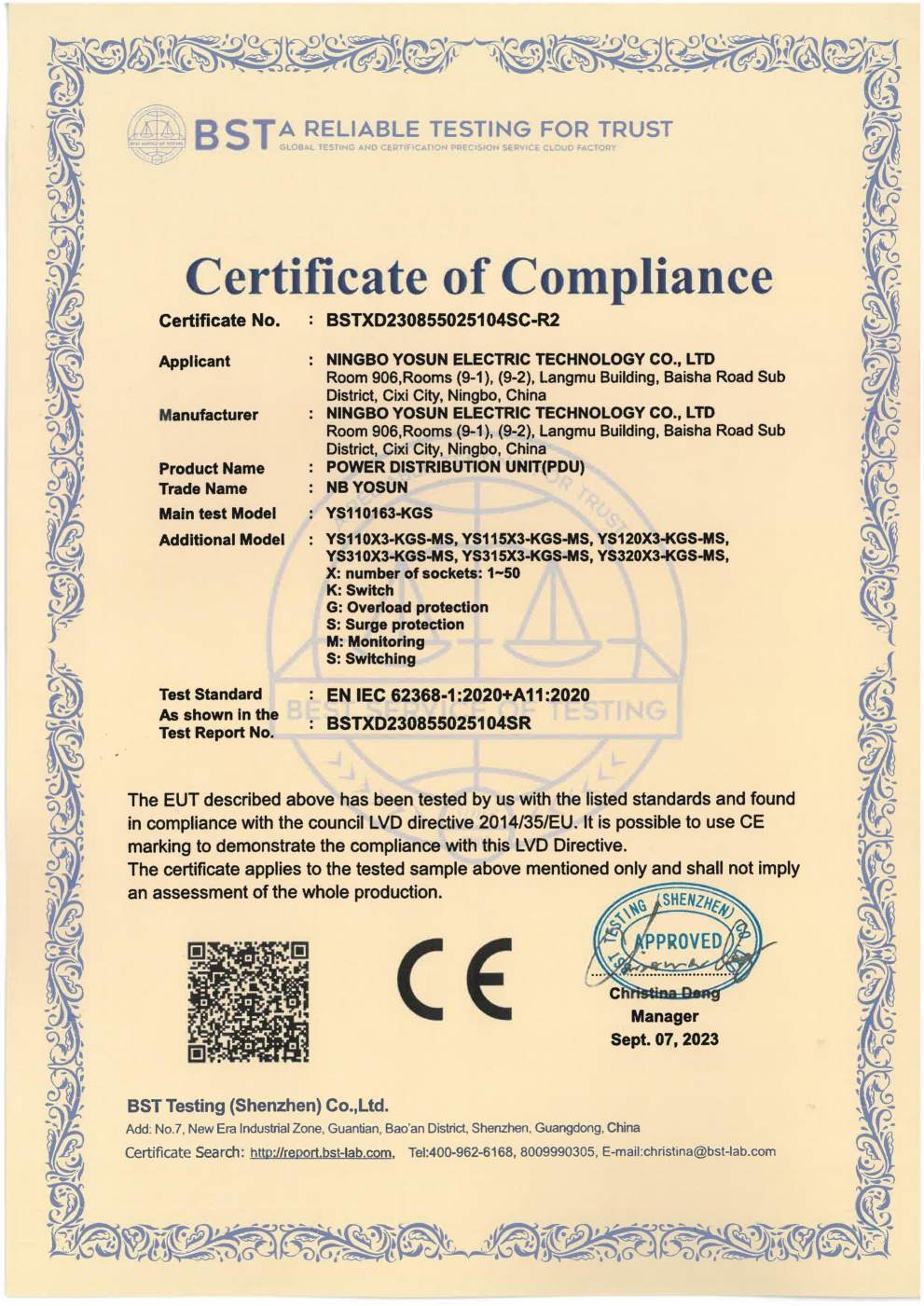
Tell us the destination market and the model you are considering.
We return the certificate, the plug and the voltage in a single line.
We are a manufacturer, not a trading desk. Tooling, injection moulding, assembly and test run in one plant.
YOSUN has built power distribution products for more than 20 years. Six assembly lines run alongside in-house injection moulding and laser processing. Housing colour and outlet blocks are made on site, which shortens a custom build.
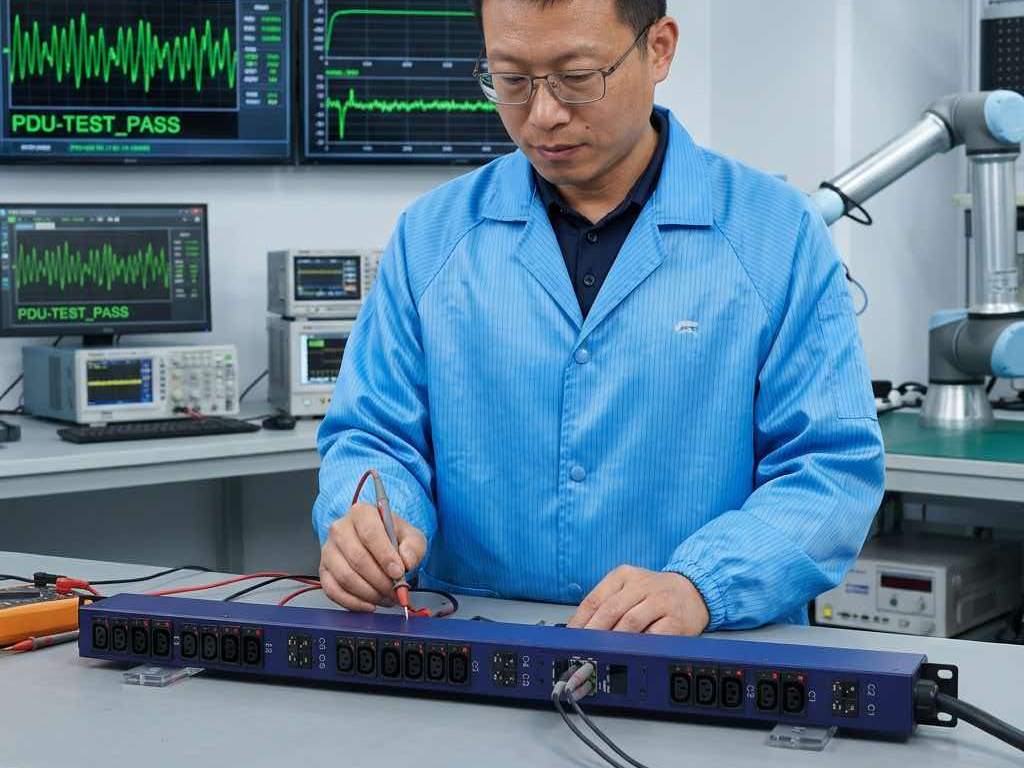
A ten-person R&D team converts a rack drawing into a buildable configuration. Our own lab runs incoming and final test on high-accuracy instruments. The copper busbar is welded in one piece without solder, which keeps joints cool under load.

Every unit goes through aging, high-current load and metering calibration before shipment. Test data travels with the shipment documents. The connector block is isolated 270° from the aluminium housing, so a loose strand cannot reach the chassis.
Products ship to the United States, Europe, Russia, the Middle East, India, South East Asia, Australia and Africa. Private-label programmes cover logo, housing colour, packaging and manuals. We also supply telecom PDU projects for domestic carrier infrastructure, where reliability requirements are strict.
Custom starts from your rack drawing and your destination market, not from our catalog page. We run the project from drawing to pilot container, and certification follows each confirmed configuration — the sequence is fixed, the lead time is not.
Colour, length, logo, panel marking, packaging
0U height, outlet orientation, bracket, 360° rotatable panel
Phase, current, inlet plug, C13 and C19 mix, breaker type
Metering level, protocol set, sensor ports, web UI branding

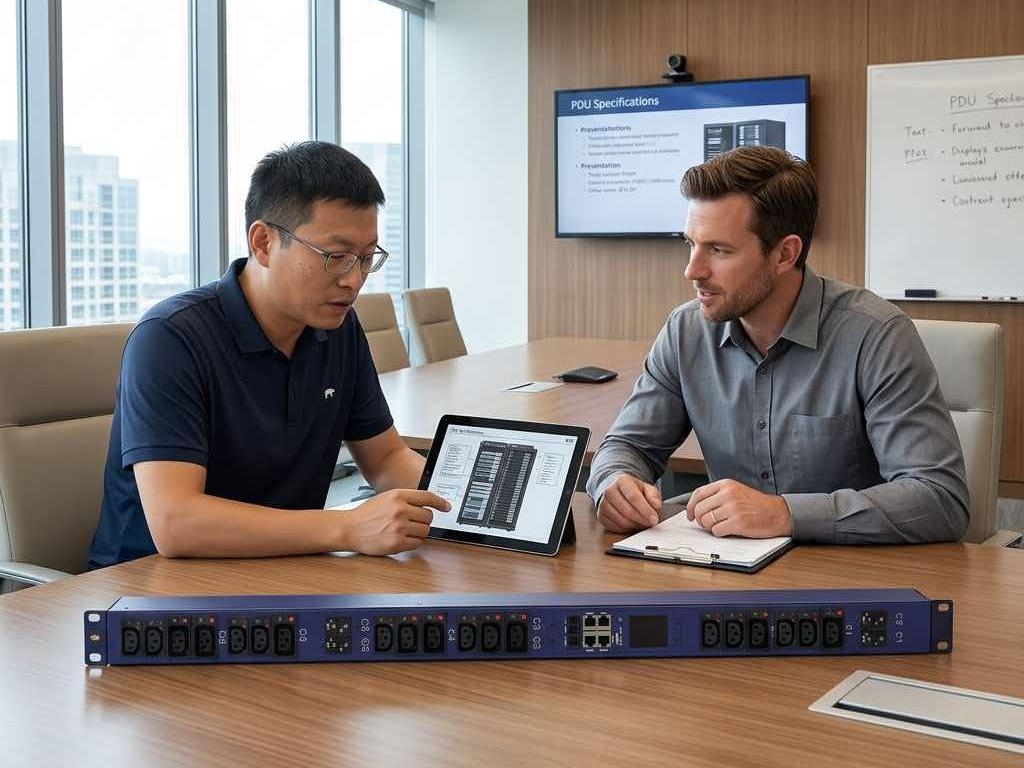
You send the rack spec, drawing or competitor part number.
→ We return a clarification list.
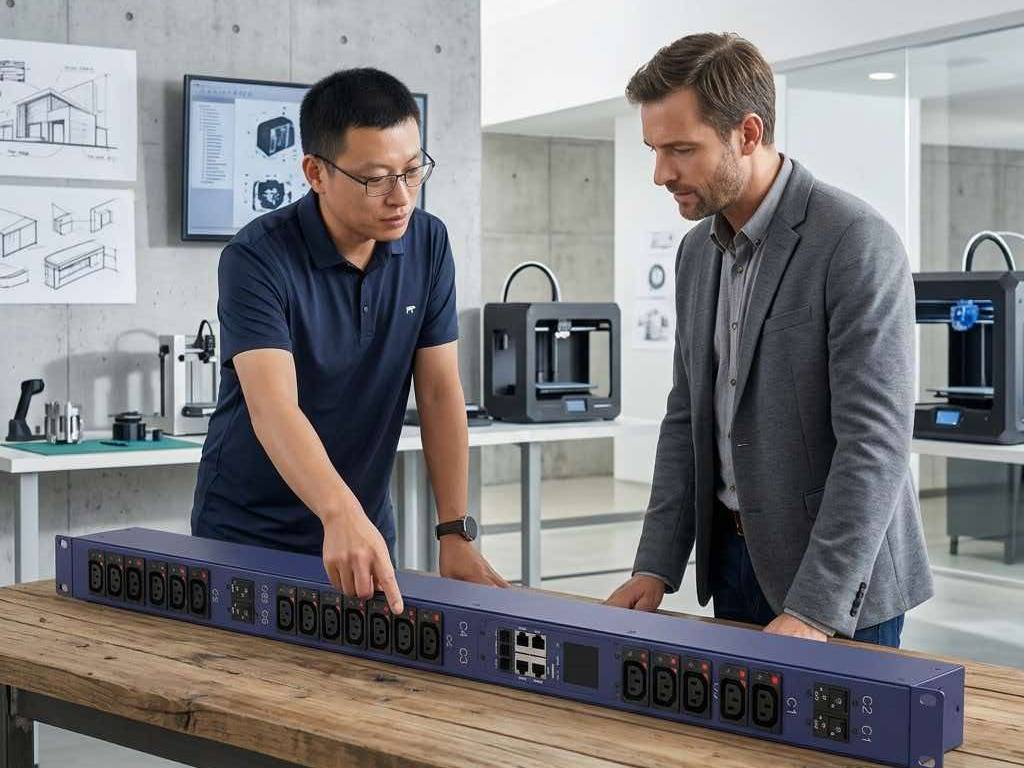
We check phase, load, input, outlets and protection.
→ 2D drawing and configuration sheet.
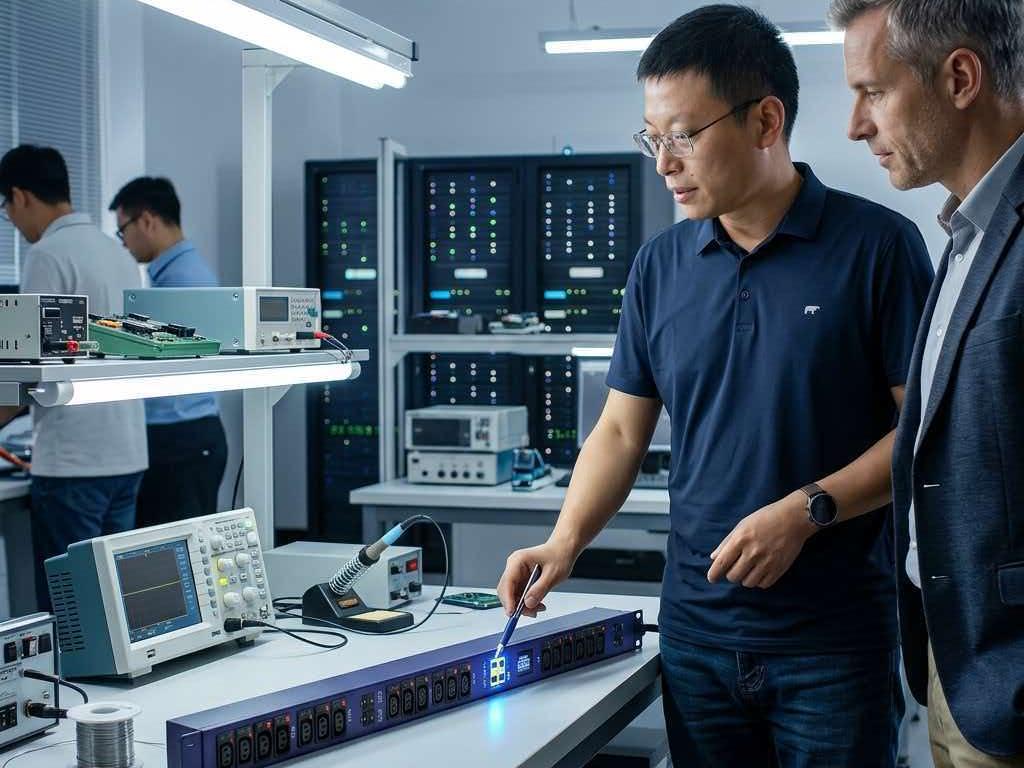
We build one or two units on the confirmed configuration.
→ Sample with test data, a few weeks.
You approve the sample; we run the route for your market.
→ Certificate and DoC.

Bulk build with first-article inspection.
→ 30–45 days, with the document pack.
Send target market, phase and load, input, outlets, monitoring level.
A custom mining PDU build is quoted within 24 hours, protection options included.
A 50kW rack at 400V three phase draws 72A per phase, so a 100A feed is the starting point. A 300kW rack needs two or more 250A feeds. Send the rack kW and the market, and we return the three phase PDU rating.
Only below 6kW per strip, which is a network rack rather than a GPU rack. A single phase 32A feed carries 25.6A at 230V, which is 5.9kW. GPU nodes start from three phase 32A, set by the high density PDU outlet map.
A C13 outlet is rated 10A and a C19 outlet 16A, so a supply above 10A needs C19. GPU nodes also arrive with C20 inlets, which mate with C19 only. We set the ratio from your bill of materials on each rack mount PDU.
Inlet metering answers the rack total and the breaker margin, which is enough for a row running one node type. Outlet metering answers which node draws what, which is what a GPU refresh needs. We quote both on one metered PDU panel.
Fit a hydraulic magnetic breaker, which responds to current rather than to heat. Set a power sequencing delay per outlet group so the nodes start in order. Send the PSU count and the curve you use, and we check the switched PDU against them.
It fits when the strip depth and the cord exit side are checked against the door swing before the order. We publish both on the drawing for the cabinet maker. Where the gap is tight, a 1U unit plus a vertical PDU remote feed works.
SNMP v3 suits a DCIM that polls traps, and Modbus RTU on RS-485 suits a building management system. An API suits billing and automation, and MQTT suits an IoT broker.
Yes, on four layers: housing, mechanical, electrical and controller. The electrical layer carries a retest, and we mark that on the scope before the drawing. Send the rack drawing and we return the layer scope with the PDU certification effect marked.
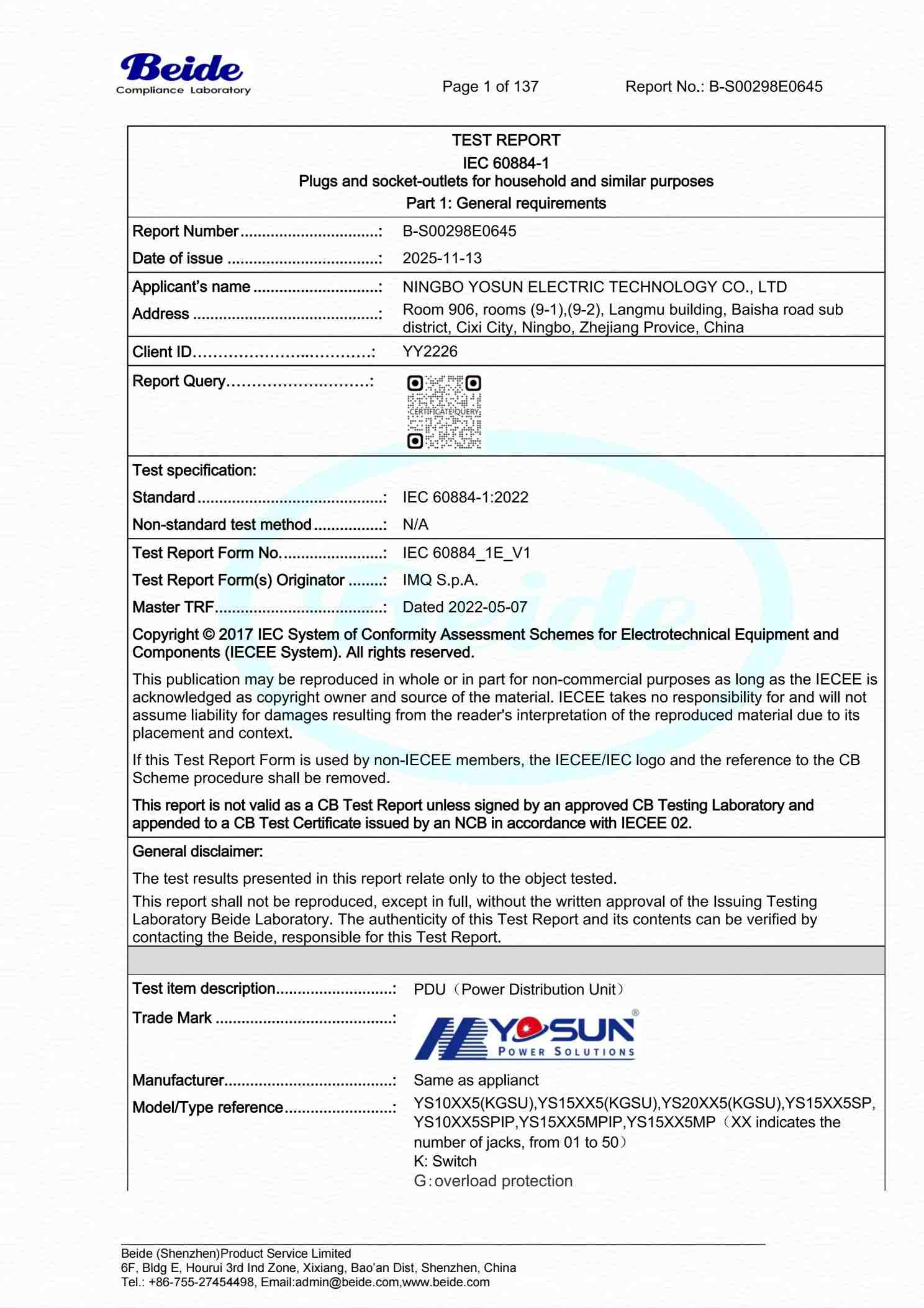
Core intelligent and three phase models carry UL 62368-1 and CE LVD plus EMC, with RoHS on all models. BIS, PSE, INMETRO and SASO are supported on order, with the certificate number and test report.
Samples take a few weeks and bulk runs take 30 to 45 days, set by certification and customization. MOQ starts small on stock specifications. Warranty runs 24 to 36 months on the rack PDU you order.
A Professional And Leading Manufacturer
For OEM
& ODM Power Distribution Unit (PDU)
You Can Trust
CONTACT
Ningbo YOSUN Electric Technology Co., LTD
Leading Professional Manufacturer in PDU Power Solutions
Contact Info.
Leave Your Message