



© Copyright – 2010-2023 : All Rights Reserved. Sitemap
Power Distribution Unit PDU, rack mount PDU, PDU data center, Smart PDu, intelligent PDU
Power Distribution Unit PDU, rack mount PDU, PDU data center, Smart PDu, intelligent PDU


+86 15867381241
Colocation PDU
We are a rack PDU manufacturer. We build metered by outlet and monitored units that give every colocation tenant its own billable power record, and we configure the input, the outlets and the protocols to your floor rather than to a stock list.

Unlike enterprise data centers, colocation facilities must simultaneously support many independent customers with different density profiles, redundancy requirements, and growth timelines. The electrical infrastructure must be flexible enough to allocate power to each tenant while maintaining reliability across the entire facility.

We build four intelligence tiers on one chassis platform, so you standardize the hardware once and upgrade metering row by row as tenants sign.
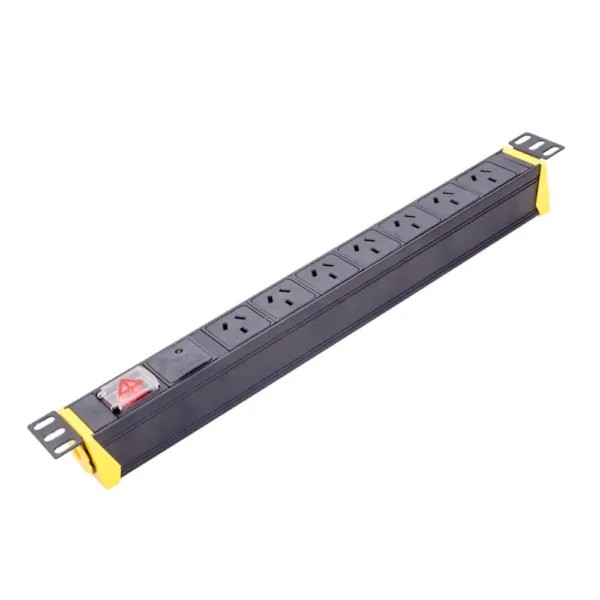
Our basic units carry the loads you never bill: fans, door access and lighting. Your upstream breaker provides the circuit protection, and the unit adds nothing a tenant would have to be told about. This is the tier we put on house power rows.
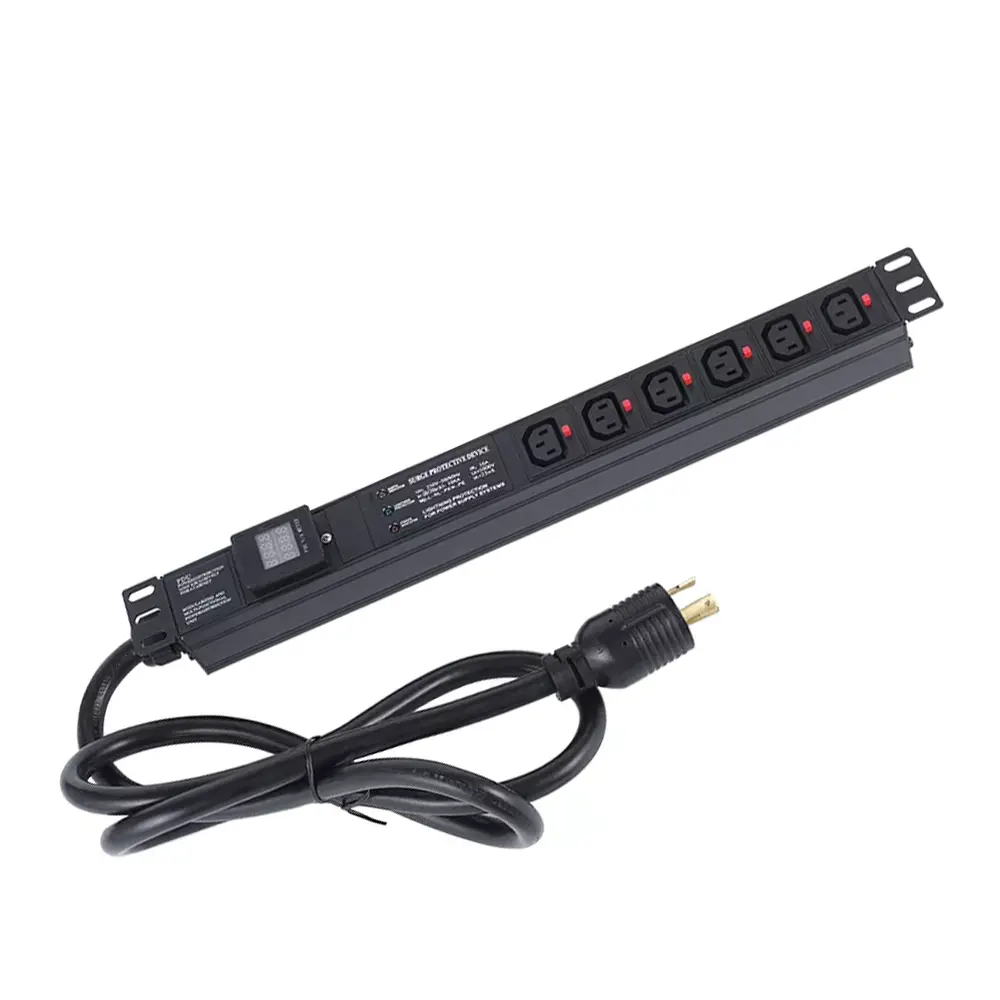
We meter the feed on these units, so voltage, current and power reconcile the rack against your upstream panel. It answers what the row drew, not who drew it. We use it where the circuit, not the outlet, is the billing boundary.

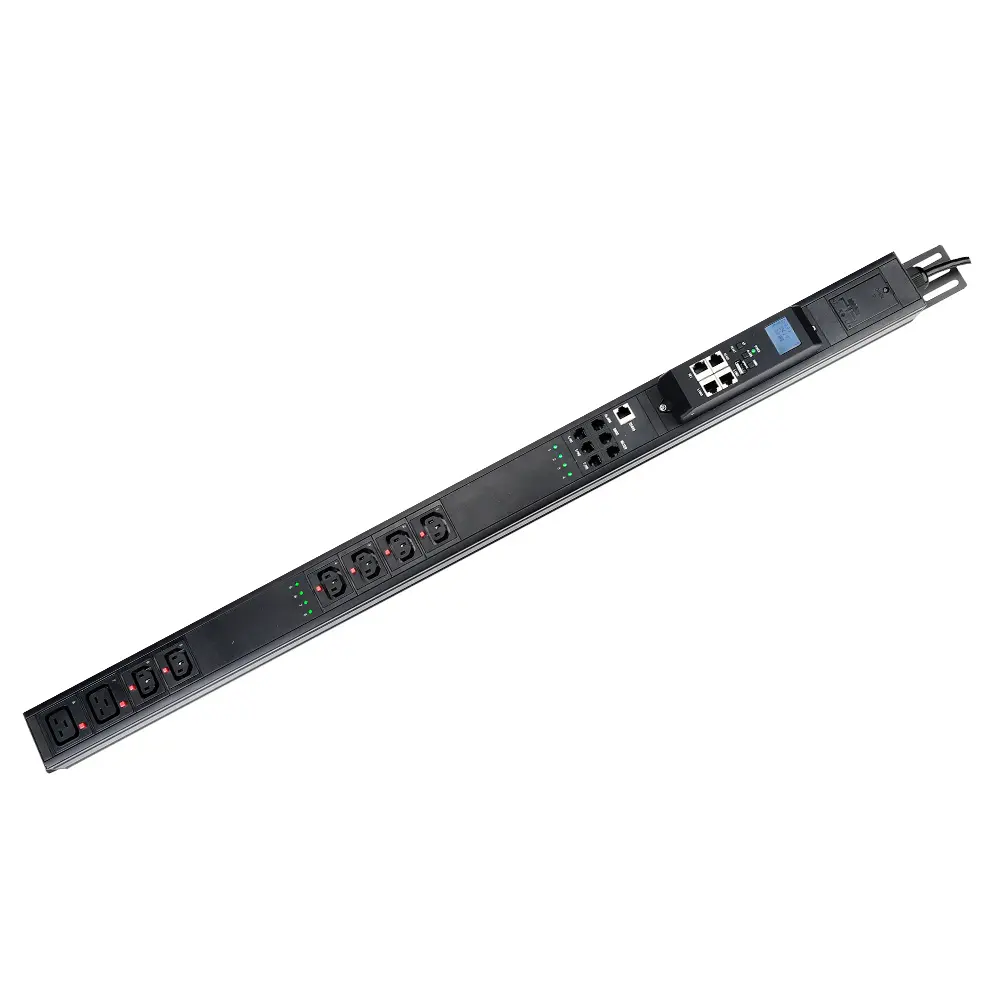
Our metered outlet PDU tier reads kWh at each C13 and C19 position at ±1% accuracy, which is the resolution a chargeback invoice needs. Each tenant group keeps its own calibrated record in firmware, so one chassis returns separate bills. This is the tier we quote when the invoice goes to tenants.
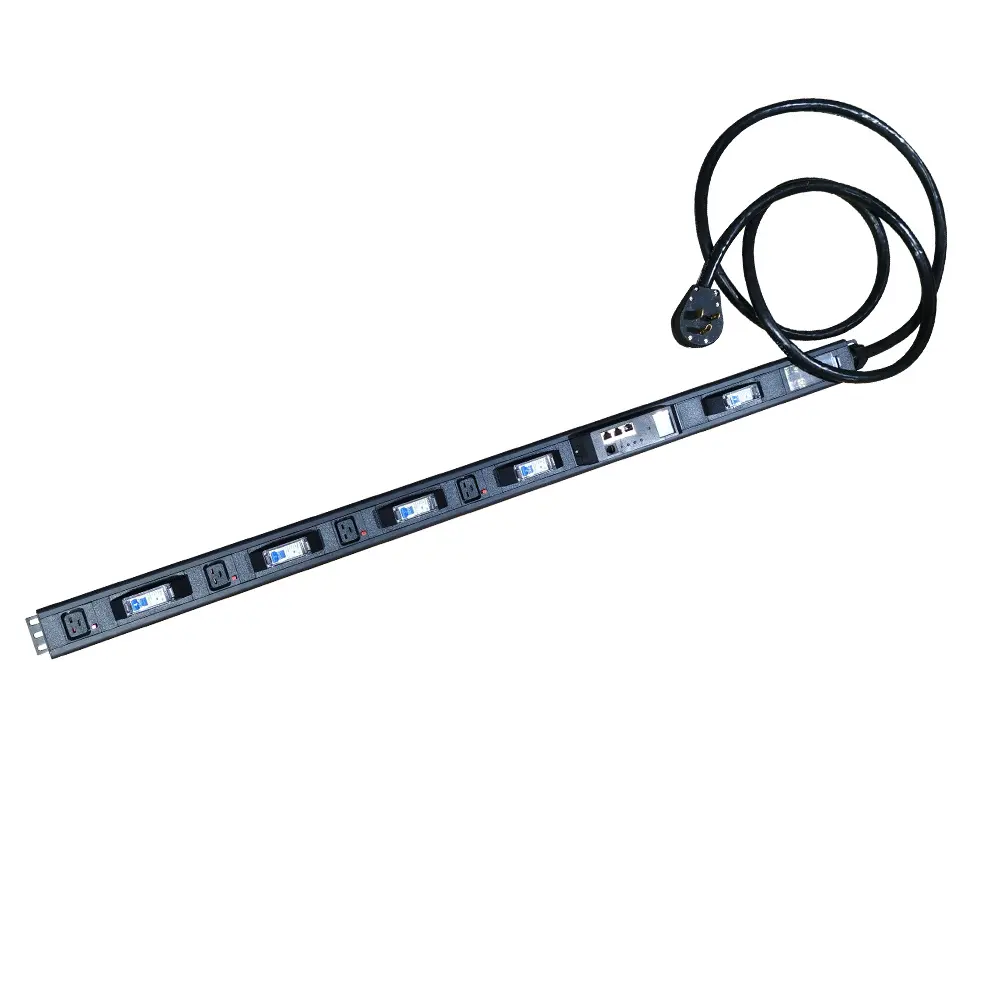
We add the network card, so your DCIM polls the rack without anyone opening the cabinet. Tenant accounts stay read only, so the record stays yours. The same chassis takes SNMP, Modbus or BACnet, whichever your platform speaks.
Tell us which rows bill tenants and which are house power.
We map a tier to every row and mark the upgrade path.
We size the input to the feed your building already has, so the unit fits the row instead of asking you to re-engineer it.
| Input | Phase | Inlet we fit | Outlets we build |
| 120V | 1P | NEMA 5-15P / 5-20P, 15–20A | 8–12 outlets, 1U/2U |
| 208V | 1P | NEMA L6-30P, 30A | 20–36 outlets, 0U |
| 230V | 1P | C20 / Schuko / BS 1363, 10–16A | 8–12 outlets, 1U/2U |
| 400V | 3P | IEC 60309 32A or hardwired 63A | 24–54 outlets, 0U |
Single phase units from our line cover 120V, 208V and 230V tenant racks in 10A to 30A ratings. For high density rows we build three phase 400V Wye units, the feed AI and HPC racks at 50kW to 300kW or more arrive on, and a three phase PDU splits outlets across phases with colour coded housings. Either way you stay on one platform, so a mixed floor keeps one spare parts list.
We apply the 80% continuous limit from NEC 210.20(A) before we quote an amperage band to you. A 32A three phase feed therefore carries 25.6A continuously, which is 17.7 kW at 400V three phase. Give us the feed rating and the kW you plan per rack, and we return the band with the arithmetic shown.
Tell us the building feed and the kW per rack.
We return the phase, the current and the inlet with the 80% rule applied.
We ship 0U vertical as the standard chassis for colocation rows, and we build 1U and 2U horizontal units to order where the cabinet has no rear post space.
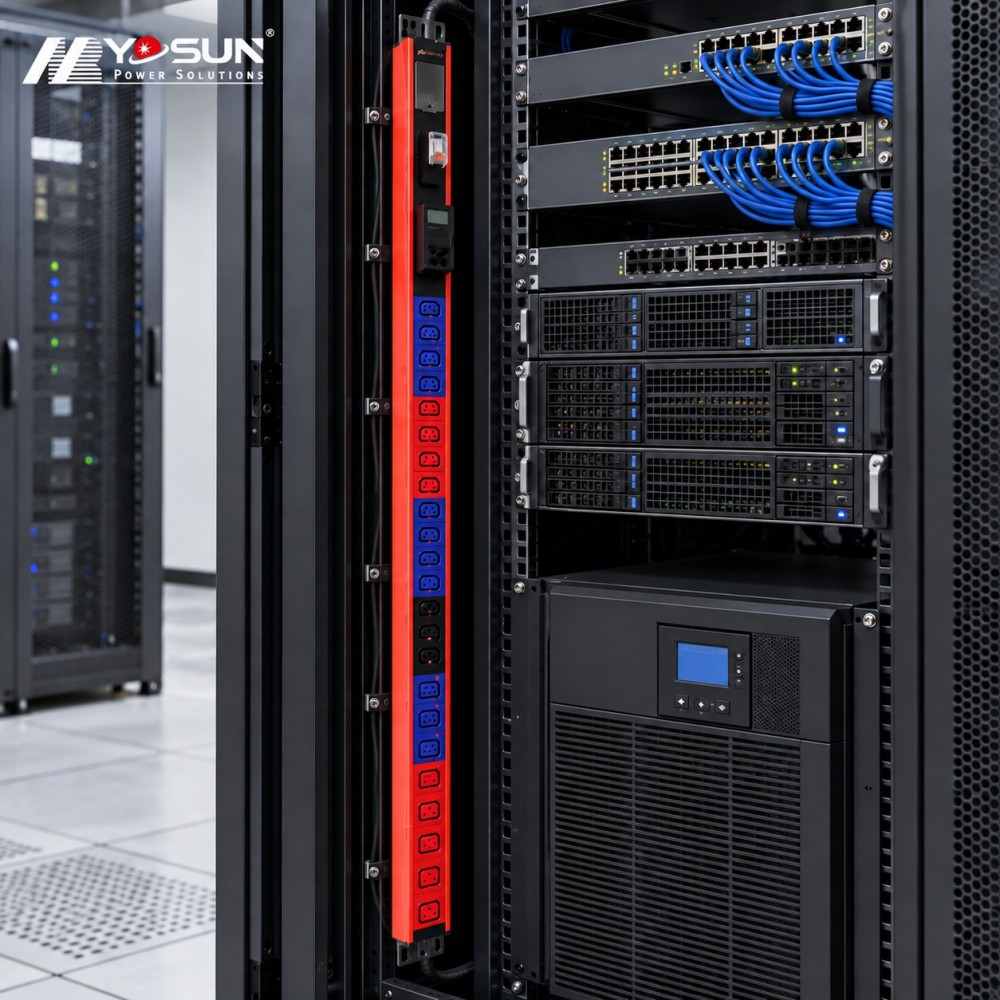
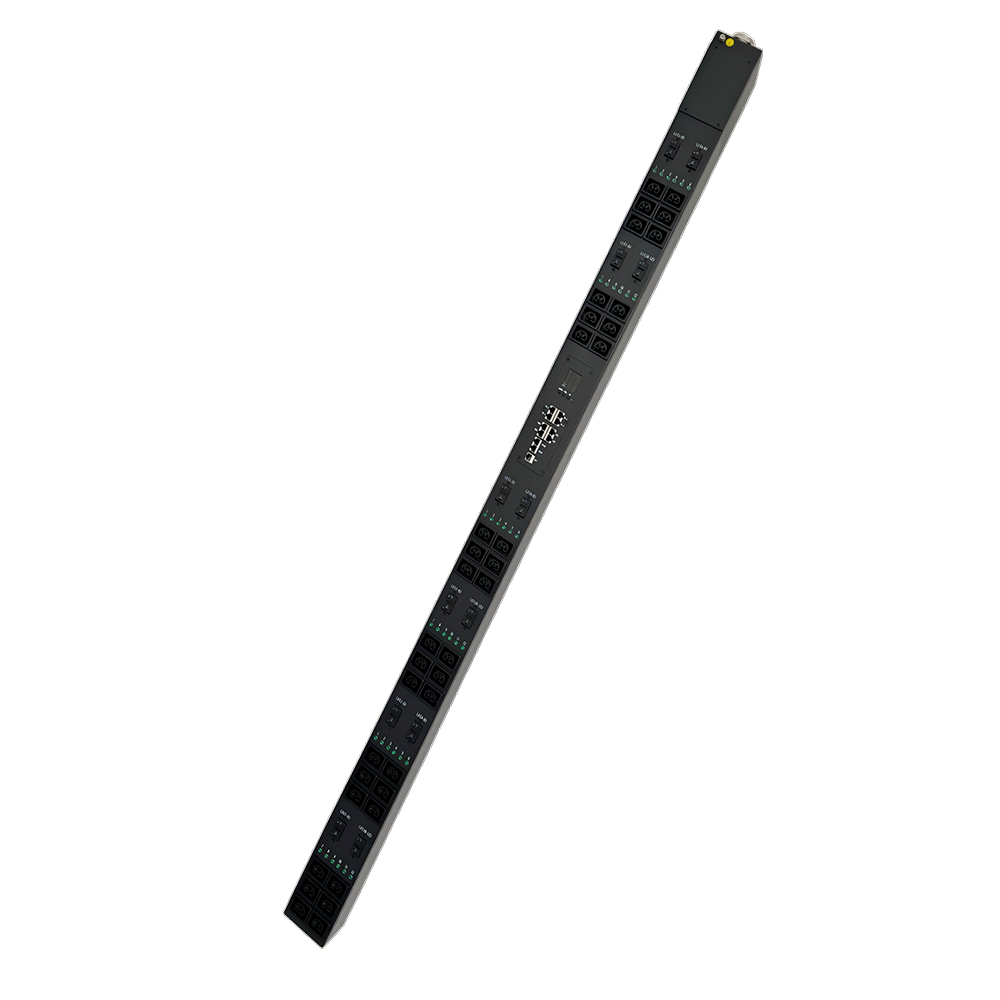
Our 0U vertical PDU mounts in the rear post channel and carries up to 54 outlets without taking a rack unit from the tenant. The brackets install without tools, and the display rotates so the reading stays upright in either post. We cut the length to your cabinet height when a bay shares space with cabling.
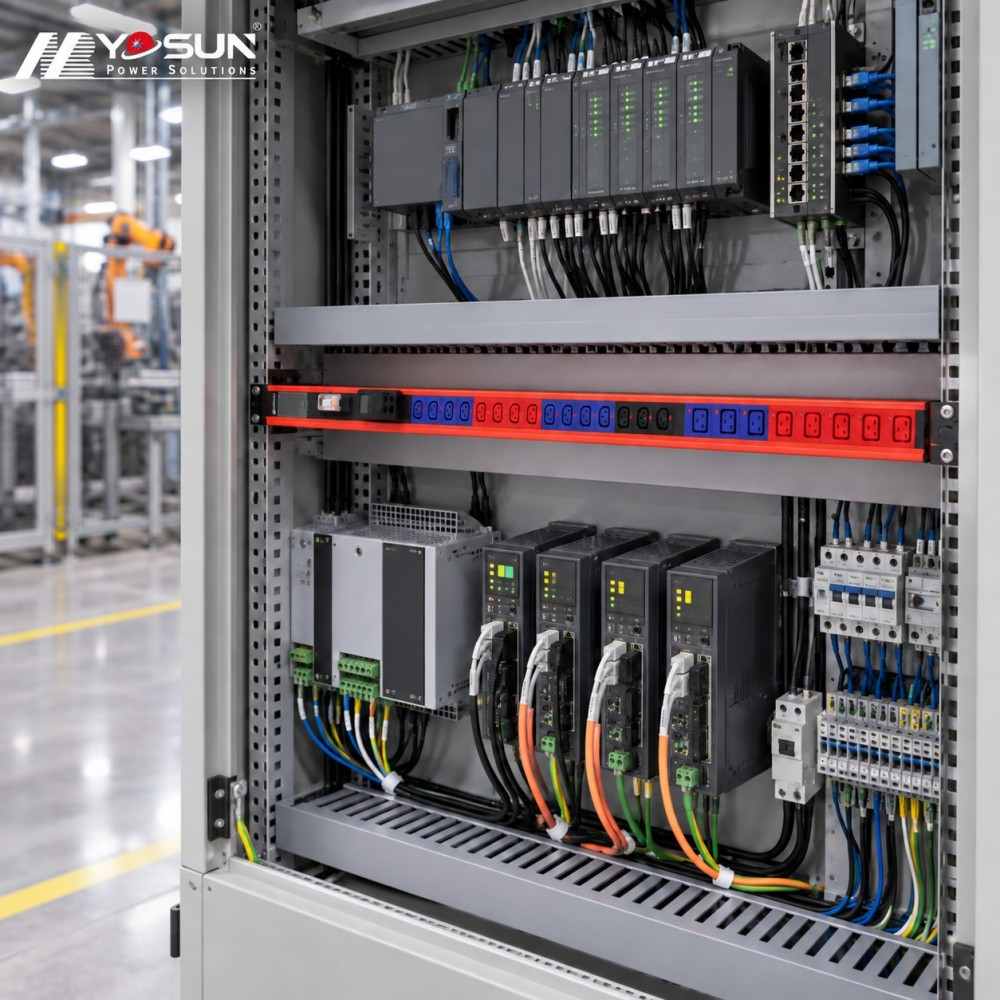
For network cabinets and short racks we build 1U units from 4 to 16 outlets. The 2U chassis gives us room for the LCD and a breaker panel on the same footprint. Both take the same tenant zoning firmware as the 0U line, so a mixed row still bills the same way.
Send a photo of your rear post and cabinet depth.
We confirm the form factor and the bracket before quotation.
We supply the inlet and the outlets as one matched set, because the plug your building gives you decides the inlet and your tenants decide the outlets.
We fit IEC 60309, IEC C20 inlets, NEMA plugs or hardwired terminals for inputs from 10A to 63A. Bus bars and outlet modules come off our own copper welding and injection molding lines, so the inlet is not a bought in adaptor inside the chassis. Where one chassis crosses regions, we build it with universal interchangeable inlets.
We fit C13 and C19 outlets in phase colour coded housings, so a technician reads the A and B feed from the rack face. Locking sockets hold tenant cords against vibration and accidental disconnection, and we set Schuko, BS 1363, NEMA 5-15R/5-20R or universal outlets to the destination market. Every socket we fit is rated to more than 5000 insertion cycles.
Horizontal chassis carry 4 to 16 outlets and vertical ones carry 20 to 54 for high density PDU rows. You set the C13/C19 ratio per order against your server fleet, and we label and group every position so it maps to one tenant and one circuit. Mixed ratios ship on the same lead time as a standard build.
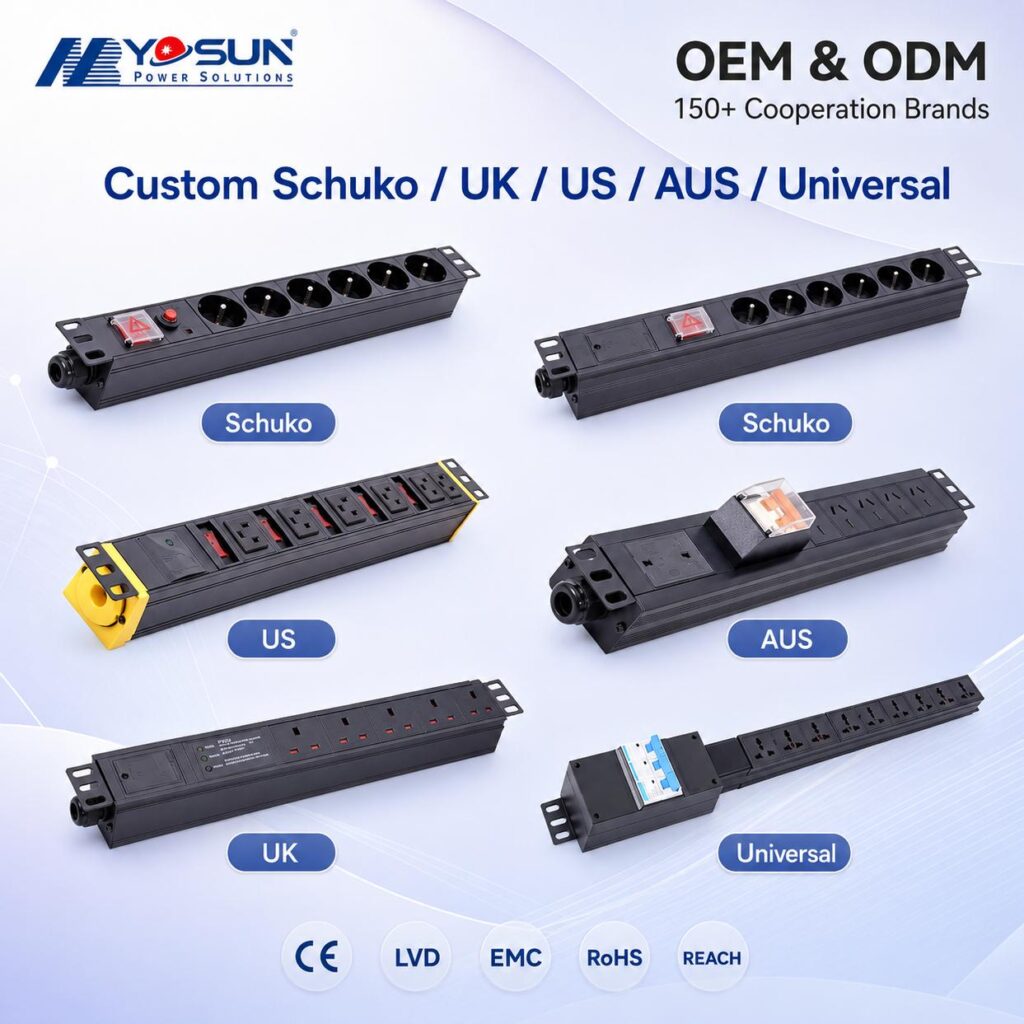
Send a photo of the plug you already use.
We identify the inlet and return the matched outlet layout.
We build the switching option to the uptime your SLA promises, not to a default, and we tell you when dual cording already covers the risk.
Single input units are what we build for single corded tenant racks. Your UPS already covers the feed, so the bill of materials stays short. We keep house power rows with no SLA obligation on this option.
We terminate two independent feeds on one chassis and split the outlets by phase colour and label between the A and B sides. Each dual corded server then draws from both power paths. This is the configuration we quote for standard colocation rows.
Where single corded equipment must ride through a feed loss, we build an automatic transfer switch PDU that moves the load to the standby feed. We set the transfer behaviour with your upstream design, project by project. One feed failure is then absorbed inside the rack.
The static version switches on solid state devices for rows where the transfer event must be invisible to the load. Both ATS and STS units are engineered to your feed diagram rather than taken from a stock list. Tell us the load type and we confirm which of the two the row needs.
Bypass units move the load from UPS power to utility without interruption during maintenance or a battery change. Your operator starts the transfer, so nothing in the rack reboots. A maintenance window stops being an outage.
We need the feed diagram with the sources and the transfer expectation. From that we confirm the switching option, the inlet pair and the outlet split. Switching units are quoted as engineered items, so the drawing comes before the price.
Send your A/B feed diagram for a transfer check.
We mark where switching adds value and where dual cording is enough.
We support SNMP v1, v2c and v3, so your DCIM polls the rack on the version it already uses. Traps report threshold crossings, from overload to environment alarms. One IP address carries up to 32 cascaded units.
We ship browser access over SSL with the dashboards your team will actually open: voltage, current, power, energy and breaker status. You set the alarm thresholds, and the unit alerts locally and remotely. No client software is needed on the operator side.
Modbus TCP and RS-485 variants talk to building management systems. RS-485 units cascade in batch metering, up to 64 units on a single phase line and 247 on a three phase line. That leaves one BMS port carrying a whole row.
BACnet variants serve building platforms, and REST API variants serve custom dashboards and billing scripts. Both are order variants of the same monitored platform, so your spare parts list does not change. Tell us which endpoint you need to feed and we confirm the variant.
We confirm the DCIM platform and version before the order, and ship the mapping table for sensors and outlets with the units. Your integrator starts from a point list instead of reverse engineering the rack. Where your platform is not on our list, we say so before quotation.
We connect temperature, humidity, water immersion, smoke, door contact and airflow sensors to the sensor ports. Water immersion sensing matters under a raised floor, where a leak reaches the rack before anyone sees it. Sensor readings ride the same SNMP tree as the power data, so one poll covers both.
We fit BCM boards that read current on each branch breaker. That allocates load inside one tenant fit out where circuits, not outlets, are the billing boundary. It complements per outlet metering rather than replacing it.

Send your DCIM platform name and protocol list.
We confirm the integration matrix before quotation.
We coordinate protection with your upstream panel instead of bolting devices on, so each one sits where the feed architecture needs it.
| Device we fit | Acts on | Where we place it |
| Hydraulic magnetic breaker C10–C63 | Overload on a branch | Per branch or per phase bank |
| Fuse | Short circuit on a branch | IEC 60309 inlet units |
| SPD 4.5kA / 6.5kA / 10kA | Lightning and switching surges | At the inlet end of the chassis |
| RCD / RCBO | Residual current to earth | 230V units on tenant outlets |
| Overload alarm | Threshold crossing on the feed | Metered units with alarm output |
We fit the protection your feed requires, from hydraulic magnetic breakers to surge modules, and the table above maps each device to the condition it acts on and where we place it. Give us the upstream layout and we run a selectivity check before production. You get the coordination on paper instead of a device list to reconcile on site.
We design the surge module to IEC surge protection practice, so lightning and switching events are clamped before they reach tenant equipment. Clamping is verified in the same load tests as the metering chain, which means one test record covers both. We size the module to the exposure your site reports.


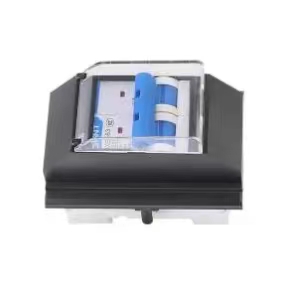

Send your upstream breaker and SPD layout.
We return the device placement with the coordination marked.
Send the spec sheet or data center scale
We return a matched configuration within 24 hours.
We zone the outlets per tenant in firmware before shipment, and the zone map matches the physical labels one to one. That map ships with the units and feeds your billing export. You do not re-map a live row after the tenant has moved in.
We mark every port and circuit for instant identification, and we separate the A and B feeds by phase colour on dual corded rows. Labels are set to your rack naming convention per order. A technician reads the unit without opening a drawing.
We configure web accounts and protocol views per tenant, so a tenant sees its own outlets and nothing else. Operator credentials stay separate from tenant credentials. You keep the operator view and hand out only what a tenant needs.
We set the metering export to your billing cycle, so chargeback and dispute checks read one record. SLA reporting draws on that same export, which keeps operations and finance quoting one number.
We are a manufacturer, not a trading desk. Tooling, injection moulding, assembly and test run in one plant.
YOSUN has built power distribution products for more than 20 years. Six assembly lines run alongside in-house injection moulding and laser processing. Housing colour and outlet blocks are made on site, which shortens a custom build.
A ten-person R&D team converts a rack drawing into a buildable configuration. Our own lab runs incoming and final test on high-accuracy instruments. The copper busbar is welded in one piece without solder, which keeps joints cool under load.

Every unit goes through aging, high-current load and metering calibration before shipment. Test data travels with the shipment documents. The connector block is isolated 270° from the aluminium housing, so a loose strand cannot reach the chassis.
Products ship to the United States, Europe, Russia, the Middle East, India, South East Asia, Australia and Africa. Private-label programmes cover logo, housing colour, packaging and manuals. We also supply telecom PDU projects for domestic carrier infrastructure, where reliability requirements are strict.
Custom starts from your rack drawing and your destination market, not from our catalog page. We run OEM/ODM projects from rack drawing to branded product line, layer by layer, so the certifying scope stays visible while the spec changes.
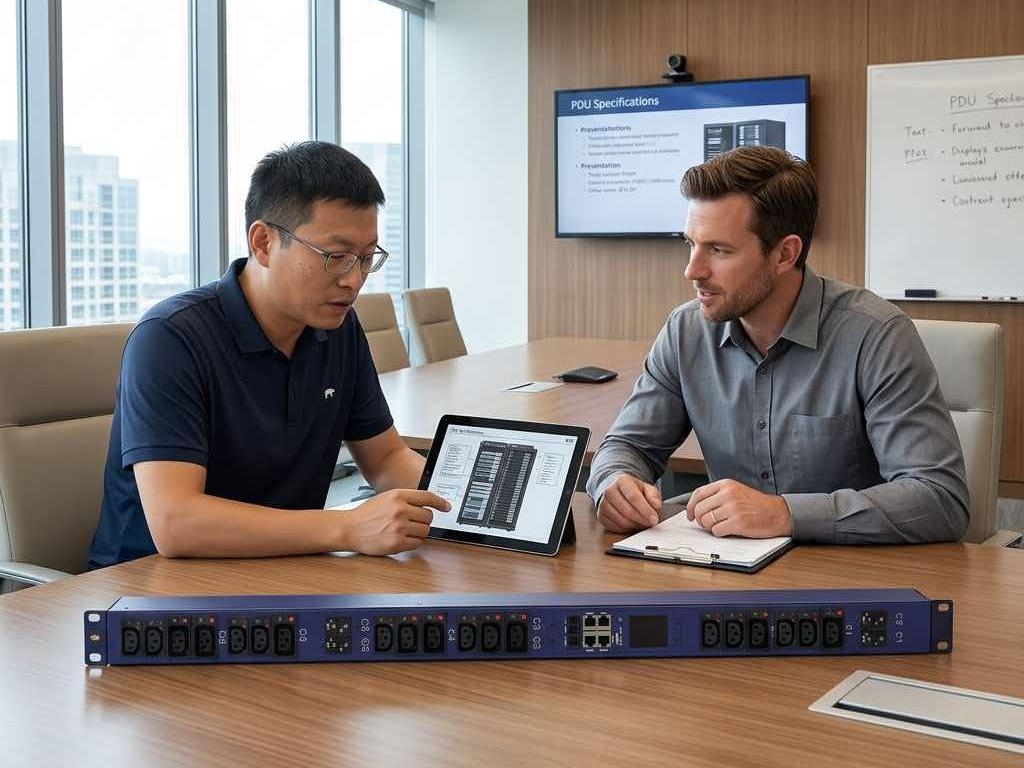
You send the rack spec, drawing or competitor part number.
→ We return a clarification list.

We check phase, load, input, outlets and protection.
→ 2D drawing and configuration sheet.

We build one or two units on the confirmed configuration.
→ Sample with test data, a few weeks.
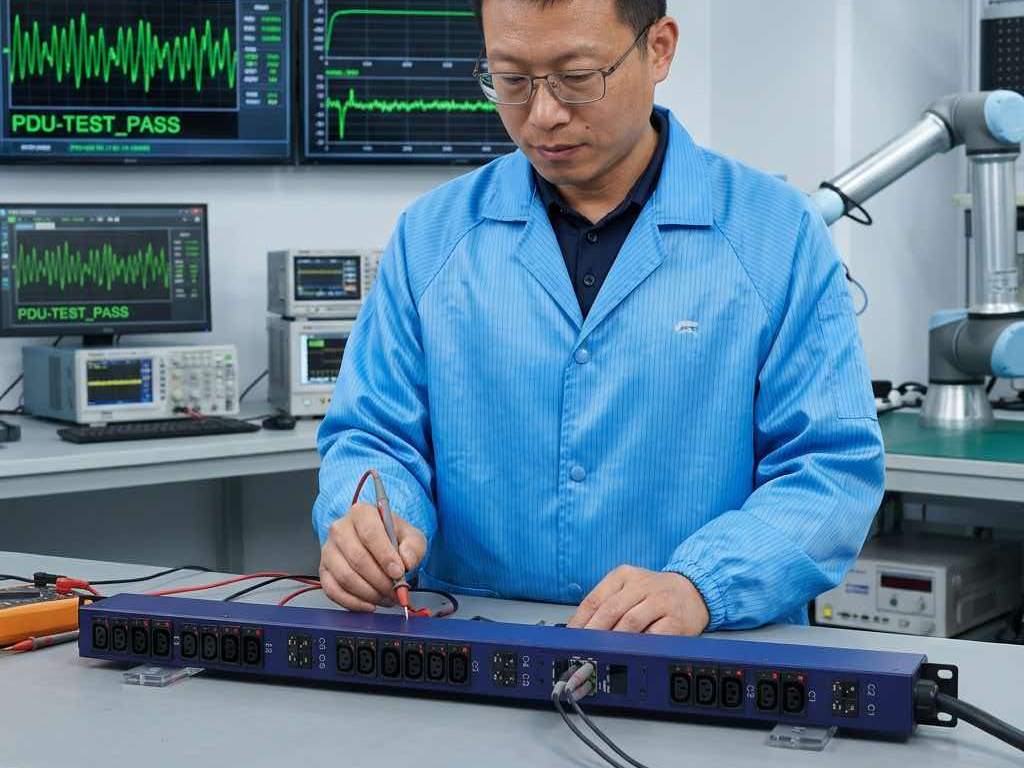
You approve the sample; we run the route for your market.
→ Certificate and DoC.

Bulk build with first-article inspection.
→ 30–45 days, with the document pack.
Share your specification and brand requirements.
We deliver a SKU configuration matrix, samples and a tiered FOB price list.
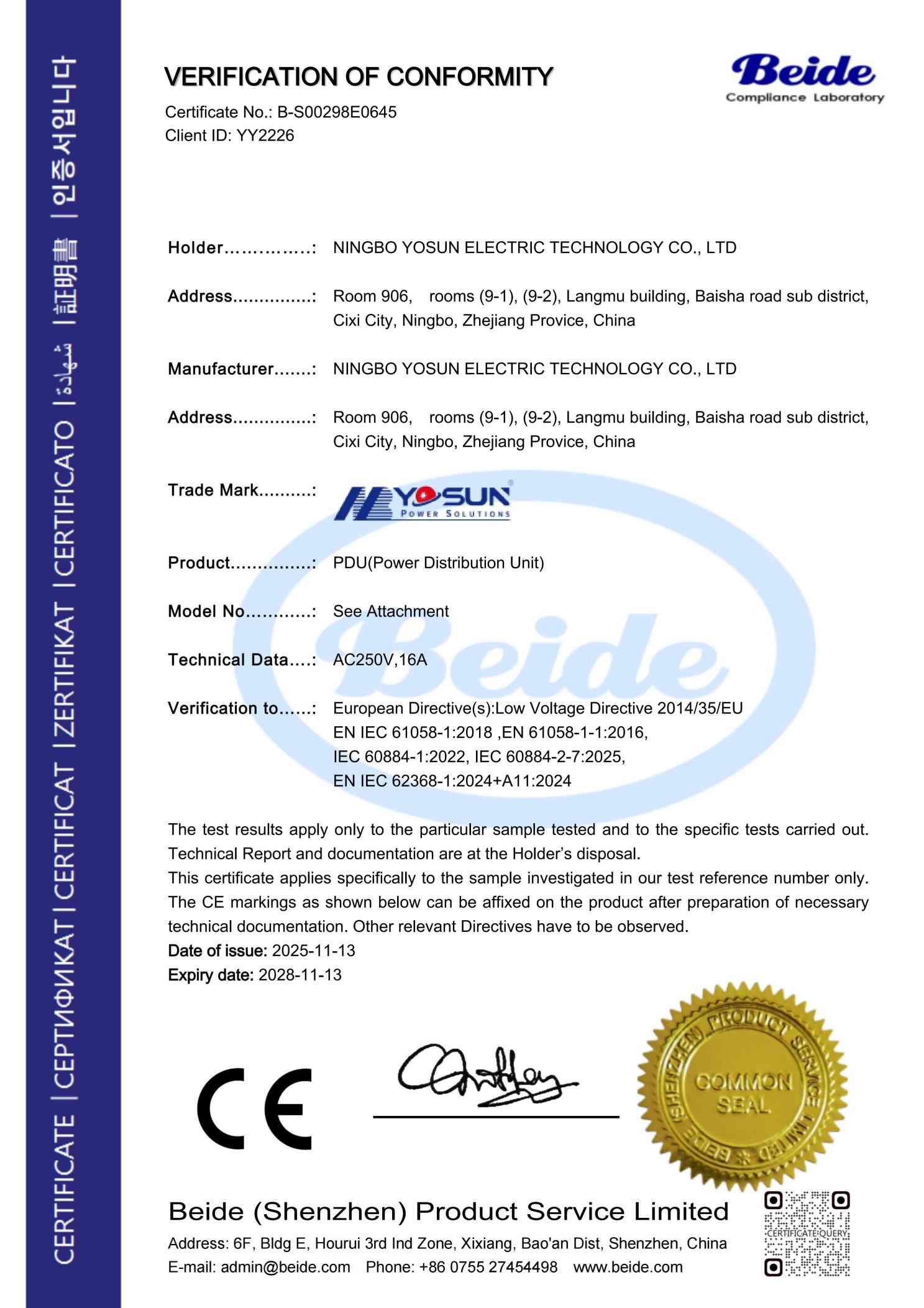
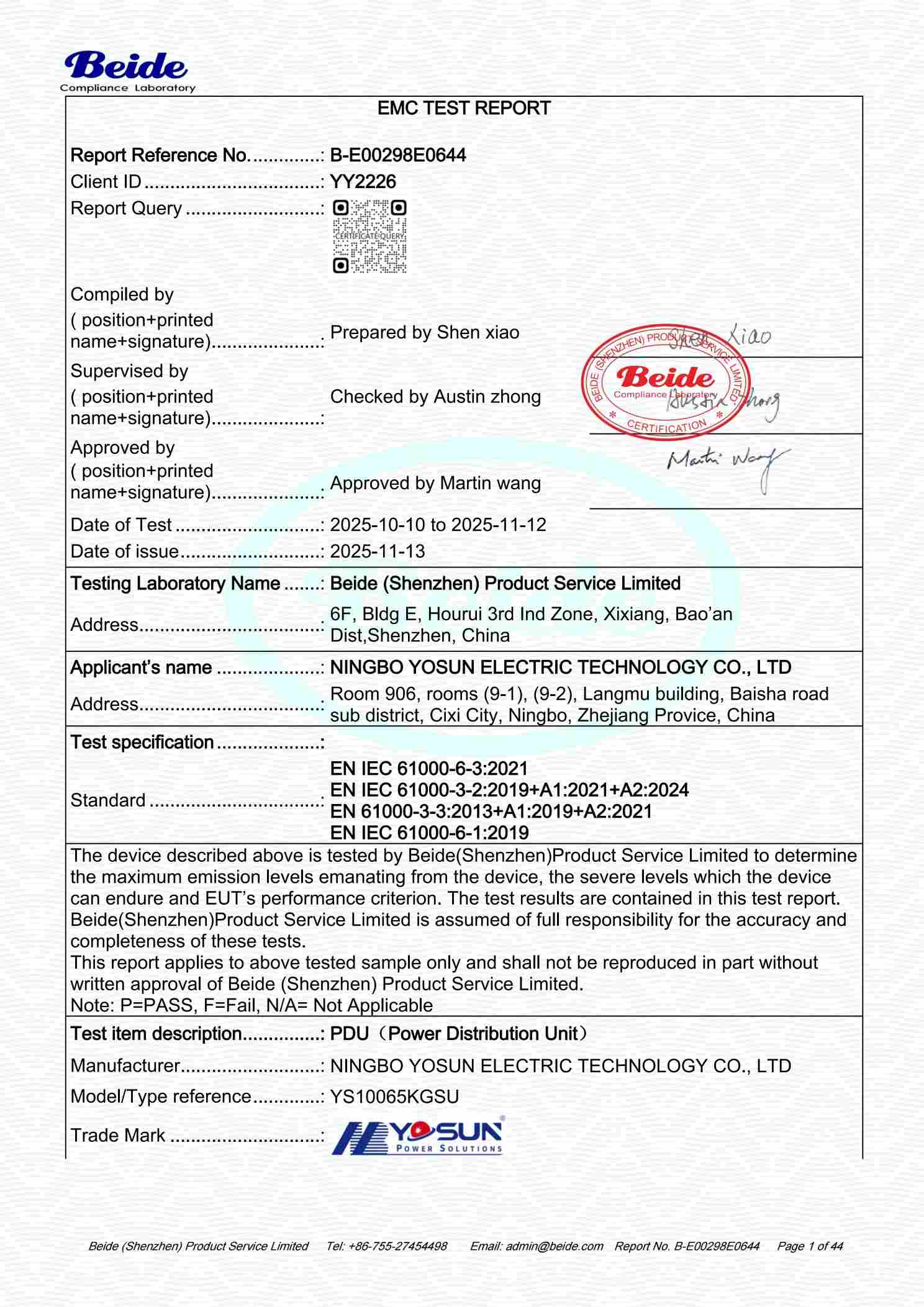
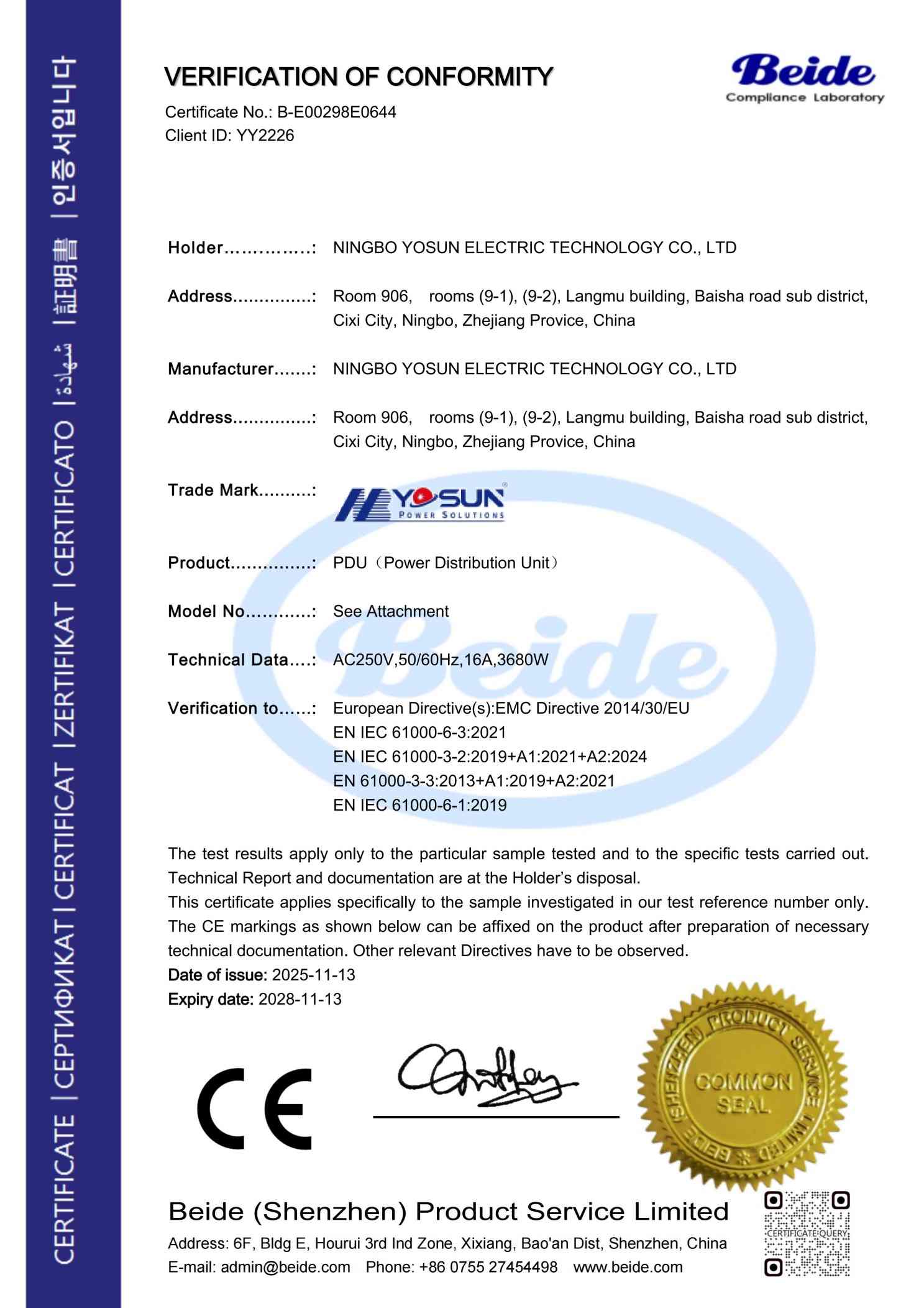
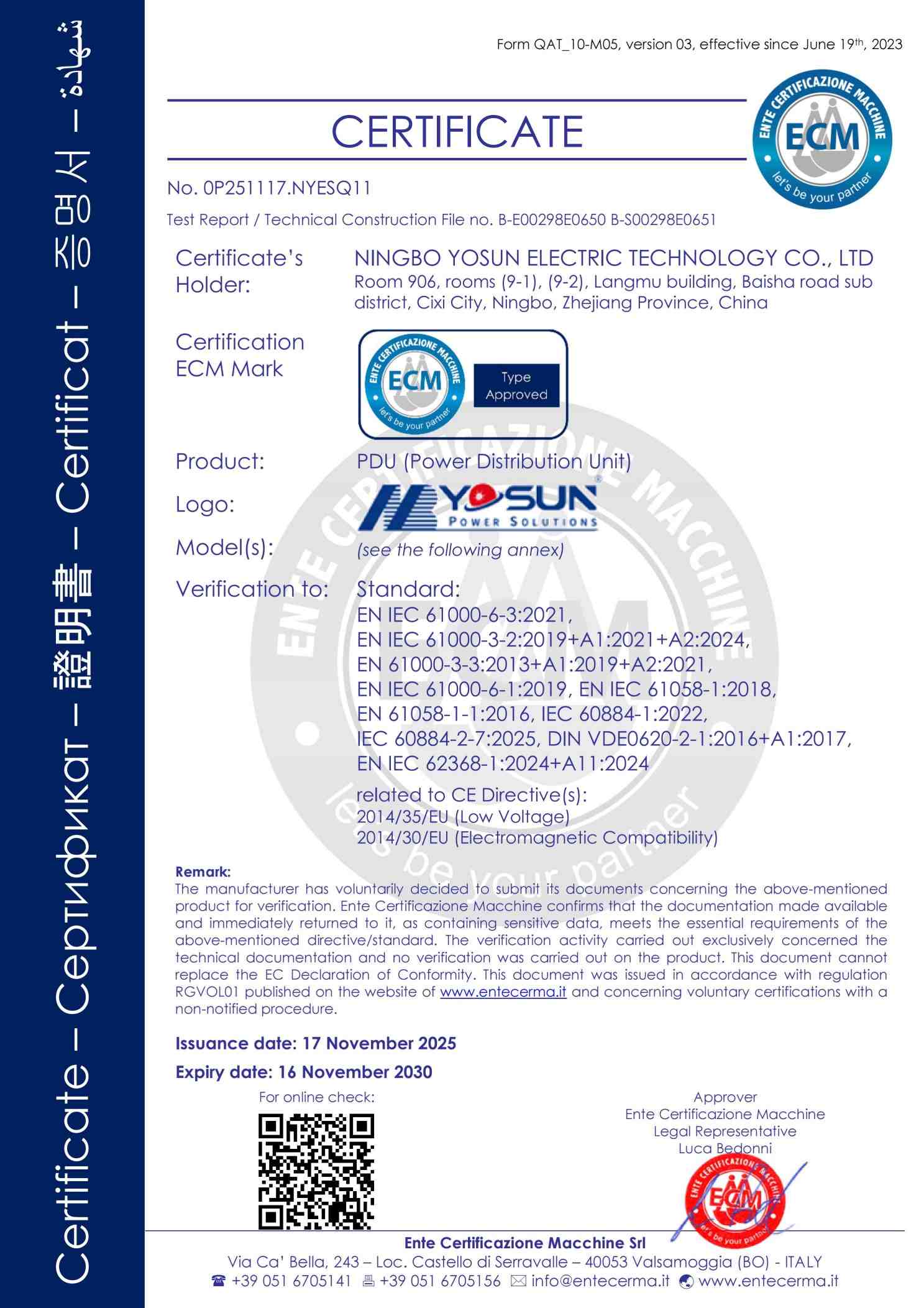
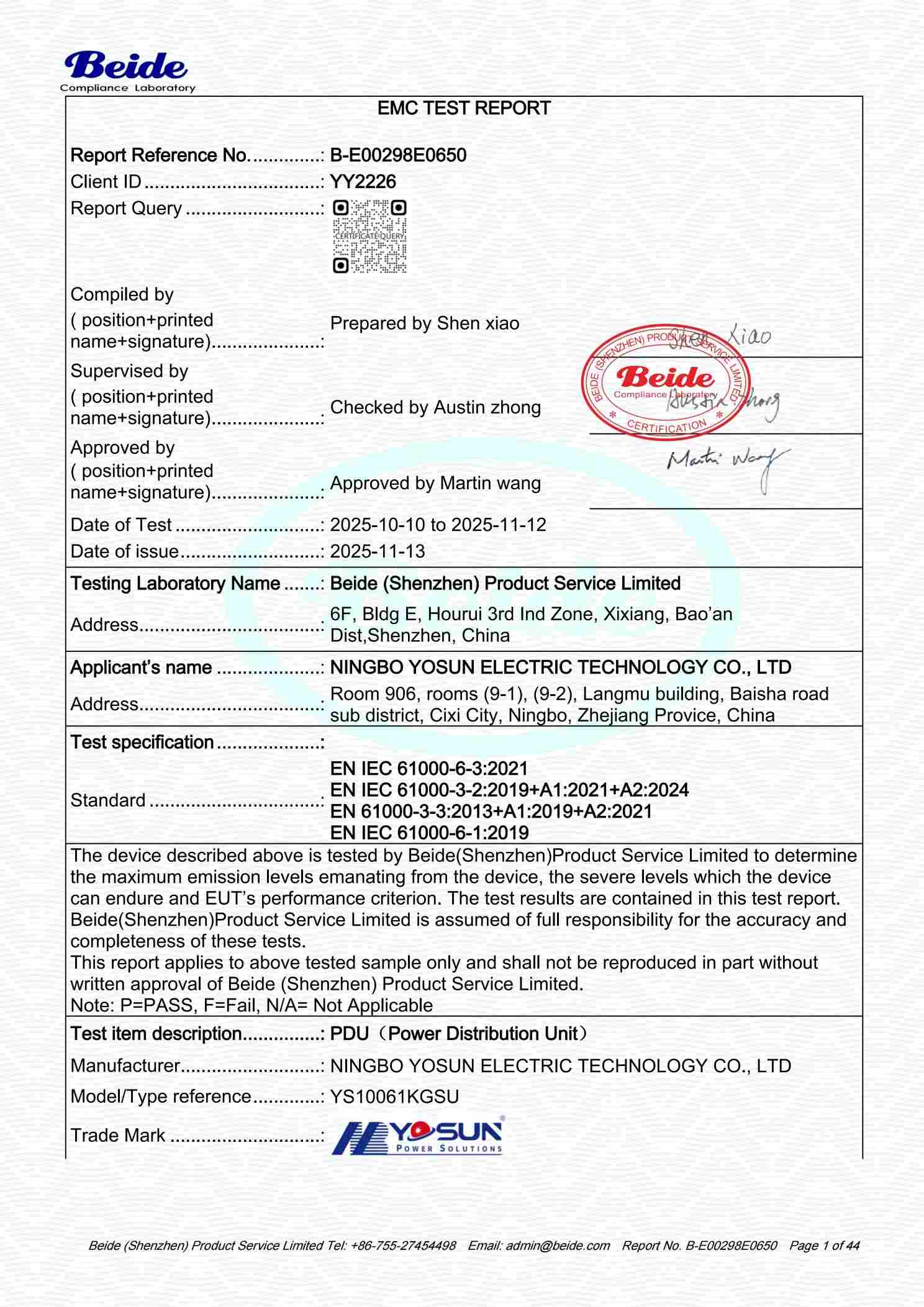
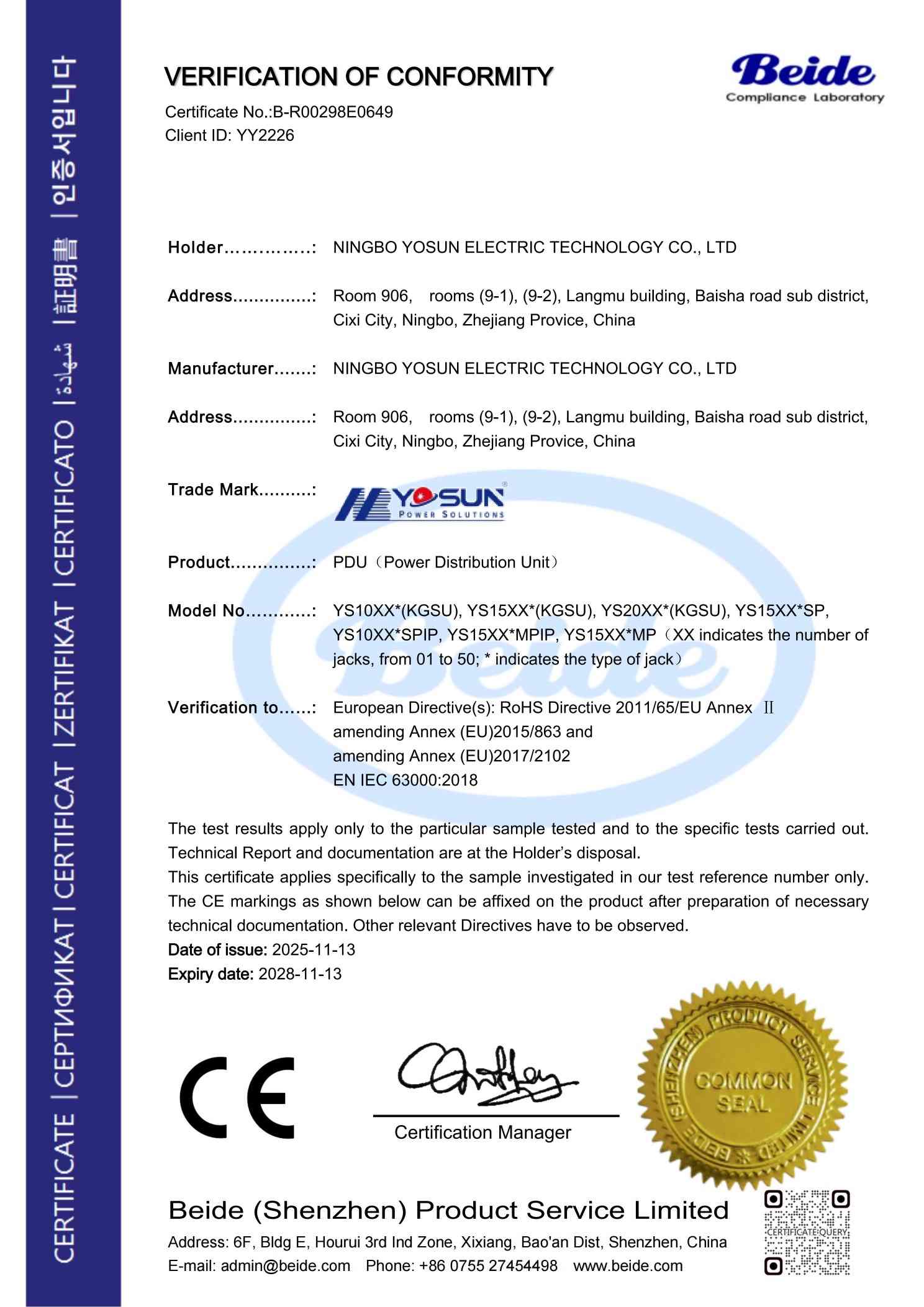
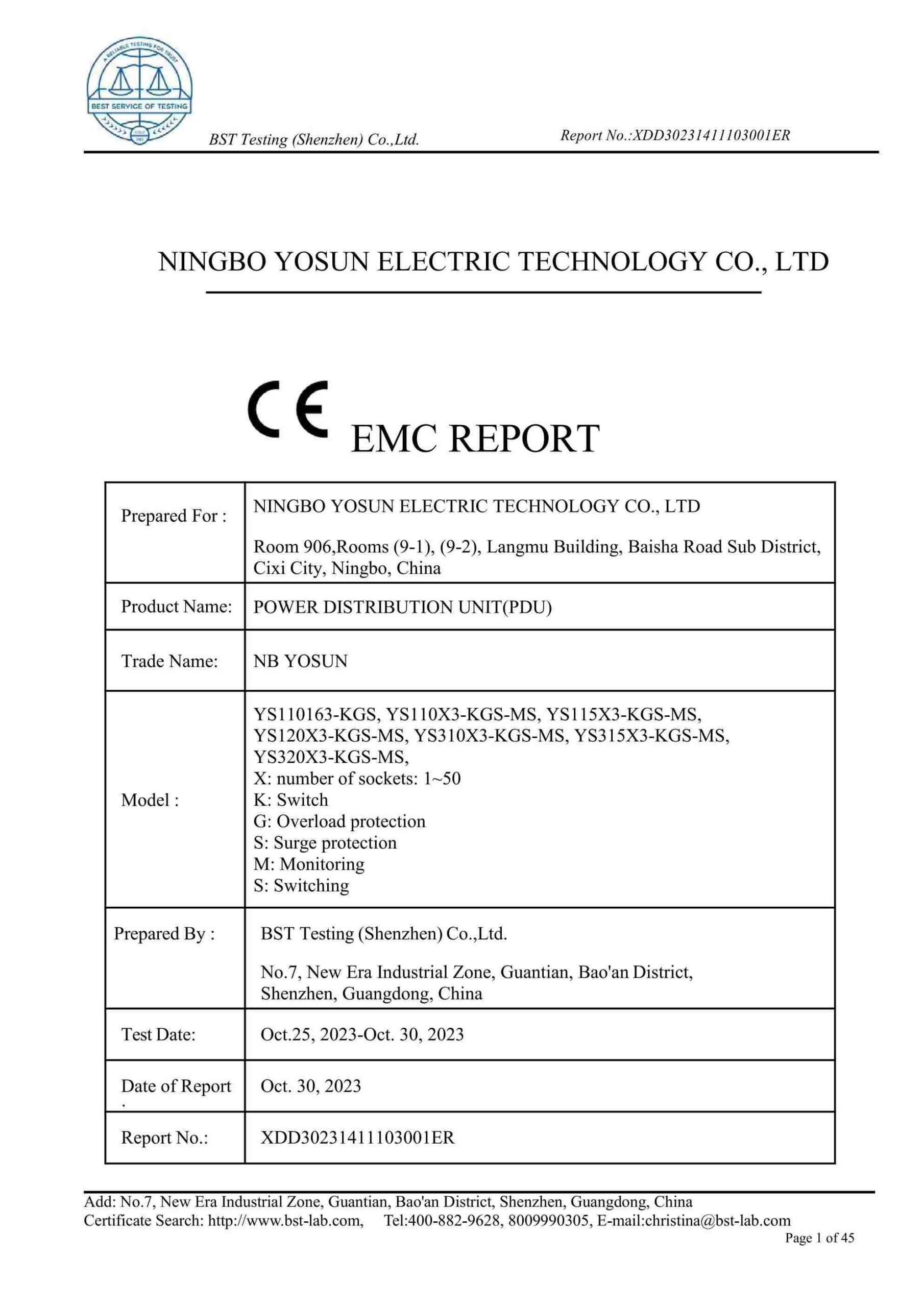
We certify intelligent and three phase models to UL 62368-1 and CE (LVD + EMC) with RoHS compliance, and we hand over certificate numbers with the test reports. For India we arrange BIS, for Japan PSE, for Brazil INMETRO and for Saudi Arabia SASO/Saber when the order calls for them. Tell us the destination market and we confirm the exact certifications, the lead time and the input plug before shipment.
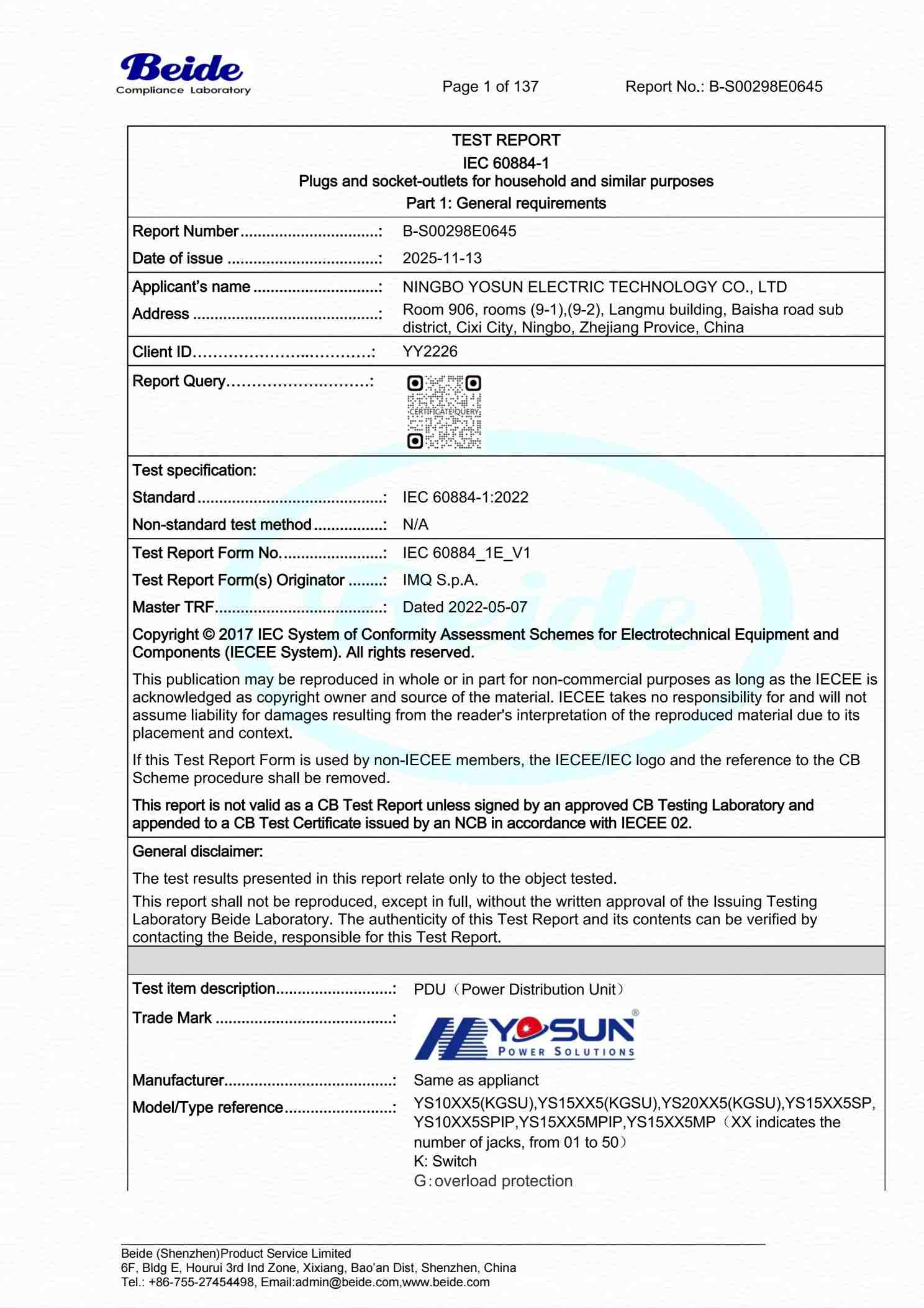






Send the destination market and plug type.
We confirm the exact certificate plan before shipment.
We make a unit billing grade with per outlet metering at ±1%, calibration before shipment and exportable records. The metered outlet PDU tier is built for tenant chargeback. Without per outlet records, billing falls back to estimates and disputes have no evidence.
Yes: outlets are grouped into tenant zones in firmware, and each group returns its own kWh record. One rack PDU chassis therefore produces separate billable records per tenant. Zone maps ship with the units so physical labels and firmware agree.
Web accounts and protocol views are configured per tenant, so a tenant sees only its own outlets. A monitored PDU gives the read only network access this needs. Operator logins cannot reach tenant outlets, so the two roles never share a view.
Dual corded racks run one feed per power supply and need no switching inside the PDU. Where single corded equipment must survive a feed loss, an ATS PDU transfers automatically. Maintenance windows are handled by bypass units instead of transfer switches.
Intelligent and three phase models carry UL 62368-1 and CE (LVD + EMC) with RoHS compliance. BIS, PSE, INMETRO and SASO/Saber are arranged per market on order. Certificate numbers and test reports are provided; coverage is model specific.
We start MOQ small on stock specifications and price better on full project volumes. Bulk orders run 30–45 days depending on certification and customization, and samples ship in weeks. The full PDU range shares the same lead time logic.
Outlet type, C13/C19 ratio, outlet count, locking sockets, input plug and firmware are set per order. The IEC 320 PDU page lists the C13 and C19 standards behind these outlets. Web UI branding and protocol lists are confirmed in the configuration matrix.
We put every unit through aging tests, high current load tests and metering calibration before shipment. Calibration records ship with each metered PDU order. Ask for the record with the shipment so the billing baseline starts on paper.
A tenant circuit is measured twice in a colocation hall, once by the PDU at the rack and once by the meter the operator bills from, and over a year of billing cycles the two records can separate by a small steady margin. The first time anyone notices is when a tenant contests a charge. The argument is rarely about the size of the gap; it is about which number the operator can defend in front of the customer.
Send the PDU reading and the utility reading for the same billing period. We return the variance, the calibration check, and a straight answer on whether the unit should come back.
In a multi-tenant row the branch breakers are chosen by different people on different days, and they all sit under one upstream device. A single tenant inrush or a failing fan then trips a breaker that was never coordinated with the device above it, and the outage lands on a rack that had nothing to do with the fault. The operator usually hears about it from the tenant, not from the panel.
Send the trip current, the upstream breaker curve and the row drawing. We run the selectivity check and tell you which breaker we would fit.
A tenant zone that reads zero while its racks are live is the most expensive reading on the floor, because a zero is either billed as zero or quietly replaced by an estimate. The same failure appears as a value that stops moving, a timestamp that stops updating, or a poll that returns the last known number for days. None of these raise an alarm unless the threshold was set for missing data rather than for a high reading.
Send the zone map and one export from the affected period. We check the mapping against the labels and tell you whether the fault sits in the unit or in the configuration.
A Professional And Leading Manufacturer
For OEM
& ODM Power Distribution Unit (PDU)
You Can Trust
CONTACT
Ningbo YOSUN Electric Technology Co., LTD
Leading Professional Manufacturer in PDU Power Solutions
Contact Info.
Leave Your Message