WhatsApp

+86 15867381241

How do intelligent PDUs integrate with DCIM software?

Table of Contents

Intelligent PDUs feed real-time power, energy and environmental data into DCIM platforms over standard network protocols, unifying distributed rack assets into a single management view. This integration unlocks power visibility, capacity planning, energy optimization and outage risk mitigation for data center operations.

Key Takeaways

  • Intelligent PDUs use SNMP, REST API, Modbus, BACnet and Redfish to exchange data with DCIM software.
  • DCIM integration delivers centralized visibility across racks, enabling trend tracking, alerting, PUE calculation and what-if capacity modeling.
  • Standalone PDU web monitoring suits small, single-rack deployments; DCIM integration is preferred for multi-rack, multi-site and colocation environments.
  • When selecting a DCIM-ready PDU, evaluate electrical specs, metering granularity, outlet switching, environmental sensor support, security and rack form factor.
  • Pre-deployment checks for network access, protocol compatibility and security policies reduce integration friction and accelerate ROI.

How Intelligent PDUs Connect to DCIM

Protocols and Data Flow

Modern smart PDUs rely on widely supported open protocols to communicate with DCIM, eliminating custom development work:

  • SNMP: The most common protocol for IT infrastructure monitoring. The PDU runs an SNMP agent with an MIB; DCIM either polls for metrics or receives trap alerts for fault events.
  • REST APIs: Supports structured, bidirectional data exchange for richer automation and analytics.
  • Modbus / BACnet: Primarily used for facility and building management system integration.
  • Redfish: Designed for modern IT hardware for standardized asset and power control.

The integration pipeline follows three clear stages:

  1. Data collection at the PDU: Inlet, branch and outlet metering captures voltage, current, power and energy. Attached sensors collect temperature, humidity and leak readings.
  2. Network transmission: Data travels over Ethernet to the DCIM platform.
  3. Platform processing: DCIM stores metrics, generates threshold alerts, builds historical trends and visualizes the full physical infrastructure.

Turning Raw PDU Metrics Into Actionable DCIM Insights

The core value of integration is a single pane of glass. DCIM correlates PDU power data with rack layout, cooling, asset inventory and circuit information. Key use cases:

  • Phase balance validation to avoid overload and redundancy violations
  • Historical trending and baseline comparison for capacity forecasting
  • Ghost server detection and granular energy reporting by site, tenant or business unit
  • Automated PUE tracking and stranded power reporting
  • What-if simulation before deploying new servers
  • Outlet-level monitoring and remote power cycling for colocation and dedicated IT loads

Business Benefits of PDU-DCIM Integration

Visibility & Capacity Planning

Without centralized integration, operators only see isolated rack-level readings. DCIM maps power consumption to physical rack space, cooling distribution and available circuit headroom. One proven optimization tactic: derating nameplate power by 30% and tracking actual load via DCIM can increase the number of supported servers per PDU by 37%, reducing demand for extra racks, PDUs and floor space. Digital twin modeling further lets teams test new deployments without impacting live infrastructure.

Energy Efficiency & Uptime Improvements

Continuous monitoring drives measurable operational gains from industry deployments:

  • Optimized airflow and cooling control cut cooling energy use by 25–35%
  • Overall capacity utilization improves by ~40%, delaying costly facility expansion
  • Change management workflows speed up by 60% with simulation-based impact analysis
  • Thermal alerting reduces thermal violation events by 94%
  • Predictive warnings catch rising temperatures, overloaded circuits or failing UPS batteries before outages occur

ITIC 2024–2025 data notes 93% of businesses face downtime costs exceeding $300,000 per hour, making early fault detection financially critical. Typical ROI for this integration lands within 12 months.

Integrated DCIM Monitoring vs Standalone PDU Monitoring

These two approaches serve different operational scales, and many teams start standalone before moving to DCIM.
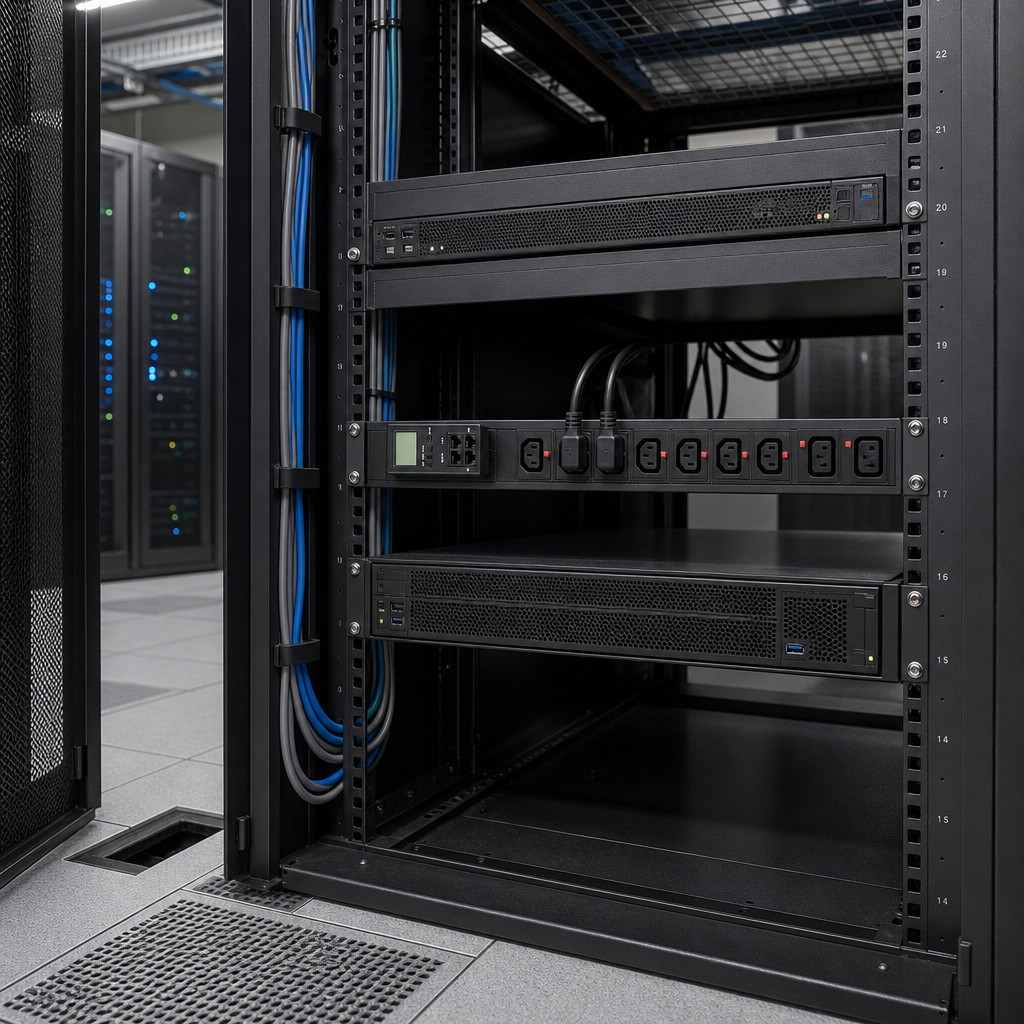
  • Standalone: Use the PDU’s built-in web UI. Fast setup, no integration work. Best for single racks, small server rooms and edge sites that only need basic alarms and spot checks. Manual checking across many racks becomes labor-intensive.
  • DCIM-integrated: Aggregates all PDUs and sensors from every rack and site into one dashboard. Supports cross-site reporting, unified alerting, trend analysis and tenant billing. Ideal for enterprise data centers, HPC and colocation.

How to Choose a DCIM-Ready Intelligent PDU

Selection Criteria

Selection CriterionRecommended Capability
Electrical compatibilityMatching voltage, phase, plug type, breaker rating
MeteringInlet metering for capacity; outlet metering for device-level tracking & billing
SwitchingRemote outlet/group power control with power sequencing
Environmental monitoringSupport for temp, humidity and water leak sensors
SecurityRBAC, encrypted communication, audit logs, firewall controls
Form factorZero U / 1U / 2U / 3U to fit rack design

Pre-Deployment Readiness Checklist

  1. Confirm PDU protocols work with your DCIM platform
  2. Plan sensor placement and define alert thresholds
  3. Lock down network access and security policy
  4. Capture baseline power data before go-live
  5. Test alerts, remote access and logging after installation

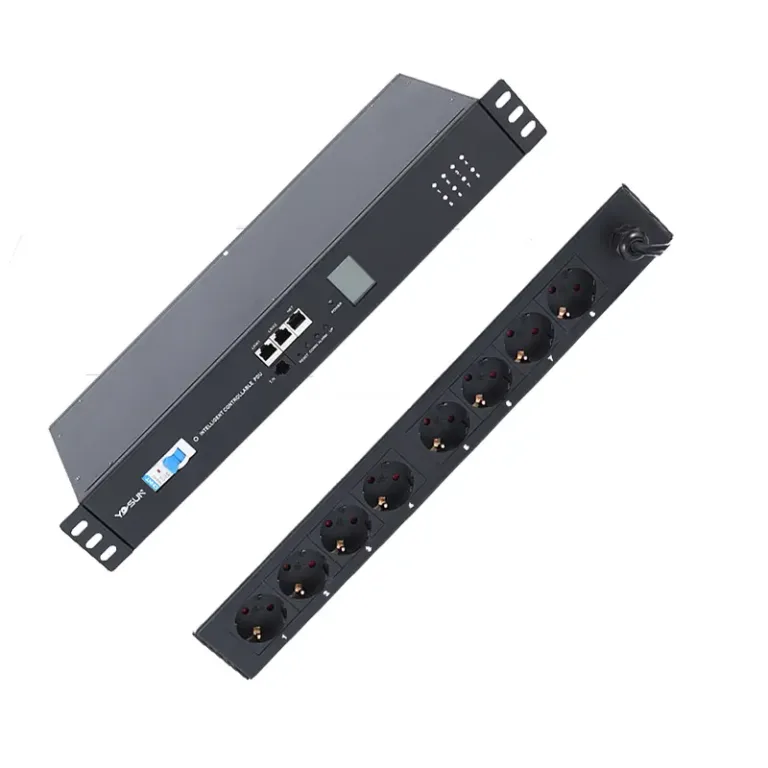
YOSUN Smart PDUs are an example of a DCIM-compatible line, offering monitored, switched and metered models. They support single/three-phase, high-density loads up to 25kW, environmental sensing and robust security, with global certifications including UL, cUL, CE, UKCA, FCC and IEC 62368.

FAQ

Which protocol should I use to connect an intelligent PDU to DCIM?

SNMP is the default for general monitoring. REST APIs are better for automation and bidirectional workflows. Use Modbus/BACnet when integrating with building management systems. Many operators enable multiple protocols for redundancy.

Is outlet-level metering required?

No. Inlet metering is enough for basic rack capacity planning. Outlet metering is essential for tenant billing, individual server power tracking and remote reboot use cases.

When is standalone monitoring no longer sufficient?

Once you manage many racks or multiple geographically separated sites. Cross-site trending, centralized alerting and stranded capacity analysis require a DCIM platform.

What security features should I prioritize?

Role-based access control, encrypted sessions, audit logs and configurable firewalls. Physical lock and access logging add another layer for compliance.

What prep work is needed before integrating PDUs into DCIM?

Validate network connectivity and protocol compatibility, define security rules, deploy sensors and record baseline power data. Post-install testing of alerts and remote functions prevents blind spots.
PDU Related Blogs