Smart PDUs vs Basic PDUs A Comprehensive Comparison
Compare Smart PDUs and Basic PDUs for your data center. Discover how smart PDU data center solutions enhance energy efficiency, control, and reliability.


+86 15867381241
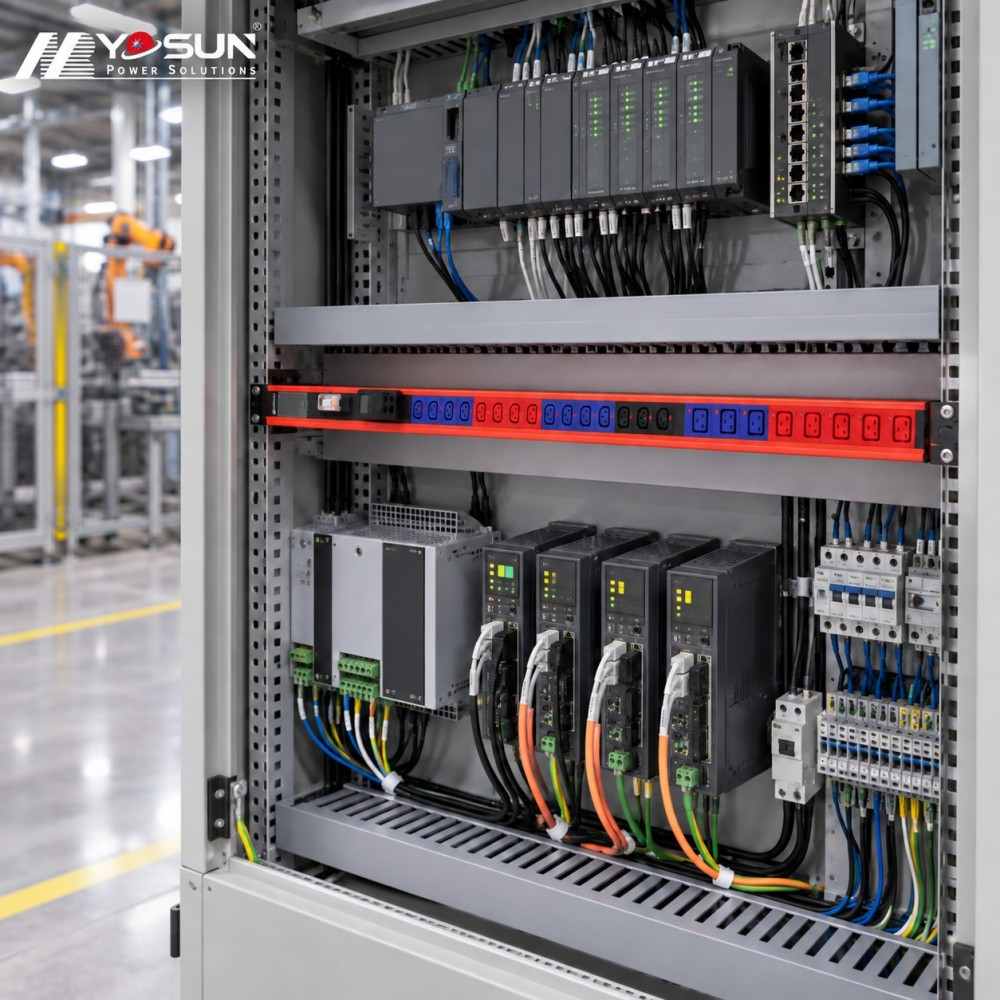
On a power distribution unit (PDU), NEMA stands for the National Electrical Manufacturers Association, the North American trade group that defines standardized dimensions, ratings and safety requirements for electrical plugs, receptacles and equipment enclosures. NEMA codes on a PDU describe the input plug type, outlet configurations, voltage and amperage ratings, ensuring predictable, safe compatibility between the PDU, facility power and connected equipment.
A plug either fits a matching NEMA receptacle or it does not — the code removes all guesswork from connectivity. This guide breaks down what NEMA means for PDUs, how to decode connector labels, common rack PDU configurations, and how to match NEMA specs to your equipment and facility.
The National Electrical Manufacturers Association (NEMA) develops consensus standards for the North American electrical industry, covering everything from wiring devices to enclosures and motor equipment. Its members include nearly all major electrical hardware manufacturers.
The core goal of NEMA standards is interoperability: a NEMA plug from one brand will fit a matching NEMA receptacle from any other brand, and will carry the same rated current and voltage. For rack PDUs, these standards apply to two key product features:
Standard ratings for PDU connectors range from 15A to 60A, covering most low- to medium-density rack power needs.
Every NEMA connector uses a standard alphanumeric code that packs all key details into a short label. Once you know the pattern, you can decode any NEMA plug or receptacle at a glance:
For example, an L6-30R is a locking, 250V, 30A receptacle. A 5-15P is a straight-blade, 125V, 15A plug.
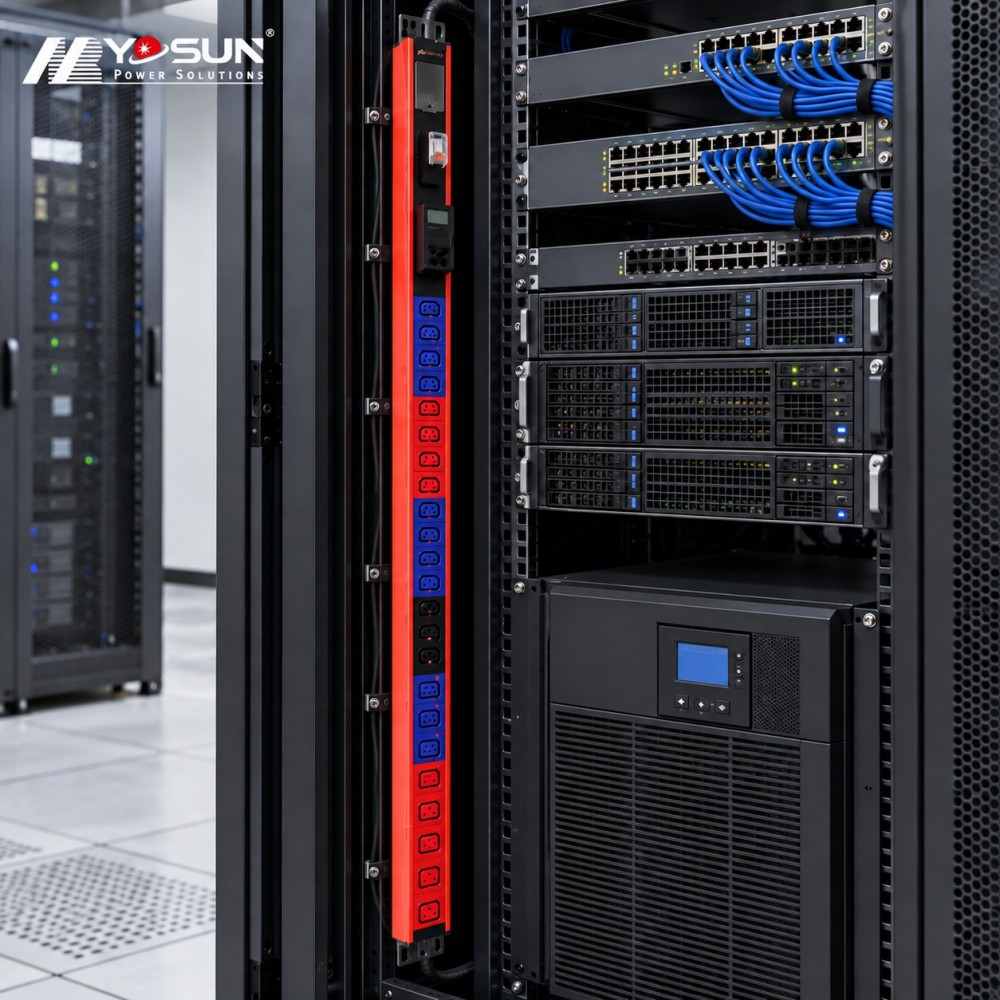
Six NEMA configurations cover the vast majority of North American rack power needs. The table below summarizes the most common options:
| NEMA Code | Voltage Family | Current Rating | Design Style | Common Use Case |
|---|---|---|---|---|
| 5-15 | 125 V | 15 A | Straight-blade | Standard wall circuits, low-density server racks |
| 5-20 | 125 V | 20 A | Straight-blade | Mid-density 120V rack deployments |
| L5-20 | 125 V | 20 A | Locking | Secure 20A 120V feeds, vibration-prone sites |
| L6-20 | 250 V | 20 A | Locking | 240V single-phase equipment |
| L6-30 | 250 V | 30 A | Locking | High-density 240V server and GPU racks |
| L14-30 | 125/250 V | 30 A | Locking | Transfer switches, dual-voltage backup power setups |
The two design styles serve different operational needs:
Most PDU vendors offer a full range of both input styles. For example, YOSUN NEMA PDUs ship with input options ranging from 5-15P and 5-20P up to L5-20P, L6-20P, L6-30P and L14-30P, with outlet mixes of 5-15R, 5-20R, C13 and C19 to match both facility power and IT equipment cord types.
Beyond connectors, NEMA also defines standardized ratings for electrical equipment enclosures, describing how well the housing resists dust, water, corrosion and physical impact.
Enclosure rating is an often-overlooked specification that directly impacts PDU reliability:
Buyers often compare NEMA enclosure ratings to IP (Ingress Protection) codes, as both systems measure resistance to solid particles and liquids. Always match the PDU’s enclosure rating to its installation environment to avoid premature hardware failure.
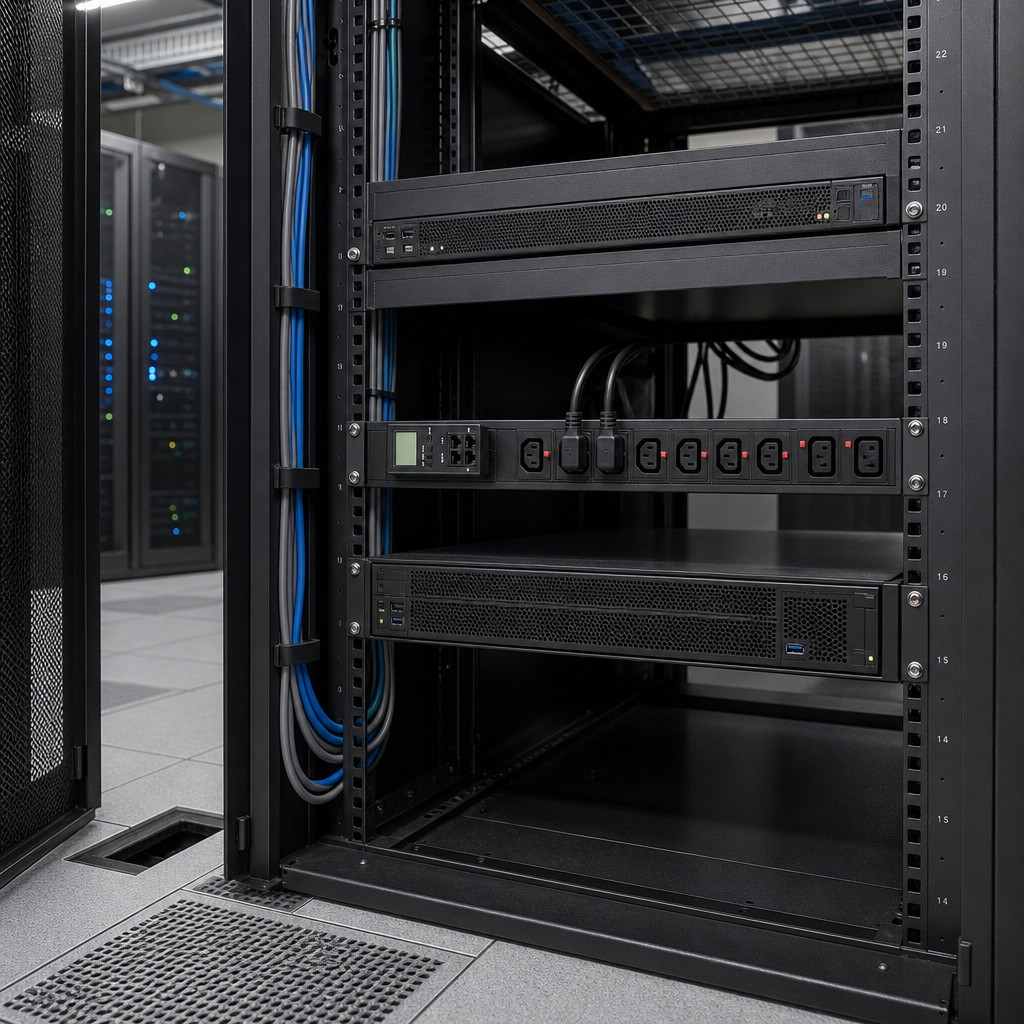
Mismatched NEMA configurations are a top cause of PDU returns and deployment delays. Follow these steps to ensure compatibility:
The NEMA label identifies the standard plug and outlet shapes used on the unit, along with their voltage family and current rating. You can cross-reference this code with your equipment plug types to confirm fit before purchase.
No. Both are part of the 125V voltage family, but their slot shapes are different, and a 5-15 plug will not seat properly in a 5-20 receptacle. Always read the full connector code, not just the first number.
Locking connectors hold the plug securely against vibration and accidental pull-out. They are recommended for high-current feeds, industrial/edge sites, and circuits that must stay online during service work. Straight-blade connectors are faster to connect and ideal for static, low-vibration data center racks.
Yes. NEMA enclosure ratings define how well the PDU housing resists dust, water and corrosion. Basic enclosures work for clean server rooms, while sealed higher-rated enclosures are required for dusty, humid or industrial edge sites.
Adapters only change the physical shape of the connector, not the electrical capacity of the circuit behind the outlet. They are acceptable for temporary use, but a permanent solution requires a PDU with the correct native NEMA configuration to avoid overload hazards.