How to Choose the Best Rack Mount Power Strip for Your Needs
Learn how to choose the best rack mount power strip by evaluating load capacity, outlet types, safety features, and mounting options for your setup.


+86 15867381241

Rack power distribution units (PDUs) are the backbone of modern data center power management, delivering stable power delivery, proactive overload protection, and real-time consumption visibility. As rack power densities continue to rise and multi-vendor hardware becomes standard, panel-level power control is no longer sufficient — outlet-level visibility and control are required for safe, efficient, and scalable operation.
At first glance, an in-rack PDU looks similar to a consumer power strip: both take a single power feed and split it across multiple outlets. The similarity ends there. PDUs add a full layer of intelligent monitoring and management, turning basic power distribution into a controlled, measurable process.
| Feature | Standard Power Strip | Rack PDU |
|---|---|---|
| Core function | Basic power distribution | Managed power delivery + monitoring + control |
| Usage visibility | None; no load reporting | Real-time current draw at inlet, branch or outlet level |
| Remote control | None | Individual outlet on/off switching from a central dashboard |
| Overload protection | Basic breaker only, no advance warning | Threshold alerts before trip limits, plus circuit protection |
| Ideal use case | Small wiring closets, low-density static loads | Production server racks, colocation cages, high-density deployments |
Ordinary power strips work only for static, low-priority loads. For production environments, they have critical gaps:
These gaps explain why efficient data center power management depends on intelligent PDUs, not basic strips.

PDUs deliver three foundational capabilities that standard strips cannot, each directly improving reliability, efficiency and operational agility.
Metered PDUs provide live current draw data at the inlet, branch or outlet level. Operators can see exactly how much power each rack uses, identify imbalanced loads, and spot circuits approaching their limit before they trip. This eliminates guesswork from capacity planning: teams can track usage trends and expand infrastructure based on measured data, not estimates.
Switched PDUs allow staff to power-cycle individual servers or devices from a central dashboard, no onsite visit required. This cuts truck rolls for simple reboots, reduces mean time to recover for hung devices, and allows safe isolation of faulty hardware without powering down an entire rack.
Intelligent PDUs can be configured to trigger automated alerts when current crosses a user-defined threshold, giving teams time to rebalance loads before a breaker trips. This turns unplanned outages into planned maintenance events, protecting uptime for critical workloads.
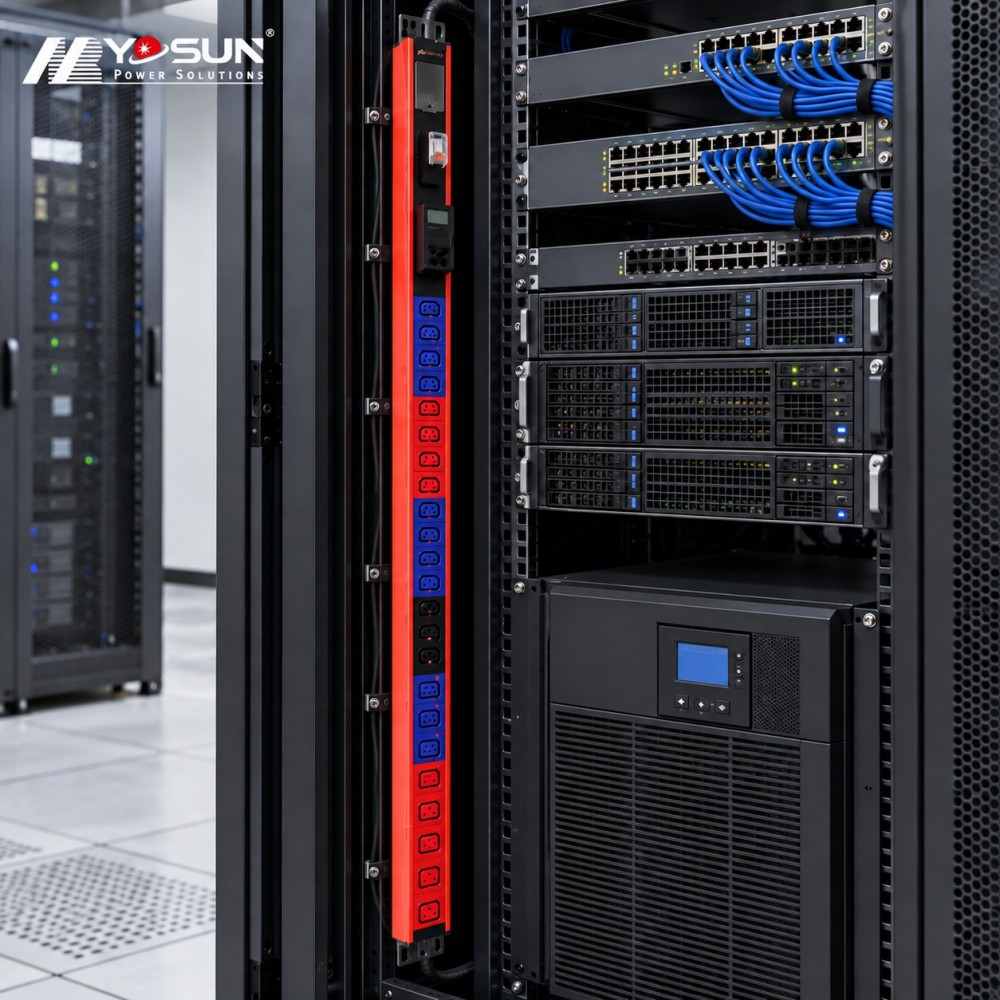
Colocation facilities have unique requirements: each tenant needs verifiable usage data, and operators need clear visibility into total capacity. Purpose-built colocation PDUs address both needs with tiered intelligence levels that scale with tenant requirements.
| Tier | Capabilities | Best Use Case |
|---|---|---|
| Basic | Power distribution only, no metering | Low-priority, non-billed cages |
| Inlet-metered | Total rack draw at feed level | Capacity planning, high-level billing |
| Outlet-metered | Per-receptacle consumption tracking | Tenant chargeback, granular fault isolation |
| Switched & monitored | Network-connected, remote outlet control + full metering | Premium colocation, high-availability deployments |
A single-chassis platform that supports all four tiers allows operators to standardize hardware across deployments and upgrade metering capabilities as tenants grow, without replacing the entire unit. For example, NBYOSUN Colocation Data Center PDUs are built on this scalable design, supporting single-phase 120V/208V/230V and three-phase 400V inputs, with 4 to 54 outlets across 0U vertical, 1U and 2U form factors to fit everything from small tenant cages to dense compute racks.
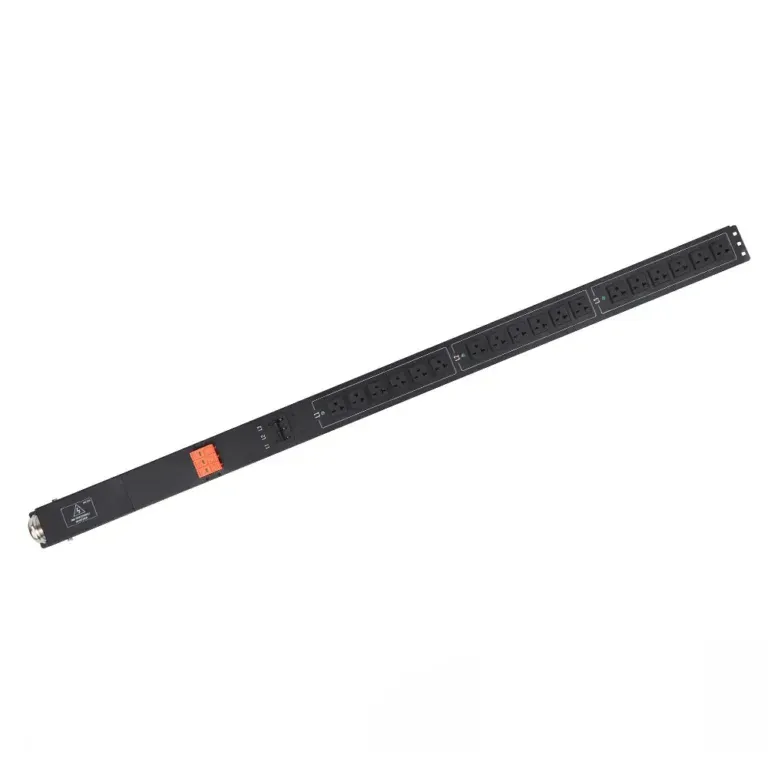
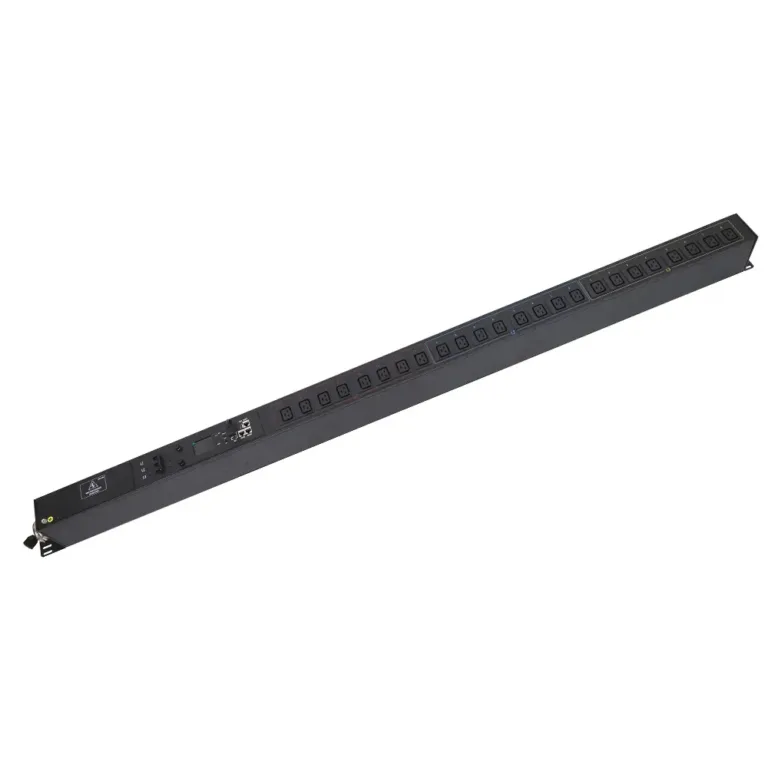
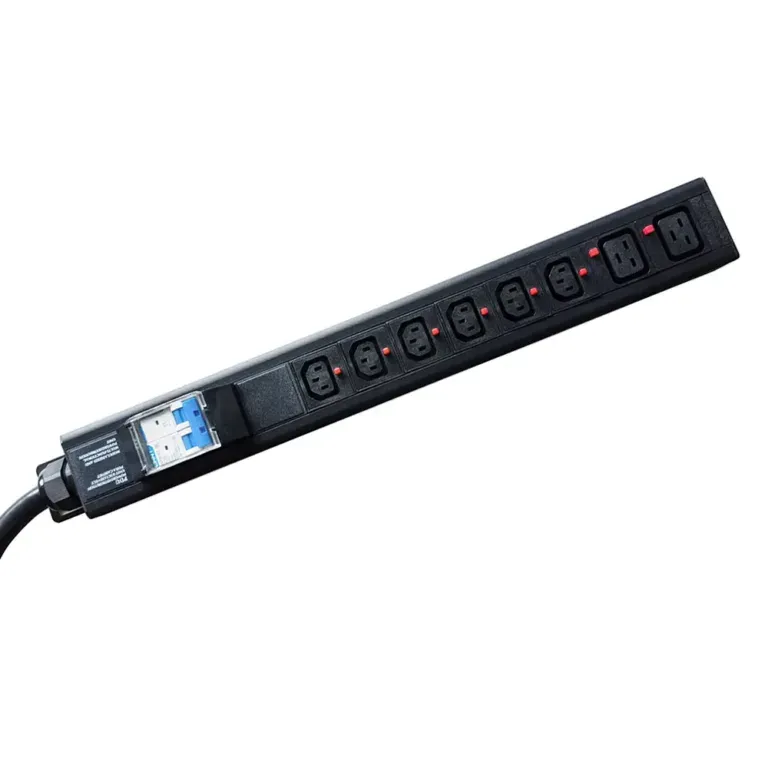
Enterprise PDUs support multiple mounting styles and outlet counts to match different rack designs. 0U vertical units maximize outlet density for full-height cabinets, while 1U/2U horizontal units fit shallow enclosures. Customizable C13/C19 outlet ratios let operators match the PDU to their actual hardware bill of materials, instead of reworking the rack to fit a generic PDU.
For high-availability deployments, PDUs support multiple redundancy options matched to tenant SLA requirements:
Branch circuit monitoring tracks load on each circuit group and flags approaching limits. Hydraulic magnetic breakers maintain consistent trip points across temperature swings, ensuring reliable, predictable protection.
For colocation chargeback, outlet-level accuracy is critical. High-quality PDUs deliver ±1% metering accuracy per outlet, with factory calibration records to validate readings. This allows operators to bill tenants based on measured consumption instead of flat fees, reducing billing disputes and building trust.
Enterprise PDUs integrate natively with DCIM platforms via standard protocols including SNMP v1/v2c/v3, Modbus TCP/RS-485, BACnet and REST API. Optional environmental sensors track cabinet temperature, humidity and water leakage, giving operators early warning of thermal or plumbing issues before they damage hardware.
Follow these steps to select the correct unit for your rack or cage:
A power strip only splits power across outlets with no feedback. A PDU adds live power monitoring, remote outlet control and configurable overload alerts. This visibility becomes critical as rack density rises or multiple tenants share a power feed.
Yes, when using billing-grade metered units. NBYOSUN colocation PDUs deliver ±1% accuracy per outlet, with factory calibration records included with every unit. This allows operators to bill tenants based on verified, documented consumption instead of estimates.
Dual A/B feeds work for sites with two independent power sources. Automatic transfer switches provide seamless failover for high-availability deployments. Manual bypass supports safe servicing without rack downtime. Operators select the option aligned to each tenant’s uptime requirements.
Modern PDUs communicate via standard protocols including SNMP v1/v2c/v3, Modbus TCP/RS-485, BACnet and REST API. They integrate with most DCIM platforms without custom development, and many include optional environmental sensors for temperature, humidity and water detection.
Start with your total number of connected devices, then add spare ports for future expansion. Most platforms offer 4 to 54 outlets across 0U vertical, 1U and 2U form factors, with support for single-phase and three-phase inputs to match most rack power layouts.