A Practical Guide to Choosing Your Next 0U PDU
Select the right 0U PDU by matching your facility's power, choosing the correct outlets, and deciding on the level of intelligence your setup requires.

+86 15867381241
Traditional rack power distribution units (PDUs) are designed to deliver power to low-density general-purpose servers. They cannot safely support GPU-heavy AI workloads, which draw far higher current, generate extreme heat, and leave zero margin for electrical error. For modern AI infrastructure, rack PDUs must deliver far more than basic power distribution.
Five core capabilities define purpose-built AI rack PDUs: right-sized power capacity, granular energy monitoring, thermal and cooling integration, redundant failover reliability, and data-driven efficiency. Each is critical to supporting stable, uninterrupted AI training and inference workloads. This guide breaks down why standard PDUs fail in high-density AI environments and what upgraded units add.
Historically, data center design was driven by floor space, with success measured in servers per square foot. AI workloads have rewritten this equation: power is now the limiting factor, and 80–100 kW per rack is already standard for dense GPU deployments.
Conventional PDUs were engineered to distribute a modest feed across many low-draw outlets. They lack the headroom for AI racks, where every outlet can run near full capacity simultaneously. The result is a unit that fits mechanically but fails electrically under sustained full load.

For AI deployments, planning starts with kilowatts, not socket quantity. Rack design is a power project first: feed size, breaker rating, and monitoring tier are all derived from the target rack draw, not a generic outlet template.
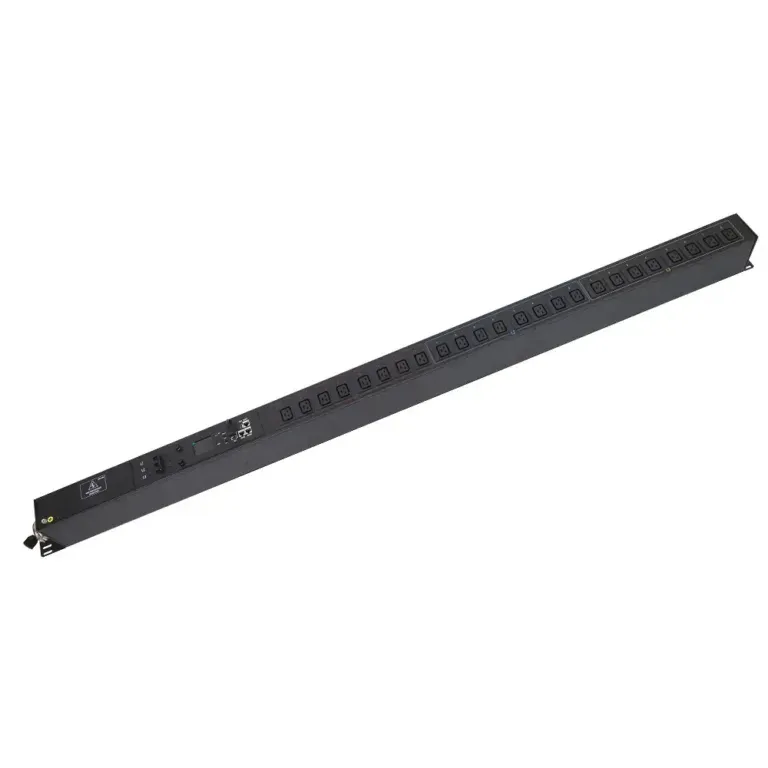
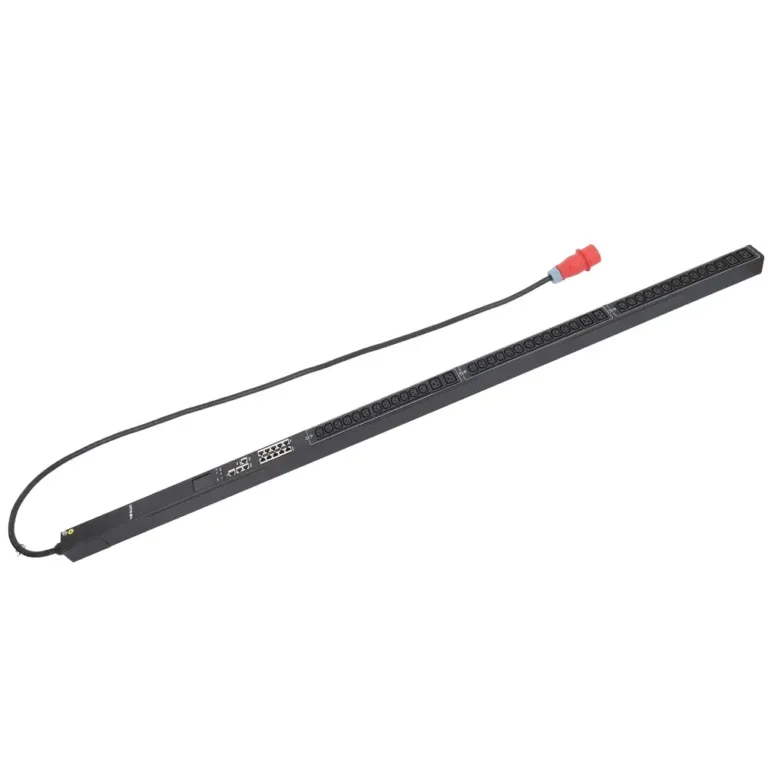
YOSUN AI Rack PDUs are engineered for GPU, HPC, and inference racks drawing 50kW to 300kW. At 400V three-phase, a 50kW rack draws 72A per phase, while a 300kW rack requires 433A per phase — the feed rating defines every other design decision.
| Rack Power Draw | Current Per Phase (400V 3-Phase) |
|---|---|
| 50 kW | 72A |
| 300 kW | 433A |
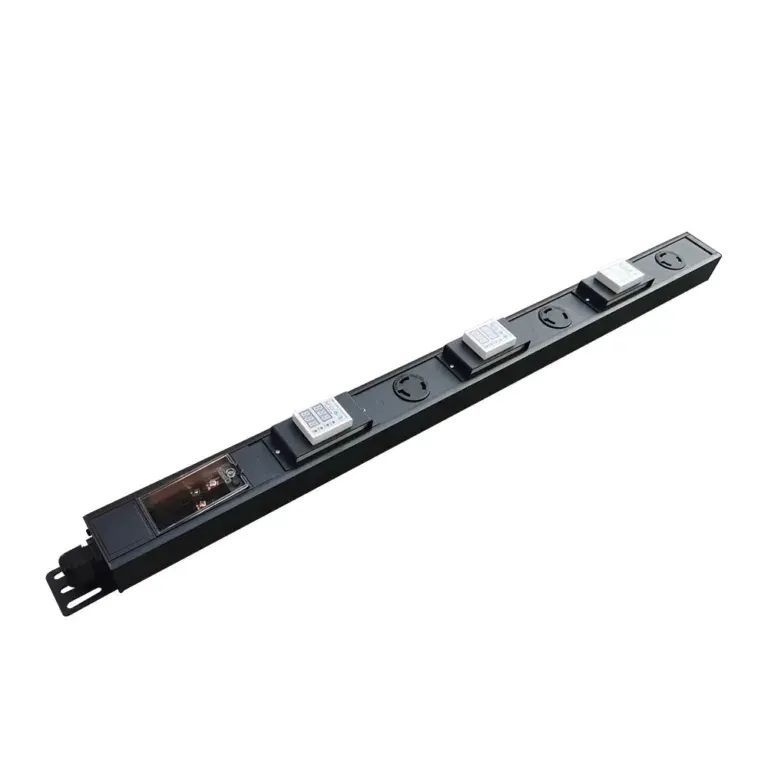
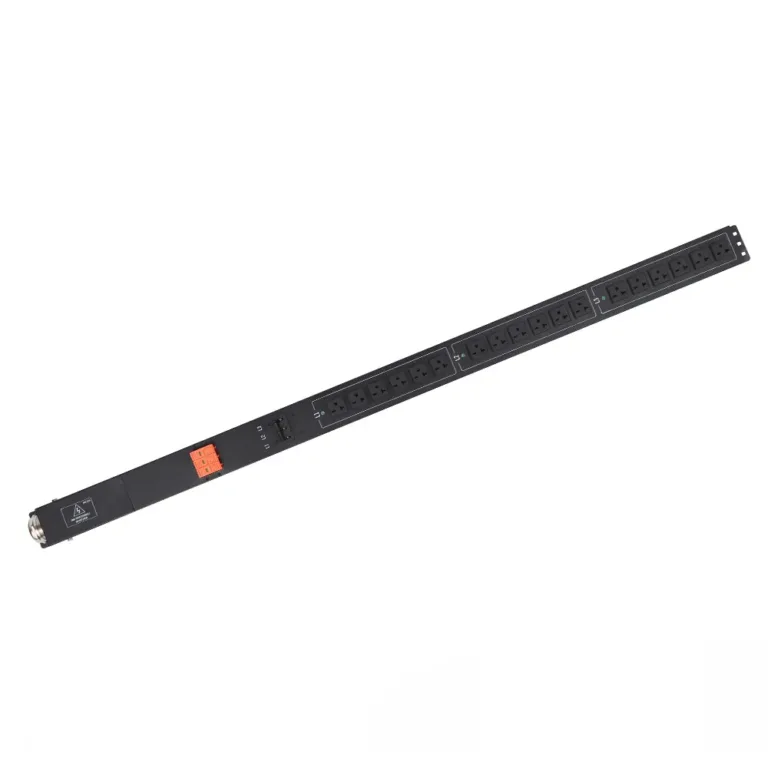
Units are available in 32A to 100A three-phase configurations, in 0U vertical and 1U/2U horizontal form factors, with customizable voltage (208V, 400V, 480V) and C13/C19 outlet ratios matched to actual hardware bills of materials. This approach turns per-rack power density from an estimate into a guaranteed, matched figure across the facility.

In high-density AI environments, a single overloaded branch circuit can trip a breaker and interrupt hours or days of model training. Operations teams need precise, real-time answers: which rack is drawing the most current? Which outlet powers a failing node? Where is the energy budget being spent?
AI Rack PDUs offer three tiers of metering, each addressing a different operational need:
| Metering Level | Primary Use Case |
|---|---|
| Inlet | Total rack draw tracking and capacity planning |
| Branch | Circuit imbalance detection and early fault warning |
| Outlet | Per-node usage chargeback and individual device fault isolation |
Built-in remote monitoring lets teams oversee every rack from a single dashboard. Automated alerts trigger when current, temperature, or other metrics cross user-defined thresholds, allowing staff to intervene before issues cause downtime.
Metered data also drives efficiency: teams can identify underutilized capacity, right-size circuits, and eliminate waste. In AI facilities, power distribution and monitoring function as one integrated system, not separate components.
Every watt of power consumed by a rack converts directly to heat in the same physical space. As power density rises, heat load rises proportionally. Cooling cannot be planned after power layout is finalized — the two systems must be designed together.
This changes how engineers approach rack density:
Power cabling, busways, and coolant lines all compete for the same rear rack channel. Coordinated planning avoids spatial conflicts later. Good AI power design therefore starts with a heat budget, not a cable list.
Liquid-cooled cabinets expose PDUs to higher ambient temperatures from coolant manifolds and lines. Units must maintain full performance in these elevated-temperature environments.
YOSUN AI Rack PDUs use a thermal-resistant aluminum alloy housing, with PC/ABS modules rated for operation above 120°C. Integrated environmental sensors track cabinet temperature and humidity, giving operators early warning of rising thermal trends before they cause faults. This design works reliably for both air-cooled and liquid-cooled dense AI deployments.
AI training clusters draw power in sharp, synchronized surges: thousands of GPUs ramp up simultaneously, creating instantaneous load spikes that stress rack transformers and facility feeds alike. PDUs built for steady, gentle load changes can sag, trip, or overheat under these conditions.
GPU nodes are also non-linear loads that inject harmonic current back into the supply. Harmonic distortion degrades power quality facility-wide and creates extra heat inside PDU transformers, accelerating winding wear over time. Harmonic-aware transformer design manages this extra heat and preserves unit lifespan across years of service.
AI Rack PDUs support dual independent A/B power feeds, so each rack draws from separate upstream sources. ATS/STS automatic transfer switches shift load to the healthy feed if one side fails. Hot-swappable controllers allow technicians to replace failed control modules without dropping rack power.
These protections grow more critical as density increases: higher current makes every connection and feed point a potential single point of failure. Increased rack power density affects the entire electrical system, from branch circuits all the way up to upstream switchgear. Facilities that plan power distribution as one connected system catch weak points early.
AI GPU racks draw far more power than standard server cabinets. YOSUN AI Rack PDUs are designed for 50kW to 300kW per rack. All design decisions start with feed power and current rating; outlet count is a secondary detail matched to the actual hardware.
Each tier answers a different operational question. Inlet metering tracks total rack capacity. Branch metering detects circuit imbalance early. Outlet metering enables per-node chargeback and precise fault isolation. Teams select the tier that matches their operational and billing needs.
Yes. YOSUN PDUs feature a thermal-resistant aluminum housing and high-temperature modules rated above 120°C, suitable for both dense air-cooled and liquid-cooled cabinets. Integrated environmental sensors add extra visibility for liquid-cooled deployments.
Dual A/B power feeds draw from separate upstream sources. Automatic transfer switches shift load to the healthy feed on failure. Hot-swappable controllers allow replacement without interrupting rack power. Together these features maximize uptime for critical training workloads.
Greater density pushes more current through every connection and feed in the power chain. A single weak point can take down an entire cabinet. Power distribution must be planned as one end-to-end system, from branch circuits up to main switchgear, to ensure reliability at every level.