Your Guide to Choosing a Reliable IP Power Distribution Unit
Choose the right IP power distribution unit by evaluating power capacity, outlet types, remote management, and scalability for reliable and efficient operations.


+86 15867381241
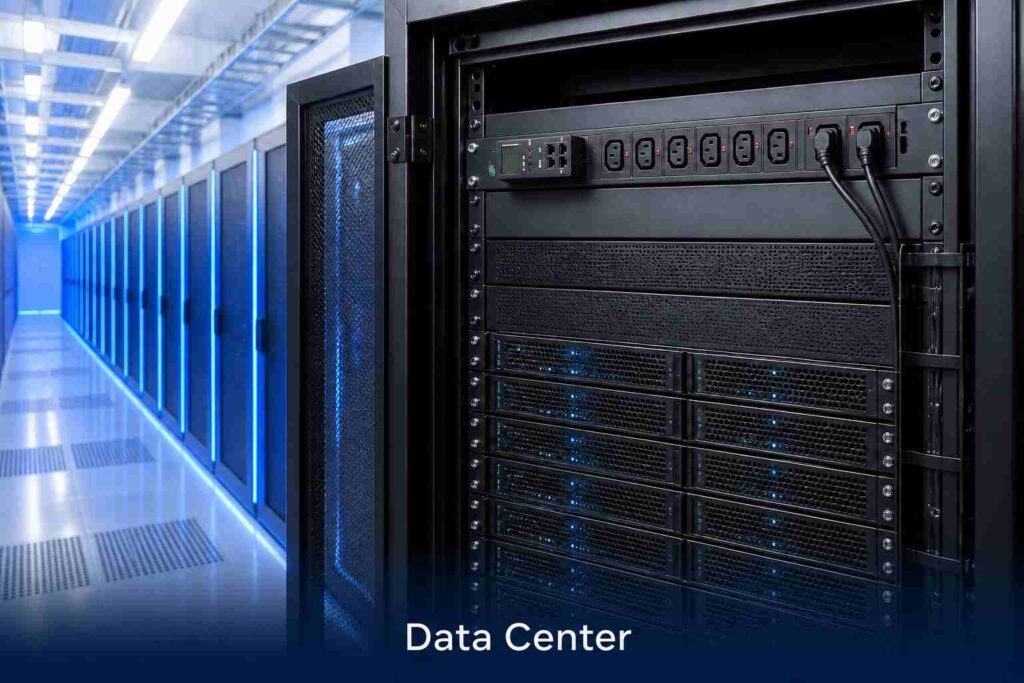
Standard fixed-configuration PDUs can no longer keep pace with the rapidly evolving power demands of modern data centers. This gap has turned customized and configurable PDU solutions from a luxury upgrade into essential infrastructure, not an optional extra.
Driven by AI and HPC workloads, average rack density has climbed from 7 kW per rack in 2021 to a projected 27 kW by 2026, with dedicated AI cabinets already drawing 50 kW or more. Off-the-shelf PDUs with fixed outlet counts, plug types, and load limits cannot accommodate this level of change without creating safety risks, downtime, and costly retrofits.
Rack power density has accelerated far faster than legacy PDU specifications were designed to handle, led primarily by AI training and inference infrastructure.
| Year | Average Rack Density (kW/rack) |
|---|---|
| 2021 | 7 |
| 2023 | 8.5 |
| 2024 | 12 |
| 2025 | 16 |
| 2026 | 27 |
Source: AFCOM survey data via Upsite Technologies
Industry analysts project 15.1% CAGR in the PDU market from 2023–2028, fueled by AI and HPC densification. Global data center energy consumption is on track to nearly double to ~1,065 TWh by 2030. Traditional 208V three-phase 60/63A rack PDUs and 120/208V distribution architectures are no longer sufficient for these loads. Upstream, facilities are already shifting to flexible overhead track busway rated 40–1250A to support higher density and faster reconfiguration — rack-level PDUs must evolve in parallel.
Standard PDUs still work well for low-density, stable environments such as small server rooms with predictable loads. They only become a liability when deployed in fast-changing, high-density facilities.
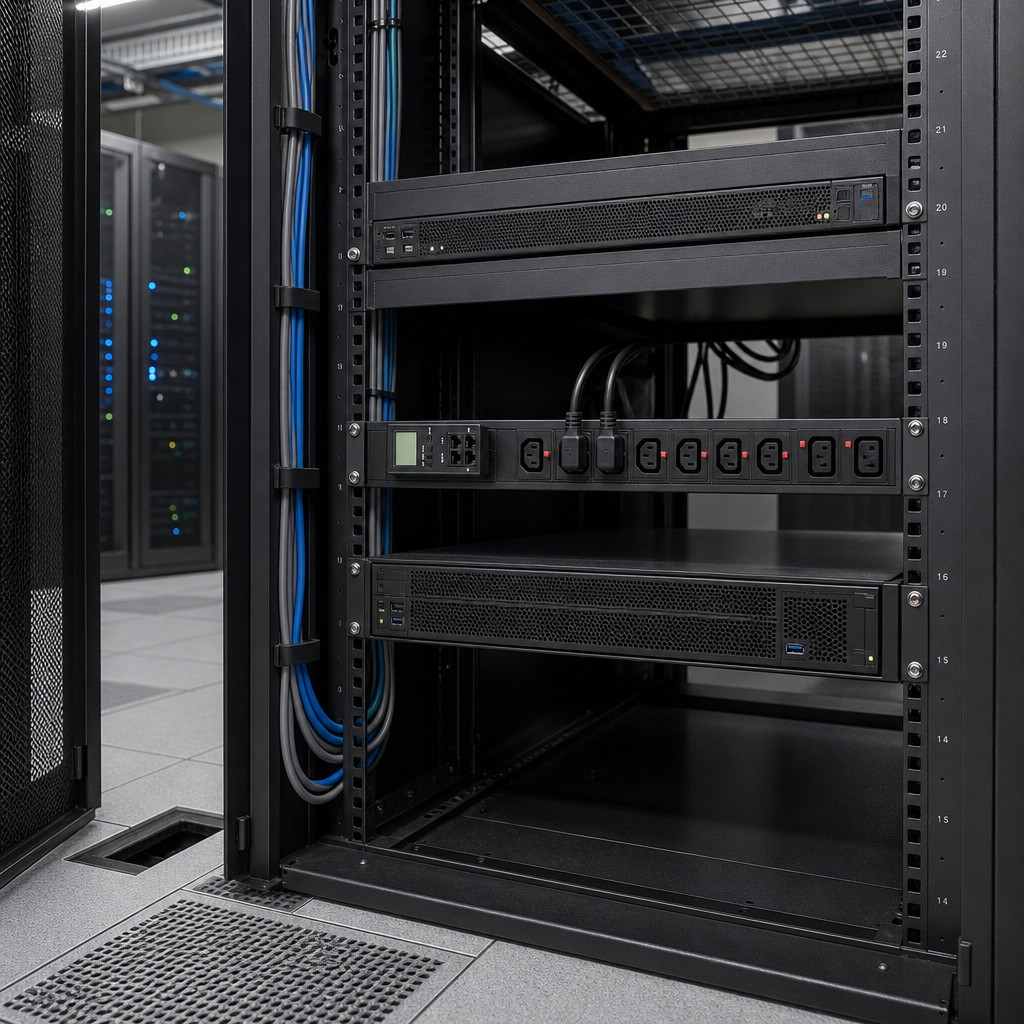
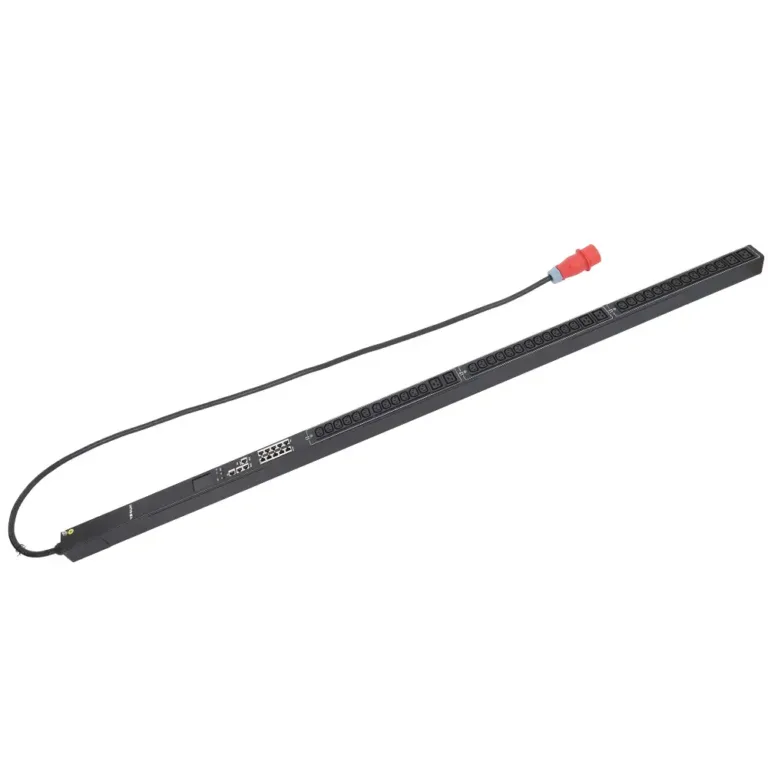
Custom PDUs are specified to match the actual facility and equipment at the design stage: input plug, receptacle type, voltage rating, and phase configuration are all tailored to the deployment. This eliminates adapters, reduces arcing and loose connection risks, and shortens commissioning timelines.
By matching every layer of the power chain from feed to rack, design-level customization removes weak points before deployment. Branch circuits, breaker ratings, and outlet counts are sized to the real load profile, creating a more reliable and efficient distribution system with fewer fault points.
Most downtime stems from small design compromises, not catastrophic failures. Customization addresses these risks directly:
For AI clusters, units sized for peak transient load maintain stable delivery through training runs and inference bursts. The financial math favors this approach: one avoided outage pays for the premium of custom PDUs many times over.
AI clusters typically expand in phases as models scale. Configurable modular PDUs let operators add outlets, power modules, or monitoring functions over time without replacing the entire unit. This protects capital investment and aligns spending with actual deployment growth, instead of forcing overprovisioning on day one.
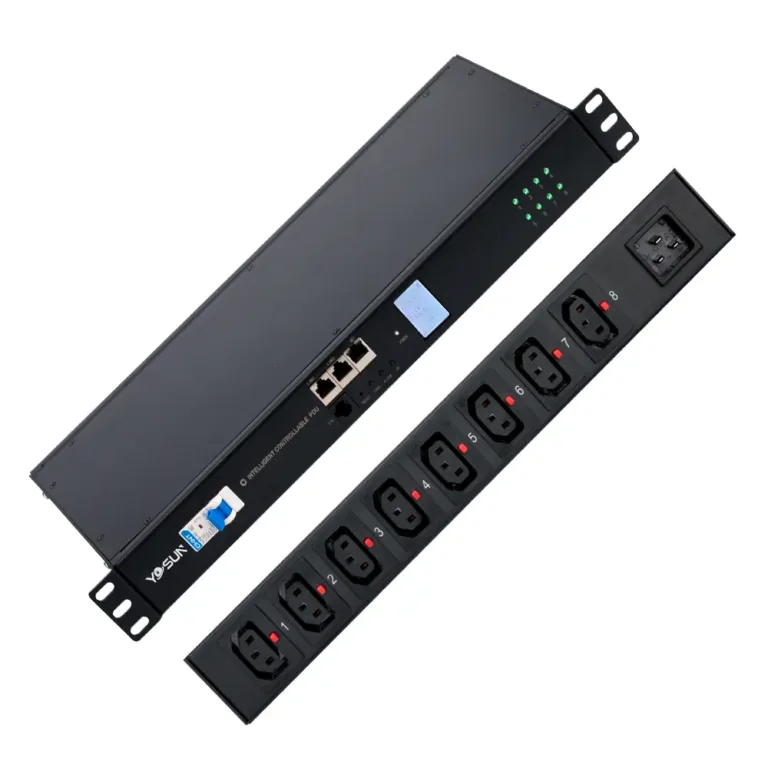
PDUs are available in three capability tiers, and custom deployments let operators select the right tier per rack instead of paying for unnecessary features site-wide.
| Capability | Basic PDU | Metered PDU | Switched PDU |
|---|---|---|---|
| Remote monitoring | No | Limited | Yes |
| Remote outlet control | No | No | Yes |
| Environmental sensors | No | No | Yes |
| Threshold alerting | No | No | Yes |
| DCIM integration | No | No | Yes |
When paired with server consolidation and airflow optimization, metered PDUs can improve data center energy efficiency by up to 20%. Granular data also supports accurate capacity planning and chargeback billing.
The terms are often used interchangeably, but they represent two distinct approaches for different use cases:
For most AI expansion, colocation, and retrofit projects, modular configurable PDUs deliver the best balance of flexibility, cost, and delivery speed. Full custom design is rarely required.
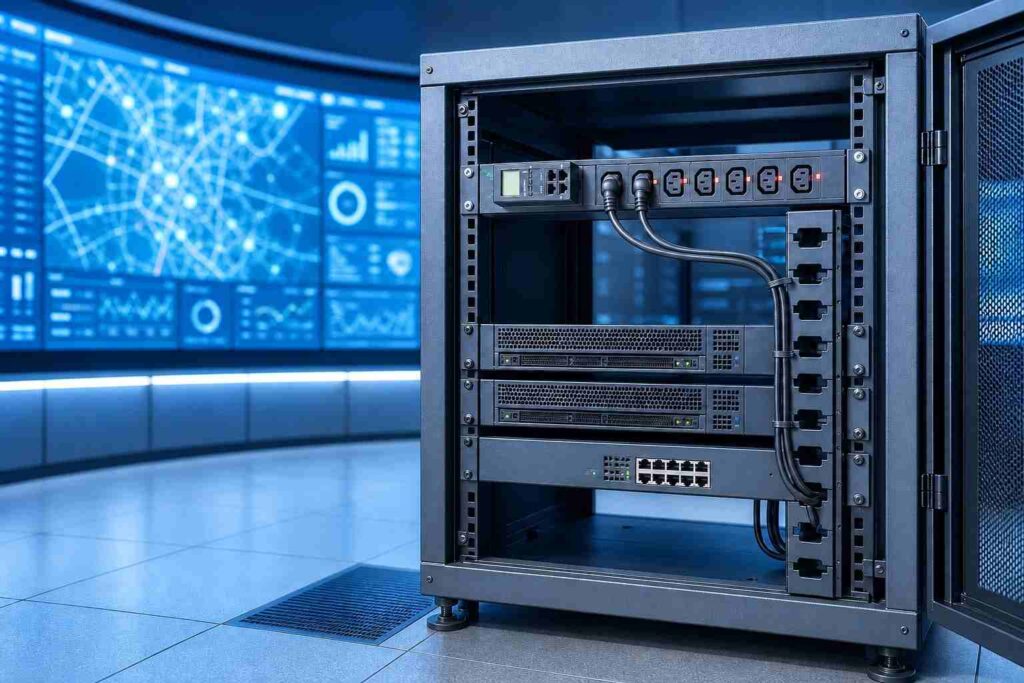
Standard PDUs work well for low-density, stable environments such as small server rooms and edge sites with predictable loads. They only become a limitation when density, voltage diversity, or uptime requirements increase rapidly.
Lead time depends on configuration complexity and certification requirements. Modular configurable units have lead times close to standard PDUs. For global deployments, a CB Test Certificate can be converted to local national marks without retesting, significantly shortening multi-market rollouts.
Yes. Modular platforms allow teams to add outlets, power modules, or monitoring functions as racks fill out, without full unit replacement. Current high-density configurations support up to 50 kW per cabinet for AI deployments, with room to expand.
Basic units provide power distribution only. Metered units show total power consumption locally and remotely. Switched units add remote outlet control, sensors, and alerts. Metered units can improve energy efficiency by up to 20% when paired with server and airflow optimization.
Upfront unit price is typically higher, but savings come from fewer adapters, less rework, shorter deployments, and fewer outage events. With the average unplanned data center outage costing $505,500, custom units deliver net cost savings for high-availability environments.