Which 1RU PDU Model Fits Your Needs?
Compare 1RU PDU models by power capacity, outlet types, and monitoring features to find the best fit for your rack system's power management needs.


+86 15867381241
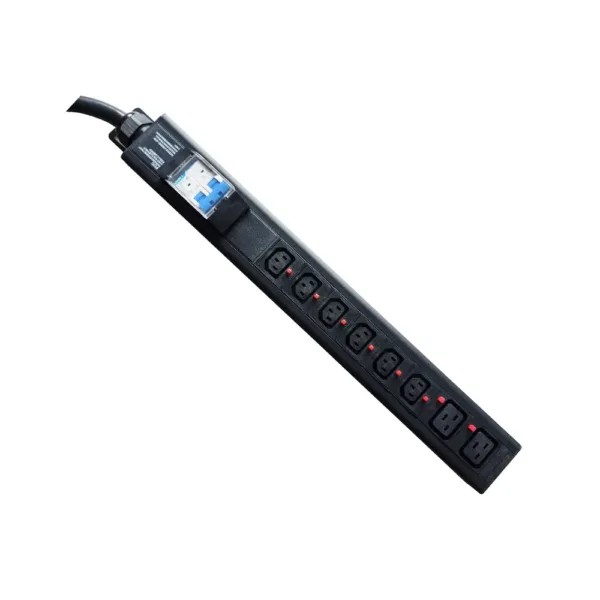
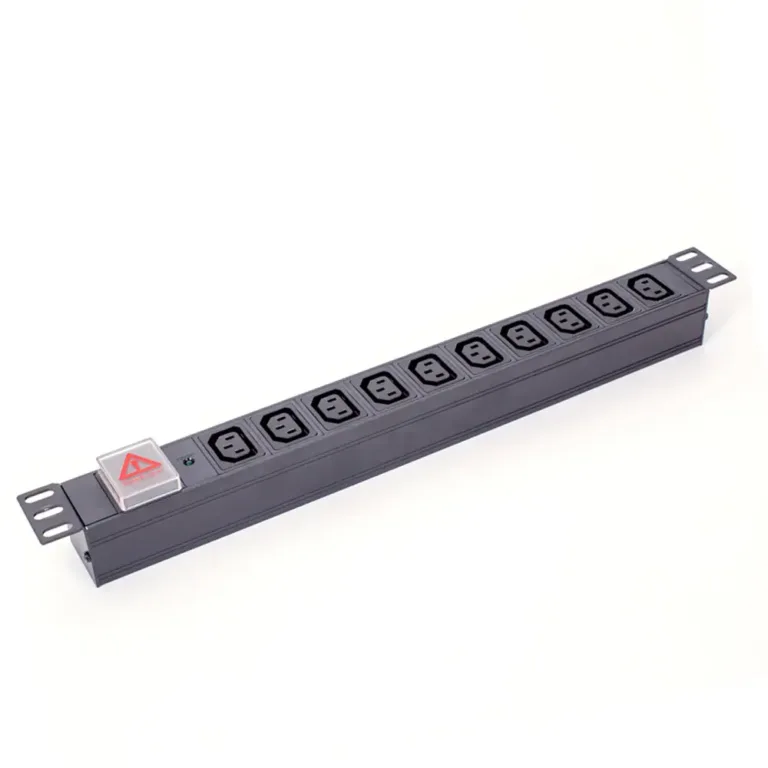
The main difference between C13 and C14 in PDUs is their gender and function: C13 is a female socket (outlet) found on PDUs and power cords, while C14 is a male inlet built into devices and PDU inputs. They are designed to work together as a matched pair to power IT equipment safely.
C13 and C14 are the most common connectors used in data centers and IT environments worldwide. This guide explains their key differences, how they work in PDUs, and how to choose the right one for your needs.
C13 and C14 are part of the IEC 60320 international standard for appliance couplers. They are designed to provide a safe, reliable and standardized way to connect electrical equipment to power sources.
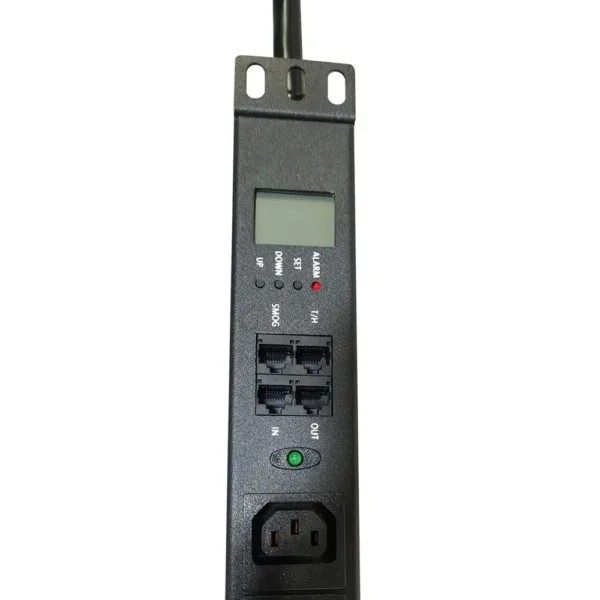
The C13 is a female socket connector typically found:
It features a rectangular shape with curved sides and three rectangular holes for the pins. The C13 is rated for 10A at 250V under IEC standards, with some UL-listed cords rated for up to 15A at 125V for North American use.
The C14 is a male inlet connector typically found:
It has an octagonal shape with three flat blades arranged in a triangle. Like the C13, it is rated for 10A at 250V under IEC standards.
💡 Pro Tip: C13 and C14 are always used as a matched pair. You cannot use one without the other.
The most obvious difference is their gender and shape:
| Feature | C13 Connector | C14 Connector |
|---|---|---|
| Type | Female socket | Male inlet |
| Shape | Rectangular with curved sides | Octagonal |
| Pin Configuration | Three rectangular holes | Three flat blades in a triangle |
| Typical Location | End of power cords, PDU outputs | Back of devices, PDU inputs |
This design includes a built-in polarization and keying feature that prevents incorrect insertion, ensuring proper electrical connection and safety.
Both connectors have identical electrical ratings under international standards:
| Rating | C13 | C14 |
|---|---|---|
| IEC Standard | 10A, 250V | 10A, 250V |
| UL/CSA Standard | Up to 15A, 125V | Up to 15A, 125V |
⚠️ Important: Always use power cords with a current rating equal to or higher than the device’s power consumption. Using undersized cords can cause overheating and fire hazards.
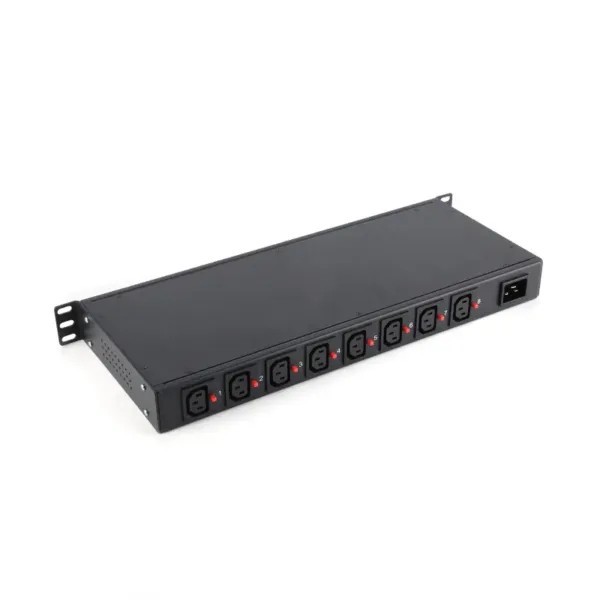
PDUs (Power Distribution Units) use both C13 and C14 connectors in different ways:
This standardized system allows for easy equipment replacement and reconfiguration in data centers.
C13 and C14 connectors are used to power almost all standard IT equipment:
For higher-power equipment (above 10A), C19/C20 connectors are used instead. These are rated for 16A/20A and work in the same way as C13/C14.
The choice of C13/C14 connectors also depends on rack density:
Always check:
C13 and C14 are complementary IEC 60320 connectors that form the universal backbone of power distribution in data centers and IT environments worldwide. Adopted by nearly all leading PDU manufacturers as the global industry standard, understanding their differences and using them correctly is essential for safe, reliable and interoperable power management.
As a trusted PDU manufacturer with over 20 years of industry experience, NBYOSUN offers a full range of high-quality PDUs equipped with standard C13 outlets and C14 inlets. Our products meet all international safety standards including IEC 60320, CE and ISO 9001, and are available in both horizontal and vertical configurations to fit any rack setup. Contact us today to discuss your custom power distribution needs.
C13 is a female socket connector, while C14 is a male inlet connector. They are designed to work together as a matched pair to power electrical equipment.
Yes. This is the standard configuration: the C13 end of the cord plugs into the C14 inlet on the PDU, and the C14 end plugs into the device.
Under IEC standards, they are rated for 10A at 250V (2500W). Under UL standards, some versions are rated for up to 15A at 125V (1875W).
C19/C20 are larger connectors rated for 16A/20A, used for higher-power equipment like servers and UPS systems. They work in the same way as C13/C14 but handle more current.
Yes, when used correctly. They are standardized under IEC 60320 and include safety features like polarization and keying to prevent incorrect insertion.