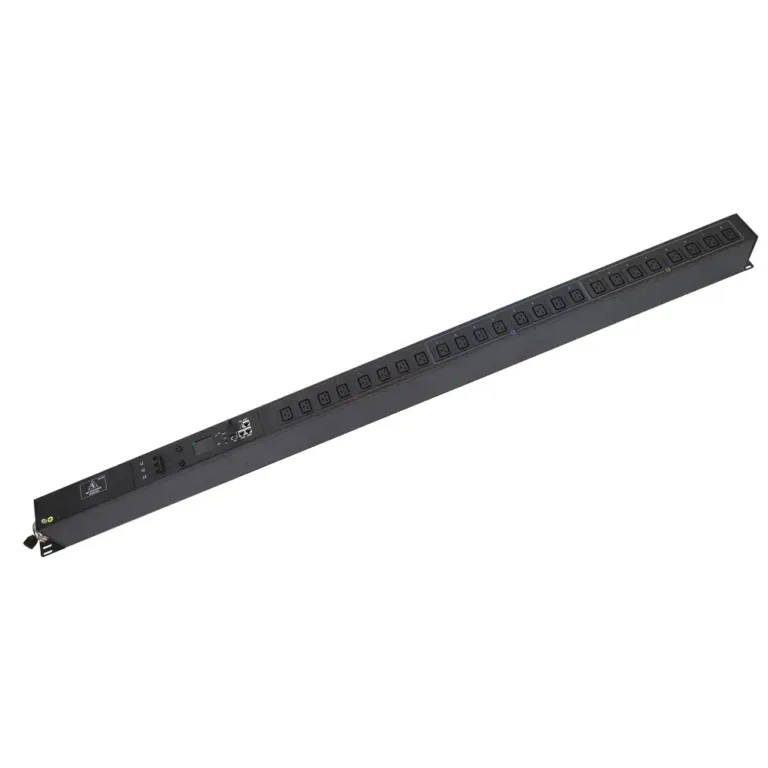
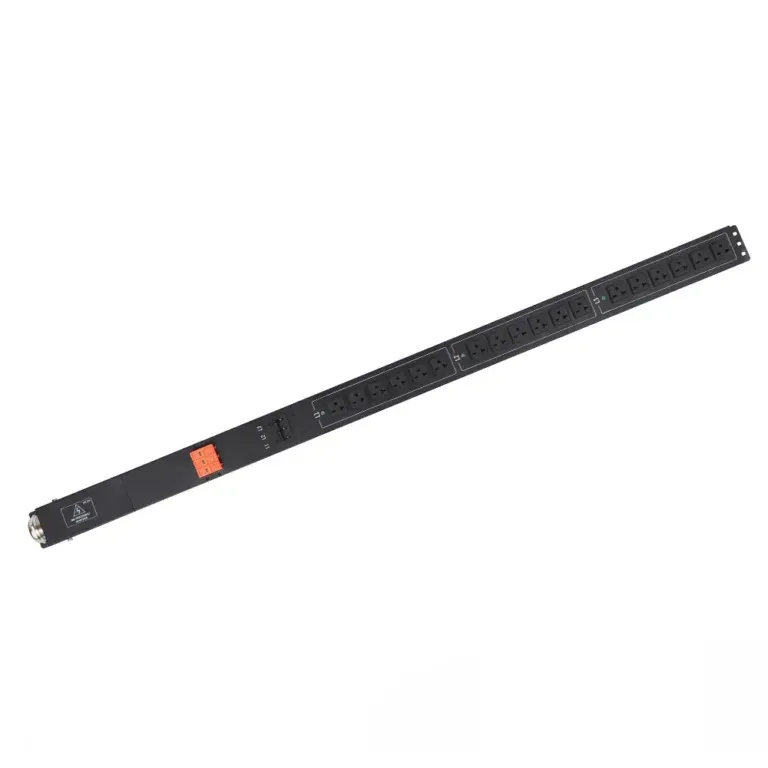
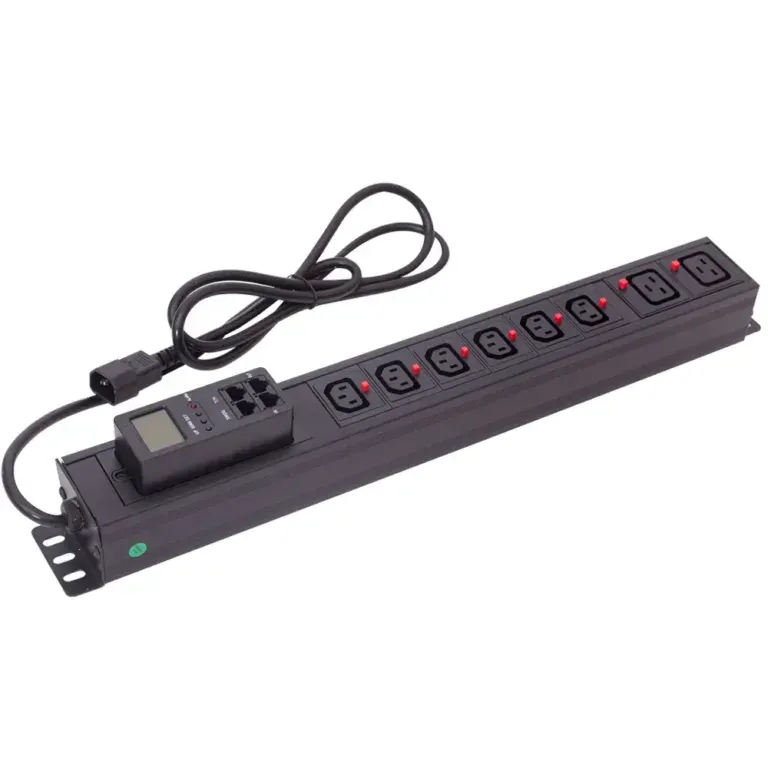
A Power Distribution Unit (PDU) is the backbone of reliable power management in server rooms and data centers. It distributes electricity to multiple devices while keeping cables organized and preventing overloads.
PDUs are categorized by their functionality, from basic power distribution to advanced remote management and AI-powered optimization. Choosing the right type depends on your facility size, power requirements and need for remote control.
Key Takeaways
The four main PDU types are Basic, Metered, Monitored and Switched
Metered PDUs show real-time power usage to prevent overloads and save energy
Switched PDUs allow remote outlet control to reduce downtime
Smart PDUs add AI analytics, environmental monitoring and predictive maintenance
Specialized options include hot-swap, high-density and three-phase PDUs for enterprise needs
Main Types of PDUs
1. Basic PDUs
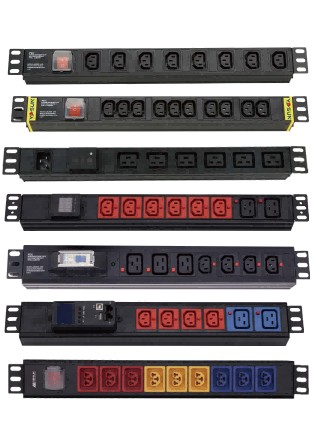
Basic PDUs provide simple, reliable power distribution with no additional features. They are the most affordable option and ideal for non-critical applications.
Key Features
Typical Applications
No monitoring or control
Small offices and home labs
Multiple outlet configurations
Non-critical IT equipment
Standard surge protection
Temporary installations
0U/1U/2U mounting options
Budget-conscious projects
Basic PDUs are best for setups where you only need to distribute power and do not require usage data or remote management.
2. Metered PDUs
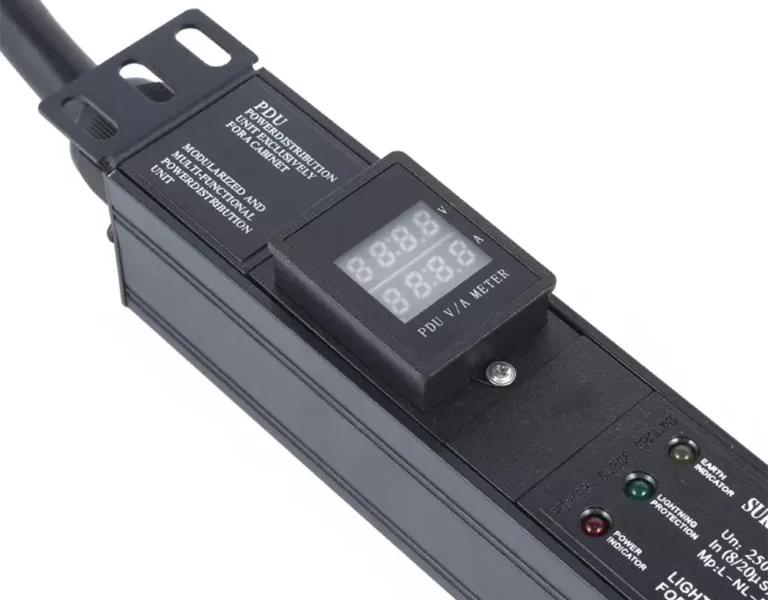
Metered PDUs feature a built-in display that shows real-time power usage for the entire unit. They help you track energy consumption and prevent circuit overloads.
Key Features:
Real-time voltage, current and power readings
Local display for on-site monitoring
Overload alarm notifications
Accurate energy usage tracking
Metered PDUs are perfect for racks where you need to monitor power usage but do not require remote control.
3. Monitored PDUs
Monitored PDUs build on metered functionality by adding network connectivity. You can view power usage data remotely and set up alerts for abnormal conditions.
Key Features:
Per-outlet or unit-level power monitoring
Remote access via web interface or SNMP
Customizable threshold alerts
Historical data logging
Monitored PDUs are ideal for medium-sized data centers where you need to track power usage across multiple racks.
4. Switched PDUs
Switched PDUs allow you to control individual outlets remotely. You can turn devices on, off or reboot them from anywhere, eliminating the need for on-site visits.
Key Features:
Remote outlet control
Power sequencing to prevent inrush current
Per-outlet power monitoring (most models)
Outlet lockout for security
Switched PDUs are the standard for enterprise data centers, as they significantly reduce downtime and improve operational efficiency.
5. Smart PDUs
Smart PDUs are the most advanced type, combining all the features of switched and monitored PDUs with AI-powered analytics and automation.
Key Features:
AI-driven predictive maintenance
Automatic load balancing
Integrated temperature and humidity sensors
Energy usage analytics and reporting
Integration with data center management systems
Smart PDUs help optimize energy efficiency, reduce downtime and simplify management of large-scale data centers.
Specialized PDU Options
Hot-Swap PDUs
Hot-swap PDUs feature a modular design that allows technicians to replace components without turning off power to connected devices. This is critical for mission-critical facilities where downtime is not acceptable.
Best For: Data centers, telecom facilities, financial institutions
High-Density PDUs
High-density PDUs are designed to power large numbers of devices in a small space. They support higher power capacities and feature optimized outlet layouts to maximize rack space utilization.
Best For: High-density server racks, cloud data centers, HPC clusters
Three-Phase PDUs
Three-phase PDUs distribute power across three electrical phases, allowing them to handle much higher loads than single-phase units. They also improve energy efficiency by balancing power across phases.
Best For: Large data centers, industrial facilities, facilities with high power requirements
Key Differences Between PDU Types
Feature
Basic
Metered
Monitored
Switched
Smart
Power Distribution
✅
✅
✅
✅
✅
Local Power Metering
❌
✅
✅
✅
✅
Remote Monitoring
❌
❌
✅
✅
✅
Remote Outlet Control
❌
❌
❌
✅
✅
Environmental Sensors
❌
❌
❌
Optional
✅
AI Analytics
❌
❌
❌
❌
✅
Typical Price Range
$50-$150
$100-$300
$200-$500
$300-$800
$500-$1500
How to Choose the Right PDU
Consider these factors when selecting a PDU for your facility:
Power Requirements: Choose single-phase for small setups, three-phase for high-density environments
Remote Management Needs: Switched or smart PDUs for facilities with limited on-site staff
Monitoring Requirements: Metered or monitored PDUs for energy management and overload prevention
Scalability: Select a PDU with extra capacity to accommodate future growth
Environmental Conditions: Look for PDUs with temperature and humidity sensors for hot or humid environments
Conclusion
PDUs range from basic power distribution units to advanced smart models with remote monitoring, outlet control, and environmental management capabilities. Choosing the right type depends on your power requirements, operational needs, and future expansion plans.
At YOSUN, we supply a wide range of PDU solutions for data centers, server rooms, telecommunications networks, and industrial facilities. Understanding the differences between PDU types can help ensure reliable power distribution and more efficient infrastructure management.
FAQ
What is the difference between a metered and monitored PDU?
A metered PDU shows power usage locally on a display, while a monitored PDU allows you to view and track power usage remotely over a network.
Do I need a switched PDU?
Switched PDUs are recommended for any facility where remote management is important. They allow you to reboot devices and manage power without being on-site, significantly reducing downtime.
What is a smart PDU?
A smart PDU is the most advanced type of PDU, featuring AI analytics, environmental monitoring and automation capabilities. It helps optimize energy efficiency and predict potential issues before they cause downtime.
Can I use a single-phase PDU for a server rack?
Single-phase PDUs are suitable for small to medium server racks with low to moderate power requirements. For high-density racks with multiple servers, a three-phase PDU is recommended.
How long do PDUs typically last?
High-quality PDUs have a lifespan of 10-15 years with proper maintenance. Regular inspection and cleaning will help extend their service life.
As data center workloads become denser, rack space, airflow, and power distribution are becoming increasingly important. Traditional horizontal PDUs can occupy valuable 1U or 2U...
IP-controlled PDUs offer remote power management, energy efficiency, and scalability, making them essential for optimizing IT infrastructure and reducing downtime.
Intelligent power distribution units monitor, manage, and optimize energy use in data centers, improving efficiency, reliability, and remote control capabilities.
Considering a vertical PDU C13? This guide weighs the pros and cons, from maximizing rack space and improving airflow to potential rear access issues and costs.
PDUs with ATS ensure seamless power failover, reduce downtime, and enhance efficiency in data centers. Discover how they improve reliability and scalability.