PDU for Crypto Mining Which Choice Reduces Downtime and Costs
Choosing the right PDU for crypto mining cuts downtime by 30% and energy costs by 20%, boosting efficiency and protecting your mining investment.


+86 15867381241
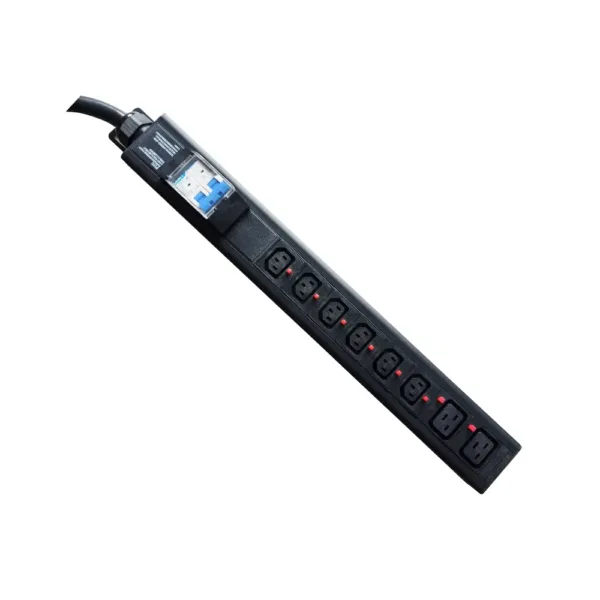
C13 and C19 PDUs differ significantly in power capacity, physical design, and application scenarios. C13 connectors power medium-power IT equipment such as standard servers and network switches, while C19 connectors support high-power hardware like high-density servers and UPS systems. The two connector types have distinct shapes and sizes and are not interchangeable, requiring matching power cords for safe operation. C13 outlets are the standard choice for general rack-mounted devices, whereas C19 outlets are ideal for high-power equipment. Selecting the correct PDU ensures safe, stable power distribution, and YOSUN offers customizable PDU solutions to match diverse power requirements.
C13 outlets are the most common choice for general power distribution in offices and data centers, engineered for medium-power applications. Most standard C13 outlets support 10–13 amps at up to 250V, with maximum wattage varying by specific deployment and device requirements. They work with both single-phase and three-phase power systems. Some industrial-grade C13 PDUs support 16–63A at 200–240V, while three-phase models handle 208V/60A setups.
C13 outlets are widely integrated into PDUs due to their compatibility with most standard servers and network hardware, delivering sufficient power for everyday IT operations.
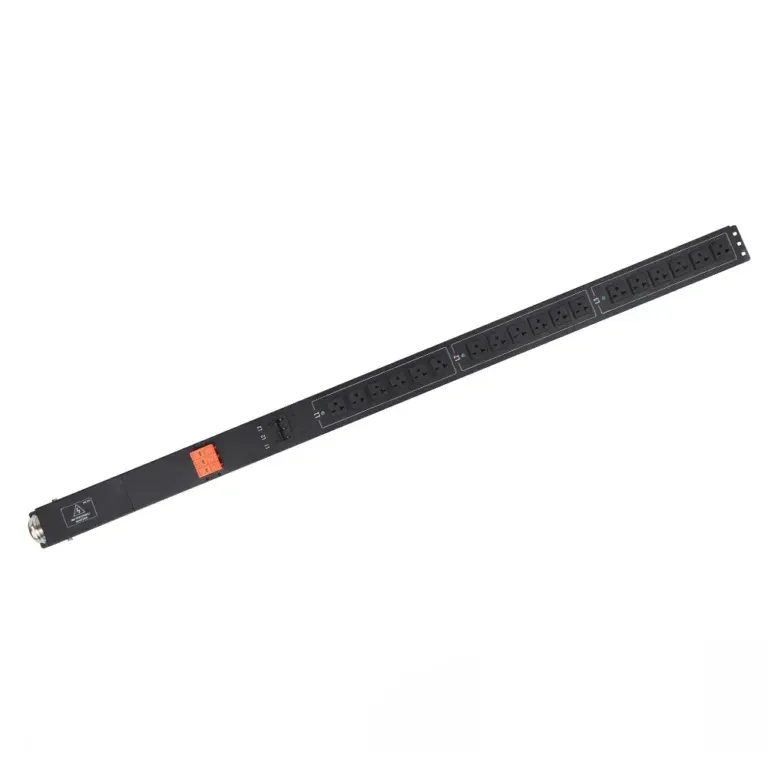
C19 outlets offer higher power-carrying capacity than C13 outlets, built exclusively for high-power equipment such as high-density servers and uninterruptible power supplies. Standard C19 outlets support up to 16A at 250V, with heavy-duty models delivering even greater power. For example, the NBYOSUN 3 Phase 32A PDU features a mixed outlet configuration (14 C13 + 10 C19) and supports up to 32A, making it ideal for powering multiple high-power devices simultaneously.
C19 outlets are standard in data center and enterprise PDUs, ensuring safe, stable operation for power-hungry critical infrastructure.
Outlet type directly defines compatible hardware for a PDU. C13 outlets are optimized for standard servers, network switches, and desktop IT equipment with moderate power draw. C19 outlets are reserved for high-power hardware such as blade servers and large-scale storage arrays.
Pro Tip: Always confirm individual device power ratings before PDU selection. Using an incompatible outlet can lead to power instability or permanent equipment damage.
Mixed-outlet PDUs (combining C13 and C19) maximize deployment flexibility, supporting both standard and high-power devices in a single rack. This setup improves power utilization in server rooms and data centers, enhances safety, and simplifies future infrastructure upgrades.
C13 and C19 connectors have distinct physical profiles: the C13 connector is smaller for standard IT hardware, while the C19 connector is larger to support higher power loads. The two designs are physically incompatible, which prevents misconnection and improves electrical safety.
| Feature | C13 Connector | C19 Connector |
|---|---|---|
| Current Capacity | Low-to-medium power | High-power |
| Compatibility | Only mates with C13 outlets | Only mates with C19 outlets |
| Typical Use | Standard servers, network devices | High-power server & storage systems |
Pro Tip: Always check the connector type before installation to ensure safe and correct matching.
Both connector types use high-grade, heat-resistant materials for long service life. C19 connectors have thicker pins and a reinforced structure to safely carry higher currents without overheating. C13 connectors offer reliable performance for regular loads and a compact shape ideal for dense rack environments.
YOSUN builds PDUs with industrial-grade connectors that undergo strict safety and performance testing. All materials meet international electrical standards, reducing the risk of faults and extending service life.
C13-based PDUs are widely used for office workstations, printers, and standard network equipment. C19 PDUs are intended for high-power infrastructure in data centers, including enterprise servers, storage arrays, and UPS units.
| PDU Type | Typical Applications | Key Characteristics |
|---|---|---|
| C13 PDU | Office IT, general network gear | Cost-effective, easy to deploy |
| C19 PDU | Data centers, high-power server racks | High current rating, overload-resistant |
C13 cords connect only to C13 outlets, while C19 cords (with C20 plugs) work exclusively with C19 outlets — a standard arrangement in data centers worldwide.
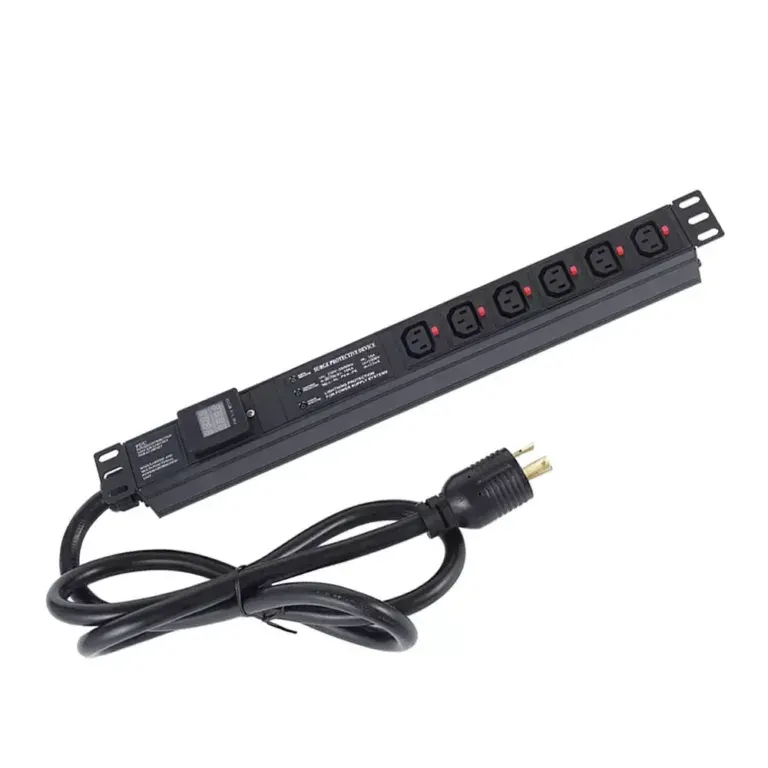
YOSUN supports custom plug configurations for its PDUs. For example, the YS1006-3D-VA model with 6 locking C13 outlets can be ordered with L6-30P, IEC 60309, or other regional plugs to ensure full equipment compatibility.
Note: Verify plug and outlet types before connection to avoid mismatches.
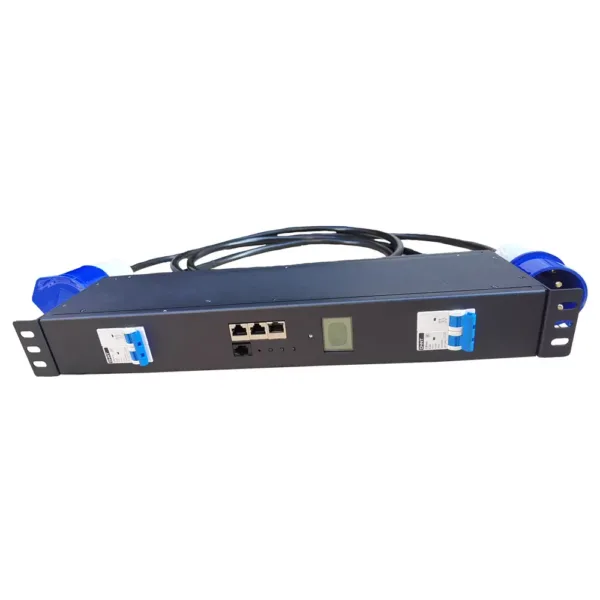
Start your PDU selection by calculating the total power draw of all connected devices. Check the power rating label on each piece of equipment, then match outlet types to device plugs and current requirements. Confirm voltage compatibility and choose between single-phase or three-phase power based on your deployment environment.
| Outlet Type | Suitable Devices | Rated Capacity |
|---|---|---|
| C13 | Standard servers, network devices | 10A/16A |
| C19 | Enterprise servers, UPS systems | Above 16A |
For safe and stable operation, reserve 20–30% of the PDU’s rated capacity for future expansion and avoid overloading. Look for essential safety features including surge protection, thermal management, and lockable outlets to prevent accidental disconnections.
Pro Tip: Plan for load balancing and backup power to maintain reliable operation for critical equipment.
When planning for future growth, C19 outlets provide significantly better scalability than C13 for high-power equipment upgrades.
To maximize flexibility, modular PDUs with mixed C13 and C19 outlets let you support both standard IT loads and high-power hardware in one unit. Hot-swappable components also allow outlet adjustments without power interruptions, ensuring continuous operation during infrastructure changes.
This mixed configuration future-proofs your setup by leveraging the strengths of each connector type, eliminating the need for full PDU replacement as your power needs increase.
Understanding the core differences between C13 and C19 PDUs is critical for safe, efficient power distribution. C13 outlets support up to 2500W for standard IT equipment, while C19 outlets deliver up to 4000W for high-power hardware. Their non-interchangeable designs eliminate misconnection risks and enhance operational safety. YOSUN’s customizable, rigorously tested PDUs adapt to diverse deployment scenarios, with flexible configurations to support current needs and future growth. Calculating power demands and planning for scalability ensures reliable, safe power management for any IT environment.
C13 outlets support low-to-medium power devices, while C19 outlets are engineered for high-power equipment. They have distinct physical designs and are not interchangeable.
No, C13 and C19 plugs/outlets are physically incompatible by design. This built-in safety feature prevents incorrect connections and equipment damage.
C19 PDUs are primarily used in data centers for high-density servers, UPS systems, large storage arrays, and other power-hungry enterprise hardware.
Yes, YOSUN provides fully customizable mixed-outlet PDUs, with flexible options for outlet quantity, plug types, and additional features to match specific deployment needs.
List all connected devices and verify their power ratings, match outlet types to device plugs, leave spare capacity for future upgrades, and select a configurable PDU for long-term flexibility.