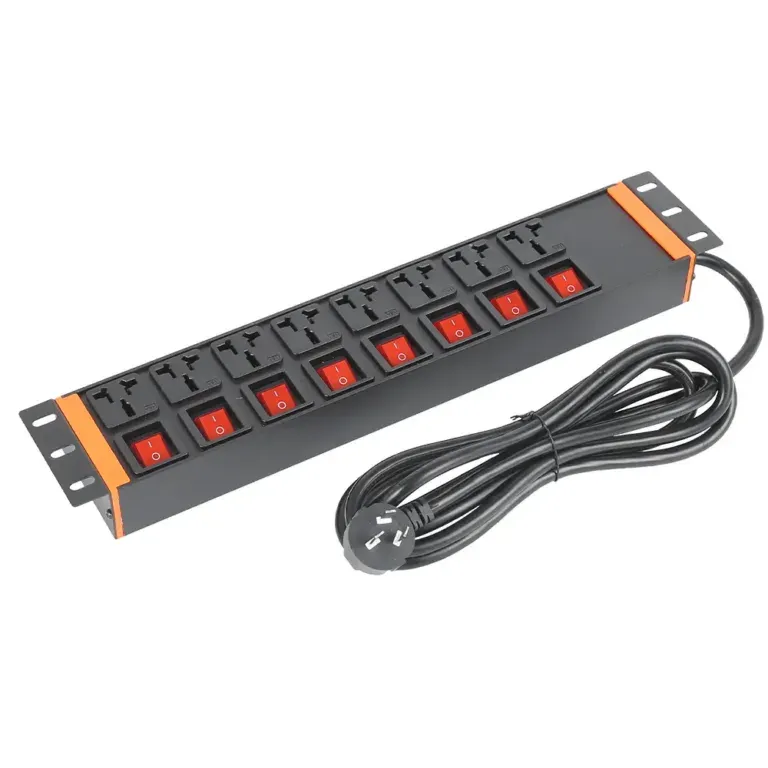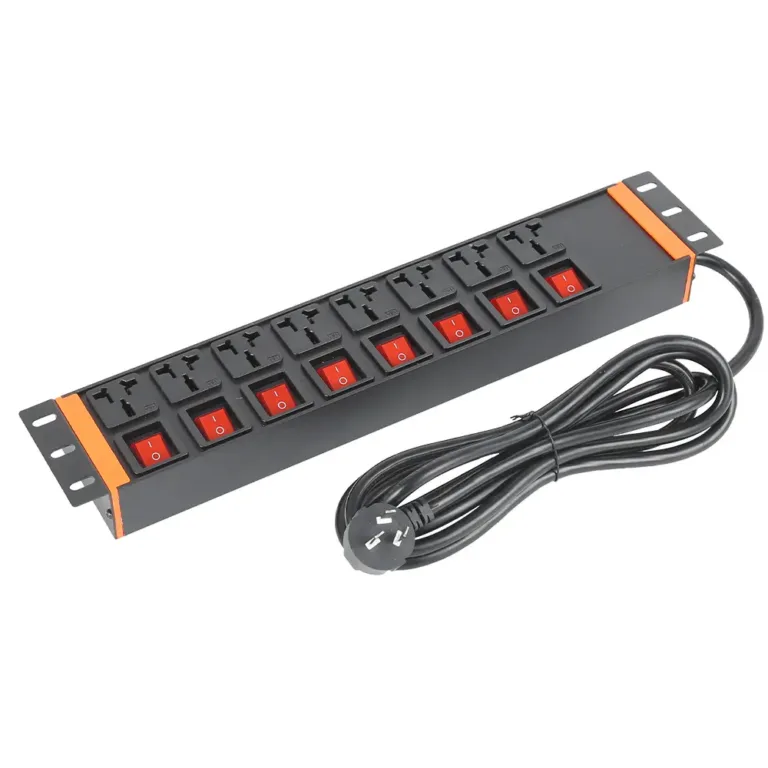
Which power strip with switch fits your family best
Find the best power strip with switch for your family’s needs—compare safety, outlets, and features to keep your home safe and devices powered.


+86 15867381241

Have you ever lost thousands of dollars in downtime because a voltage spike fried your server? Or had sensitive IT equipment fail prematurely due to dirty power? A PDU transformer is the unsung hero that prevents these disasters. It converts voltage, cleans power, and protects your most valuable equipment in data centers, telecom facilities, and industrial sites.
A PDU transformer integrates voltage conversion, power distribution, and protection into a single unit. It takes incoming high-voltage power (typically 480V in North America) and steps it down to lower voltages (120V, 208V, or 230V) that servers, network gear, and industrial equipment use.
It includes these core components:
Unlike basic transformers that only change voltage, PDU transformers distribute power directly to multiple devices while providing comprehensive protection.
PDU transformers are purpose-built for IT and industrial environments, addressing the unique challenges of powering sensitive electronic equipment:
| Feature | PDU Transformer | Standard Transformer |
|---|---|---|
| Primary Function | Voltage conversion + integrated power distribution | General voltage conversion only |
| Load Type | Designed for harmonic-rich non-linear IT loads | Not optimized for harmonics |
| Outputs | Multiple circuit breakers and outlets | Typically single output |
| Protection | Built-in surge, overload, and ground fault protection | Limited basic protection |
| Monitoring | Optional remote power and environmental monitoring | No built-in monitoring |
All PDU transformers operate on Faraday’s Law of Electromagnetic Induction: current flowing through a primary coil creates a magnetic field, which induces voltage in a secondary coil. By changing the number of turns in each coil, the transformer can step voltage up or down with high efficiency.
Modern PDU transformers achieve exceptional energy efficiency, especially at higher capacities:
| kVA Rating | Typical Efficiency |
|---|---|
| 15 kVA | 98.76% |
| 50 kVA | 99.08% |
| 250 kVA | 99.32% |
| 500 kVA | 99.42% |
This is the most critical safety feature of PDU transformers. Galvanic isolation physically separates the incoming utility power from the outgoing power to connected devices.
Isolation provides three key benefits:
Isolation is required by safety standards like IEC 60601 for medical equipment and IEC 62040-1 for industrial UPS systems.
Safety is the top priority for mission-critical power equipment. PDU transformers include multiple layers of protection:
For maximum reliability, many facilities use redundant PDU transformers connected to separate power sources. This ensures continuous power even if one transformer requires maintenance. Advanced models also send real-time alerts for potential issues, allowing teams to resolve problems before they cause downtime.
Dirty power is the leading cause of premature equipment failure. PDU transformers use power conditioning technology to clean electricity before it reaches your devices:
Clean power not only extends equipment lifespan but also reduces data errors and system crashes.
PDU transformers support all major international voltage standards, making them ideal for global deployments:
| Region | Standard Voltages | Common Connector Types |
|---|---|---|
| North America | 120V, 208V, 240V | NEMA 5-15P, NEMA L6-20P |
| Europe | 230V | IEC 60320, Europlug |
| United Kingdom | 230V | BS 1363 |
This flexibility allows companies to use the same equipment across different regions without expensive modifications.
Data centers and telecom facilities are the largest users of PDU transformers. They rely on these units to deliver clean, stable power to thousands of servers and network devices.
Benefits for data centers:
One large Asian data center achieved 15% energy savings after upgrading to PDU transformers with advanced power conditioning.
Factories and industrial sites use PDU transformers to power PLCs, robotics, and control systems. These units can withstand harsh industrial conditions and provide reliable power even in high-vibration, high-temperature environments.
Hospitals and clinics require the highest level of power reliability and safety for life-saving medical equipment. PDU transformers provide:
A PDU transformer is much more than a simple voltage converter—it is a complete power protection and distribution system that keeps your critical equipment running safely and efficiently. By combining voltage conversion, isolation, power conditioning, and distribution in one unit, it simplifies your power infrastructure and reduces the risk of costly downtime.
When choosing a PDU transformer, partner with a reputable PDU manufacturer that offers customizable solutions and complies with international safety standards.
Ready to upgrade your power infrastructure? Contact the YOSUN team today for a free power assessment and customized recommendation.
A PDU transformer converts high-voltage utility power to the lower voltages required by IT and industrial equipment, while providing isolation and protection against electrical hazards.
It includes circuit breakers, surge protection, and galvanic isolation to prevent overloads, short circuits, electric shocks, and equipment damage.
They are used in data centers, telecom facilities, factories, hospitals, and any other environment with sensitive equipment that requires stable, clean power.
Calculate the total power consumption of all connected devices, then add 20-30% headroom for future growth. For example, 30kVA of equipment requires a 40kVA transformer.
K-factor measures how well a transformer handles harmonic loads from IT equipment. A higher K-factor (K-13 or K-20) is recommended for data centers to prevent overheating.