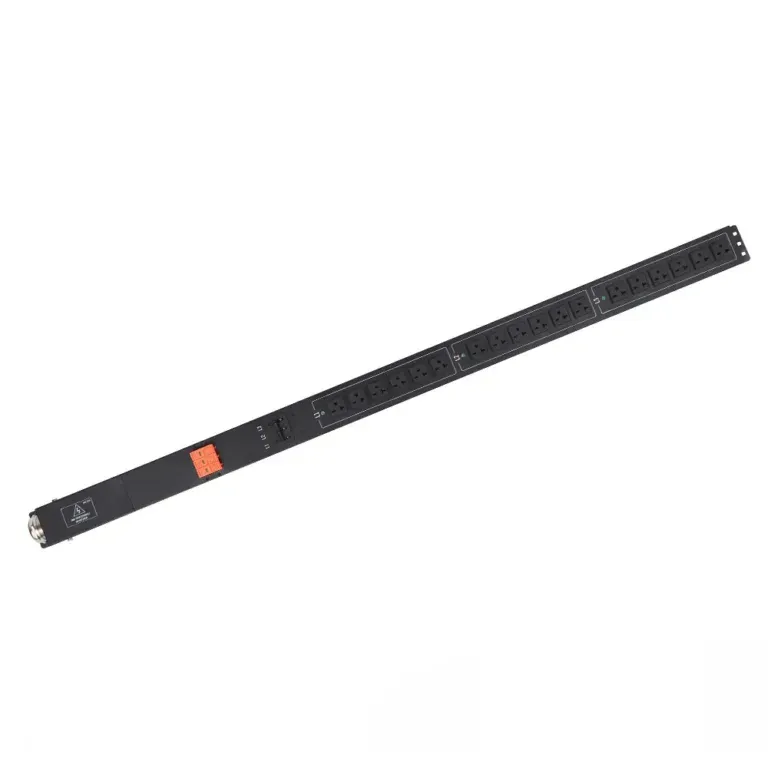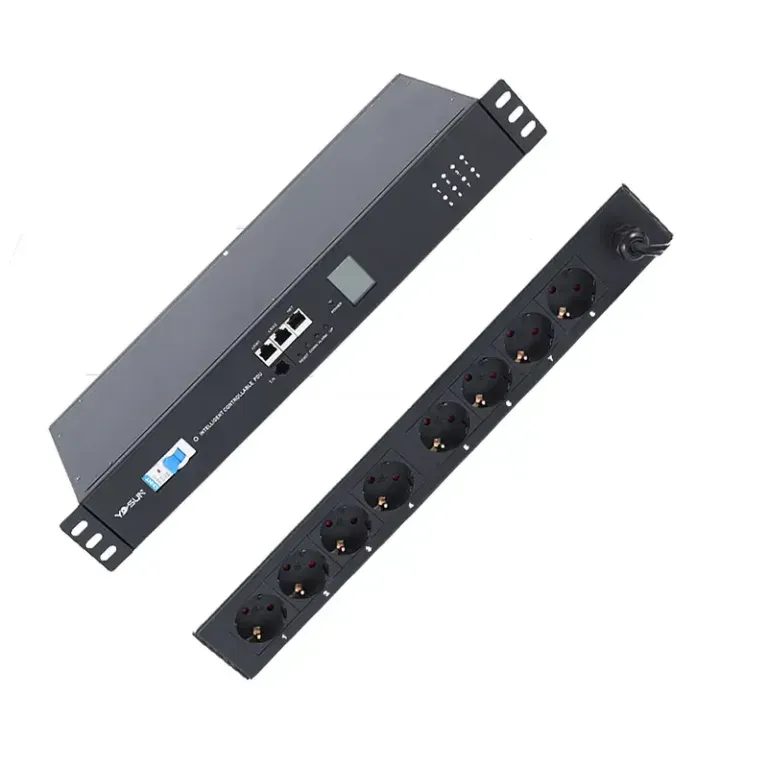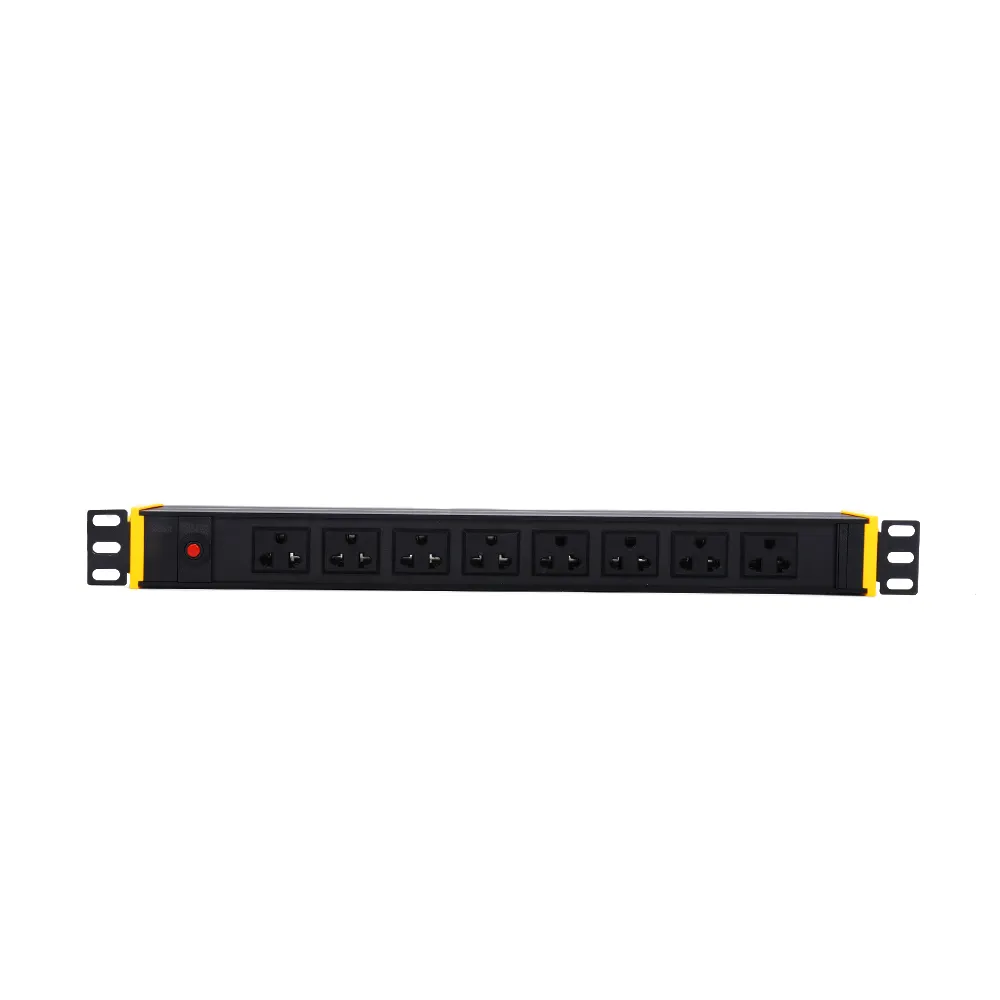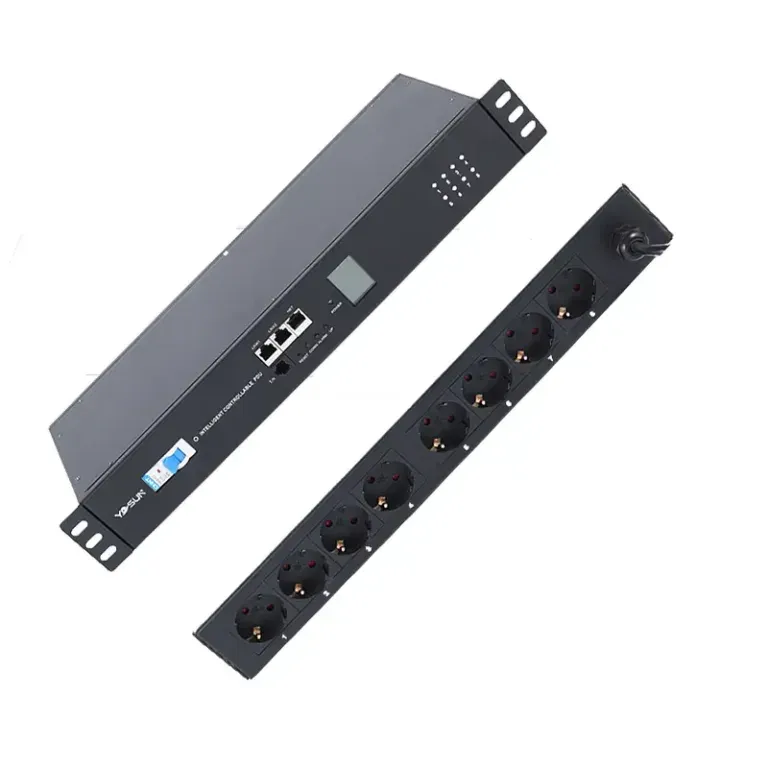
Affordable Remote Power Management Inexpensive IP Switched PDU Picks
Get reliable remote power management with our top inexpensive IP switched PDU picks. Compare affordable models for individual outlet control and find the best value.


+86 15867381241
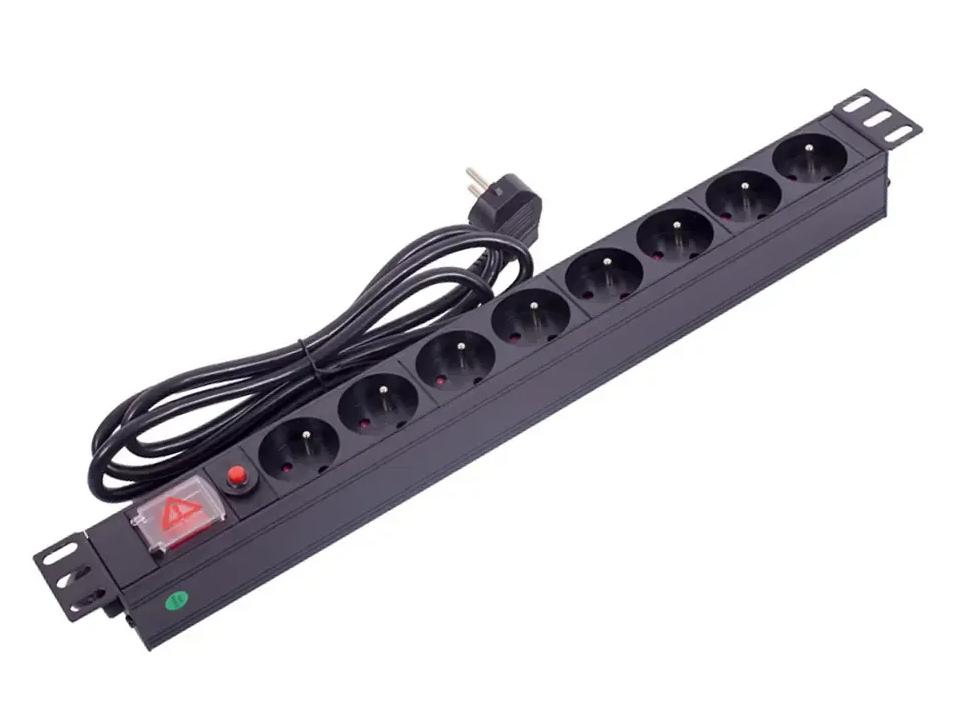
PDU power is calculated using standard electrical formulas:
Accurate power calculation is critical for maintaining reliable operation in data centers and server environments. Even minor miscalculations can result in overloaded circuits, tripped breakers, equipment damage, and costly downtime.
This article breaks down these formulas step by step, provides real-world calculation examples, and highlights common mistakes to help you ensure safe and efficient power distribution. Whether you’re setting up a small home lab or managing a large-scale data center, understanding how to calculate PDU power is essential for selecting the right equipment and avoiding power-related risks.

PDU power refers to the total electrical energy a Power Distribution Unit can safely deliver to connected devices. Accurate calculations are critical to:
Before calculating PDU power, you need to understand these fundamental electrical terms:
The universal power formula is:
Power (Watts) = Voltage (V) × Current (A) × Power Factor (PF)
Industry Standard: Most data center equipment has a power factor between 0.7 and 0.9. Using 0.8 provides a safe, conservative margin for almost all installations.
Single-phase power is the standard for residential and small commercial environments. The formula is:
Single-Phase Power (W) = Voltage × Current × Power Factor
Example: A YOSUN Basic PDU operating at 208V with a 24A current and 0.8 power factor:
Power = 208 × 24 × 0.8 = 3,994 Watts
Single-phase PDUs are ideal for small offices, home labs, and low-density server racks with power requirements up to 5kW.
Three-phase power is used in data centers and large commercial facilities because it delivers more power efficiently. The formula includes the square root of 3 (≈1.732) to account for the three separate power lines:
Three-Phase Power (W) = Voltage × Current × Power Factor × 1.732
Important Note: This formula uses line-to-line voltage, the standard for all commercial and industrial PDUs. Common line-to-line voltages are 208V (North America) and 400V (Europe).
Example: A high-density rack with a YOSUN Smart PDU operating at 208V, 41.6A per phase, and 0.8 power factor:
Power = 208 × 41.6 × 0.8 × 1.732 ≈ 11,999 Watts
| Rack Type | Total Power Draw | Voltage | Amperage Calculation | Required PDU Capacity |
|---|---|---|---|---|
| Low-Density Rack | 5kW | 208V | Amps = 5000 ÷ (208 × 0.8) ≈ 30A | 30A |
| High-Density Rack | 15kW | 208V | Amps per Phase = 15000 ÷ (208 × 0.8 × 1.732) ≈ 52A | 60A |
The appropriate formula depends on your power supply and application:
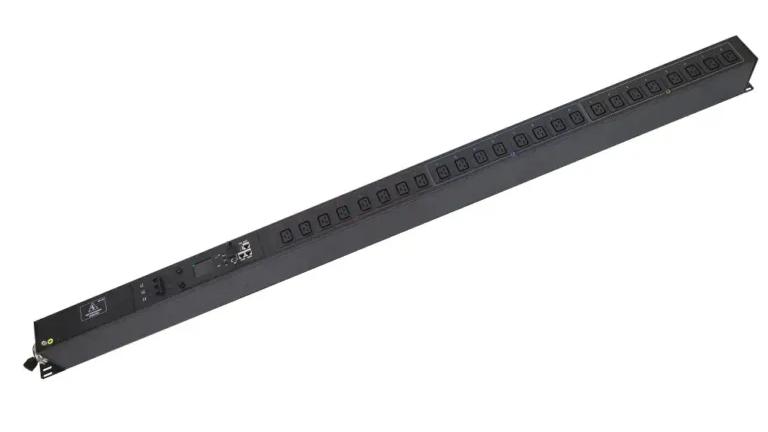
Add up the power consumption of all devices. For safety, always use the maximum rated power, not the typical operating load.
This total represents your actual load before applying safety margins.
The National Electrical Code (NEC) recommends that continuous loads should not exceed 80% of a circuit’s rated capacity.
Required PDU Capacity = Total Power Draw ÷ 0.8
This ensures safe operation and accounts for inrush current during startup.
Based on your calculated capacity and operational needs:
A home office setup with a total power draw of 400W:
Required PDU Capacity = 400 ÷ 0.8 = 500W
In practice, PDUs are selected based on standard circuit ratings rather than exact wattage.
A standard 15A (≈1800W) single-phase PDU is more than sufficient and provides ample room for future expansion.
A rack with a total load of 12kW at 208V:
Required Capacity = 12,000 ÷ 0.8 = 15,000W
Amps per Phase = 15,000 ÷ (208 × 0.8 × 1.732) ≈ 52A
Since the calculated current is approximately 52A, a 60A three-phase PDU is selected to ensure safe operation and allow capacity headroom.
Pro Tip: Metered and smart PDUs provide real-time visibility into voltage, current, power factor, and total load. This helps reduce manual calculations and enables more accurate load management and capacity planning.
| Power Type | Formula | Example Calculation |
|---|---|---|
| Single-Phase | Power (W) = V × A × PF | 208V × 30A × 0.8 = 4,992W |
| Three-Phase | Power (W) = V × A × PF × 1.732 | 208V × 30A × 0.8 × 1.732 = 8,640W |
| Measurement | Formula | Description |
|---|---|---|
| Watts (W) | N/A | Real power that does useful work |
| Kilovolt-Amps (kVA) | kVA = (V × A) ÷ 1000 | Apparent power used for capacity planning |
| Single-Phase Amps | A = (W) ÷ (V × PF) | Calculate current from watts |
| Three-Phase Amps | A = (W) ÷ (V × PF × 1.732) | Calculate current per phase from watts |
Accurate PDU power calculation is the foundation of a safe, reliable, and efficient IT infrastructure. By using the correct formulas, following the 80% load rule, and planning for future growth, you can prevent costly downtime and ensure your systems run smoothly.
YOSUN offers a complete line of high-quality PDUs for every application, from basic single-phase models to advanced three-phase smart PDUs. All our products are rigorously tested to meet international safety standards and come with industry-leading support. Whether you’re building a new data center or upgrading your existing power infrastructure, YOSUN has the right solution for you.
Choose based on your total power requirement and facility’s electrical supply. Single-phase PDUs are sufficient for setups under 5kW. For higher power requirements, three-phase PDUs are more efficient and cost-effective. YOSUN offers both types to meet your specific needs.
Keep the total load below 80% of the PDU’s rated capacity. Use metered or smart PDUs to monitor real-time power usage and receive alerts before an overload occurs. Always plan for future growth when sizing your PDU.
Power factor measures how efficiently devices use electricity. A lower power factor means more current is required to deliver the same amount of real power. Ignoring power factor will result in under-sizing your PDU and potential overloads.
Yes. All YOSUN metered and smart PDUs feature high-precision digital displays that show real-time voltage, current, power factor, and total power consumption. This makes it easy to monitor your power usage and balance loads.
Distribute devices evenly across all three phases, aiming for no more than a 10% difference in current between phases. YOSUN smart PDUs can automatically monitor phase balance and alert you if an imbalance is detected.
YOSUN PDUs are built with heavy-gauge steel, high-quality components, and rigorous testing. They feature advanced safety protections including overload protection, short-circuit protection, and surge protection. Our smart PDUs also offer remote monitoring and management capabilities to keep your data center running smoothly.