The Ultimate Showdown Switched PDU vs Metered PDU
Deciding on a switched PDU vs metered PDU? A metered PDU tracks power consumption for energy optimization, while a switched PDU offers remote outlet control to reboot devices.

+86 15867381241
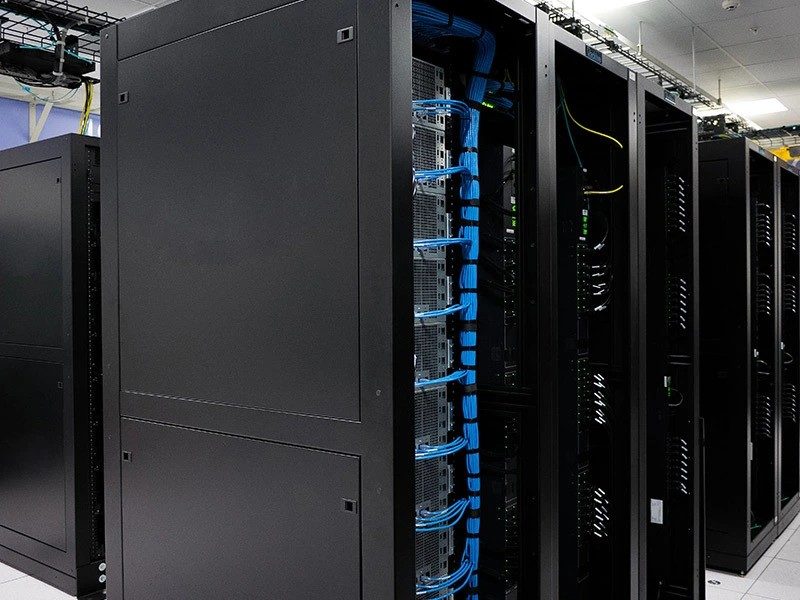
Energy efficiency has become one of the biggest priorities for modern data centers as rising electricity costs and increasing rack densities put greater pressure on power infrastructure. Traditional power distribution units (PDUs) provide basic power delivery, but they offer little visibility into how energy is being consumed at the rack level.
Smart PDUs solve this problem by combining power distribution with real-time monitoring, remote management, and detailed energy analytics. By helping operators track power usage, balance loads, identify underutilized equipment, and optimize cooling strategies, smart PDUs can significantly reduce energy waste while improving overall operational efficiency.
Energy efficiency has become a strategic priority for data center operators as electricity costs rise and rack power densities continue to increase. According to industry estimates, data centers consume roughly 200 terawatt-hours (TWh) of electricity each year, making energy management one of the largest operational cost factors for modern facilities.
One of the most widely used efficiency metrics is Power Usage Effectiveness (PUE). While leading hyperscale facilities can achieve PUE values close to 1.3, the global average remains around 1.57, indicating that many data centers still have substantial room for improvement.
To close this efficiency gap, operators are investing in high-efficiency cooling systems, newer IT hardware, renewable energy sources, AI-assisted monitoring platforms, and intelligent power distribution technologies.
Improving efficiency is not simply a matter of using less electricity. Data centers must balance performance, reliability, scalability, and compliance while managing increasingly complex power demands.
| Challenge | Impact on Efficiency |
|---|---|
| High Energy Consumption | Growing workloads increase overall power demand and operating costs |
| Cooling Inefficiency | Cooling systems can account for a significant portion of total facility energy use |
| Rising Rack Power Density | Higher-density racks generate more heat and create localized hotspots |
| Limited Visibility | Legacy power infrastructure provides little real-time data for optimization |
| Scalability Constraints | Expanding capacity without increasing energy waste is increasingly difficult |
| Regulatory Requirements | Sustainability regulations require more detailed energy monitoring and reporting |
| Operational Costs | Operators must balance capital investment with long-term efficiency gains |
| Manual Management | Spreadsheets and manual tracking limit proactive energy optimization |
Among these challenges, limited visibility into rack-level power consumption is one of the most common barriers to improving efficiency. Without accurate, real-time data, operators often struggle to identify underutilized equipment, balance loads effectively, or detect developing power issues before they impact performance.
This is where smart PDUs provide a significant advantage. By delivering real-time power monitoring, outlet-level visibility, remote management, and energy analytics, smart PDUs help transform power distribution from a passive utility into an active tool for energy optimization.
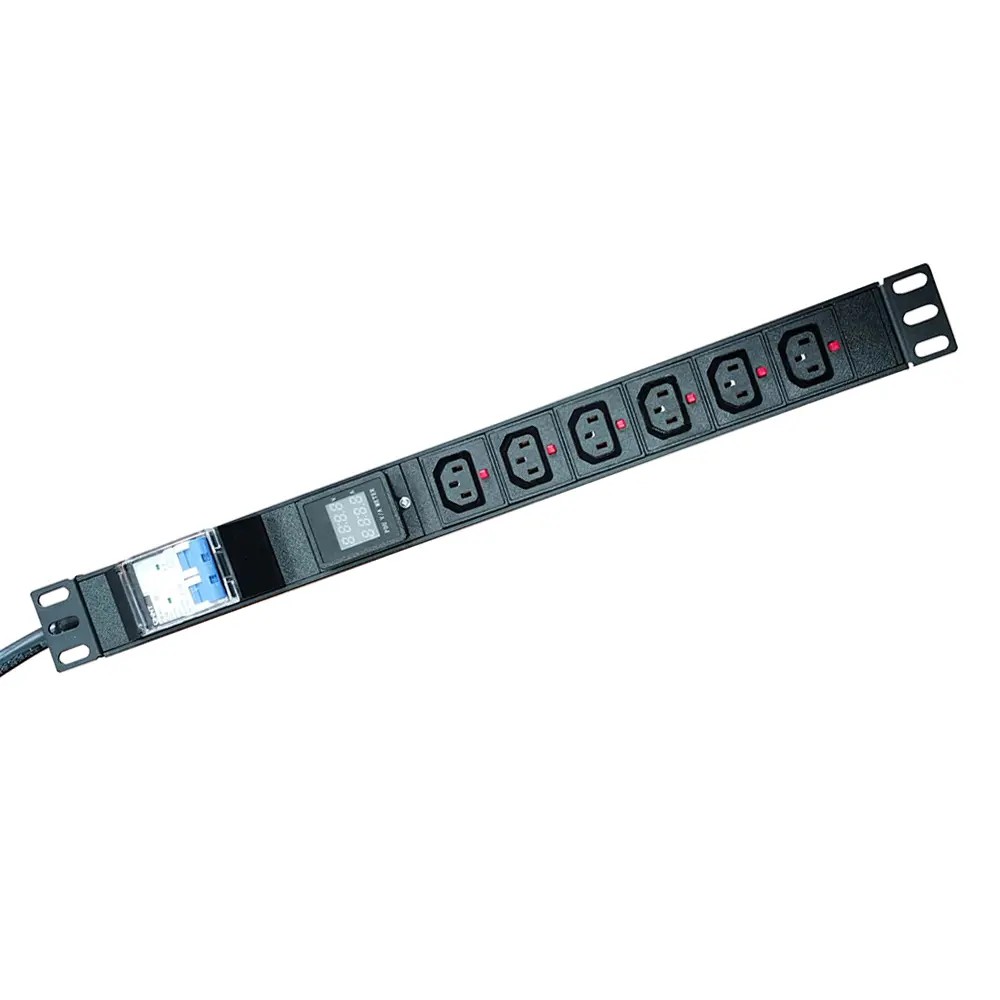
Smart PDUs improve data center energy efficiency by turning traditional power distribution into an intelligent monitoring and control system. Unlike basic PDUs that only deliver power, smart PDUs provide real-time visibility, remote management, and actionable energy data that help operators reduce waste, optimize cooling, and improve capacity planning.
By monitoring rack-level power consumption and environmental conditions, intelligent data center PDUs allow facility teams to make data-driven decisions instead of relying on manual measurements or estimates.
One of the biggest advantages of smart PDUs is their ability to provide detailed power usage data at the rack and outlet level. This visibility helps operators understand exactly where energy is being consumed and identify areas where power is being wasted.
Smart PDUs can monitor:
With this information, data center teams can identify inefficient equipment, detect unused devices drawing standby power, and optimize workload distribution.
Smart PDUs allow operators to manage rack power remotely without physically accessing equipment. This is especially valuable for large data centers where manual intervention is time-consuming and inefficient.
Common remote management capabilities include:
These features help operators quickly respond to power issues, shut down unused equipment, and perform maintenance tasks more efficiently.
By improving visibility and control, smart PDUs help reduce downtime risks while avoiding unnecessary power consumption from unused or inefficient equipment.
Cooling represents a significant portion of data center energy consumption, especially as rack power density continues to increase. Smart PDUs help optimize cooling strategies by providing environmental data alongside power measurements.
Integrated sensors can monitor:
This data allows operators to identify hotspots, adjust cooling distribution, and prevent over-cooling in areas that do not require additional airflow.
Smart PDUs also support sustainability initiatives by providing accurate energy usage data for reporting, carbon tracking, and efficiency analysis.
| Benefit | Description |
|---|---|
| Hotspot detection | Identifies areas with excessive heat generation |
| Cooling optimization | Helps match cooling output with actual demand |
| Energy reporting | Provides accurate data for sustainability tracking |
| Better resource planning | Supports smarter infrastructure decisions |
When connected with Data Center Infrastructure Management (DCIM) platforms, smart PDUs provide a complete view of power consumption, environmental conditions, and equipment performance.
Integration enables:
With continuous data collection, operators can identify inefficient equipment, avoid over-provisioning, and make better decisions about future infrastructure expansion.
For modern data centers focused on reducing energy costs and improving sustainability, combining smart PDUs with DCIM systems provides a powerful foundation for intelligent energy management.
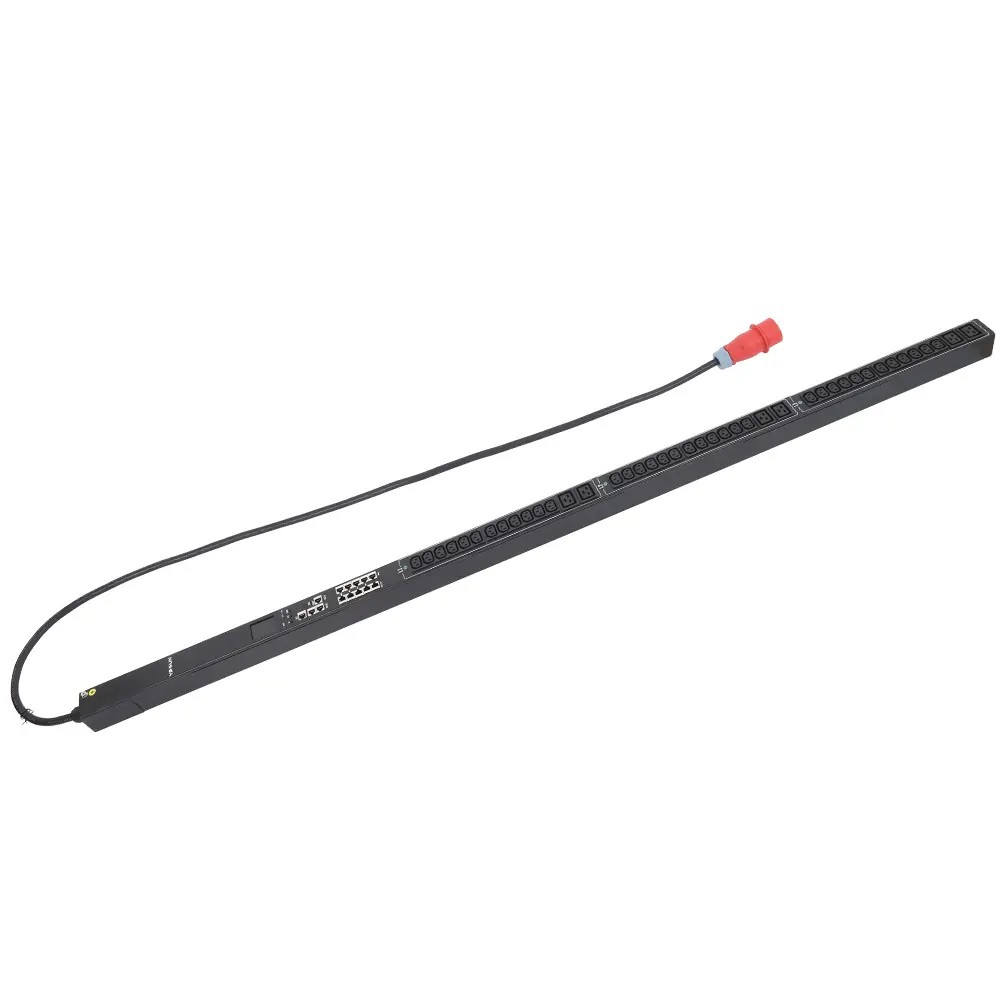
A smart PDU typically delivers the greatest value in environments where power visibility, operational efficiency, and uptime are critical.
Consider investing in a smart PDU if:
For medium and large-scale facilities, smart PDUs have become a core component of modern power management strategies, providing both operational and financial benefits over the long term.
A basic PDU may still be a practical choice in certain situations, particularly where power requirements are simple and operational complexity is low.
A smart PDU upgrade may be less urgent if:
Many organizations begin with basic or metered PDUs and transition to smart PDUs as their infrastructure grows and management requirements become more complex.
Smart PDUs help data centers improve energy efficiency by providing real-time power visibility, remote management, environmental monitoring, and actionable energy data. These capabilities enable operators to reduce waste, optimize cooling performance, improve capacity planning, and support lower PUE targets.
While basic PDUs may be sufficient for small deployments, smart PDUs offer significant long-term value for growing, high-density, and enterprise-scale environments. As data centers continue to prioritize efficiency, sustainability, and operational reliability, smart PDUs have become an essential part of modern power management strategies.
A smart PDU provides real-time power monitoring and remote management capabilities, allowing operators to reduce energy waste, improve uptime, and optimize rack-level power usage.
Yes. By identifying underutilized equipment, improving load balancing, and supporting cooling optimization, smart PDUs can help reduce unnecessary energy consumption and operating costs.
A basic PDU only distributes power, while a smart PDU adds features such as power monitoring, outlet-level control, environmental sensing, alerts, and remote management.
Yes. Most smart PDUs can integrate with DCIM platforms, providing centralized visibility into power usage, capacity planning, and infrastructure performance.
It depends on the operational requirements. For single-rack or low-density environments, a basic or metered PDU may be sufficient. However, organizations planning future growth or requiring remote management may benefit from upgrading to a smart PDU.