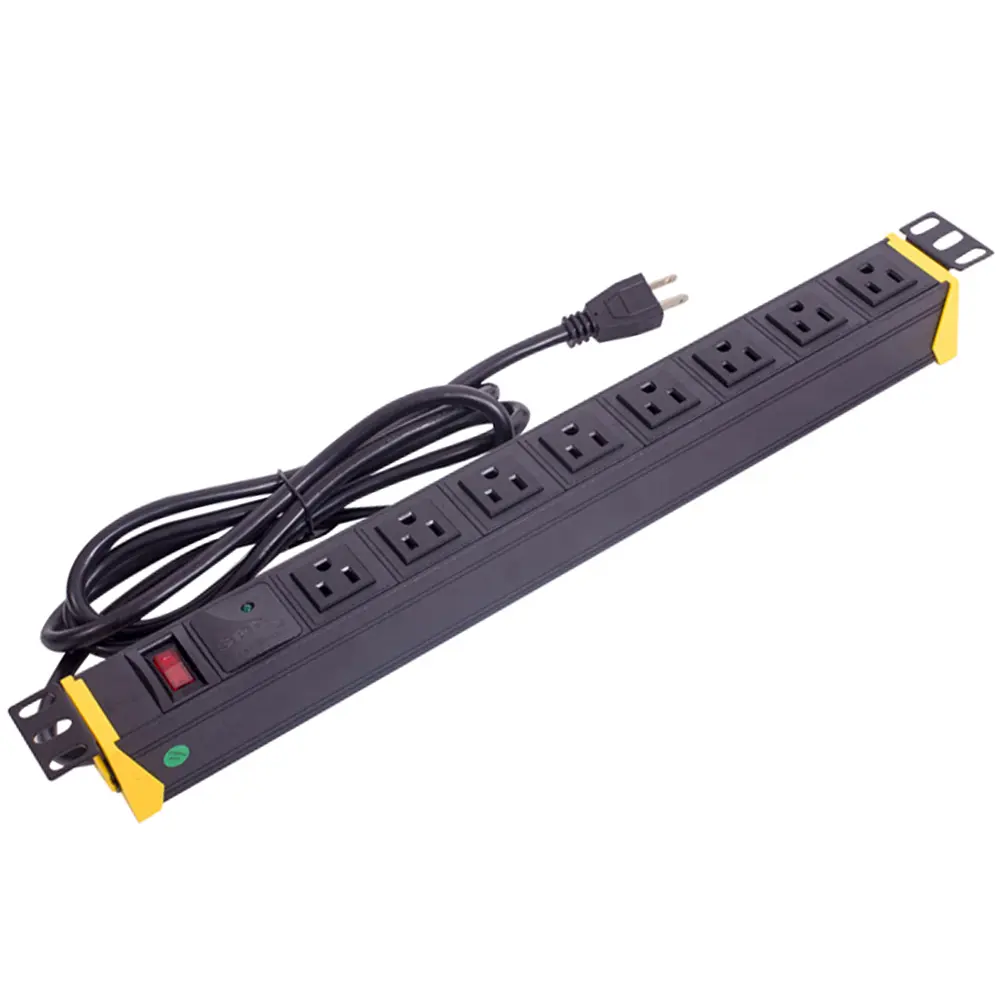
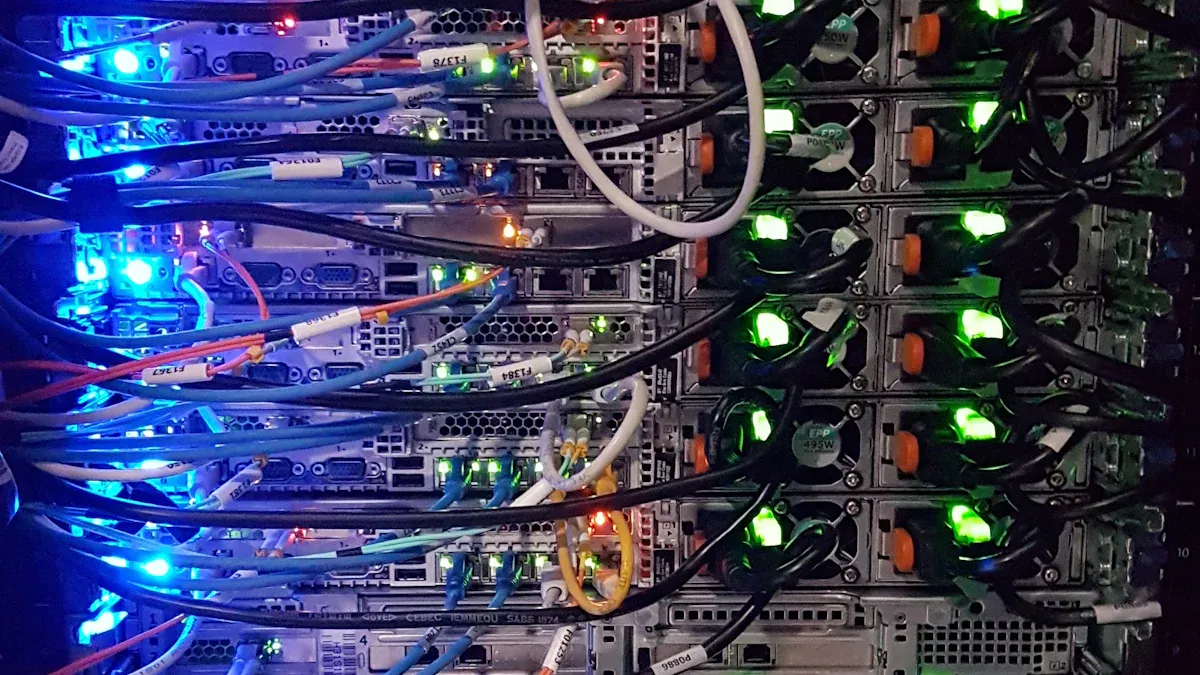
Почему центрам обработки данных необходимы индивидуальные и настраиваемые решения для распределения питания (PDU)
Содержание
Standard fixed-configuration PDUs can no longer keep pace with the rapidly evolving power demands of modern data centers. This gap has turned customized and configurable Решения PDU from a luxury upgrade into essential infrastructure, not an optional extra.
Driven by AI and HPC workloads, average rack density has climbed from 7 kW per rack in 2021 to a projected 27 kW by 2026, with dedicated AI cabinets already drawing 50 kW or more. Off-the-shelf PDUs with fixed outlet counts, plug types, and load limits cannot accommodate this level of change without creating safety risks, downtime, and costly retrofits.
Основные выводы
Standard fixed PDUs cannot support AI-driven rack density growth or mixed voltage/plug requirements.
Custom PDUs are engineered to match exact voltage, receptacle, and load specifications, eliminating adapter-related hazards and rework costs.
Modular configurable PDUs scale alongside growing deployments, protecting capital investment without full unit replacement.
Customized fault isolation and tiered monitoring reduce outage risk and improve uptime for high-availability environments.
While custom units carry a higher upfront price, they deliver lower total cost of ownership by reducing downtime, rework, and redundant hardware purchases.
Why Standard Fixed PDUs No Longer Keep Up
Rising Rack Density Outpaces Standard Designs
Rack power density has accelerated far faster than legacy PDU specifications were designed to handle, led primarily by AI training and inference infrastructure.
Год
Average Rack Density (kW/rack)
2021
7
2023
8.5
2024
12
2025
16
2026
27
Source: AFCOM survey data via Upsite Technologies
Industry analysts project 15.1% CAGR in the PDU market from 2023–2028, fueled by AI and HPC densification. Global data center energy consumption is on track to nearly double to ~1,065 TWh by 2030. Traditional 208V three-phase 60/63A rack PDUs and 120/208V distribution architectures are no longer sufficient for these loads. Upstream, facilities are already shifting to flexible overhead track busway rated 40–1250A to support higher density and faster reconfiguration — rack-level PDUs must evolve in parallel.
Standard PDUs still work well for low-density, stable environments such as small server rooms with predictable loads. They only become a liability when deployed in fast-changing, high-density facilities.
Three Core Limitations of Off-the-Shelf PDUs
Fixed configuration mismatches: Outlet types voltage ratings, and phase configurations are locked in at the factory. Real deployments frequently encounter mismatches: 208V three-phase rack feeds powering 240V single-phase servers, colocation tenants with CEE plugs in IEC-wired halls, or retrofit sites with legacy NEMA receptacles and new hardware cord sets. These mismatches force adapters, field rewiring, or delayed deployments — all of which add cost and create arc and overload hazards.
Elevated downtime risk in shared environments: In multi-tenant setups, adding a new customer to a shared standard PDU requires powering down the entire unit for safety, interrupting service for existing tenants and risking SLA breaches. Uptime Institute 2025 data shows power distribution components — not utility grid failures — cause 45–54% of impactful data center outages. The Ponemon Institute puts the average cost of a single unplanned outage at $505,500.
No headroom for AI workload transients: AI and HPC workloads draw large, fluctuating power blocks, with transient spikes reaching 150% of steady-state draw. Fixed standard PDUs have no built-in margin for these peaks and are prone to nuisance tripping. They also cannot adapt as clusters scale up over time.
Core Advantages of Custom & Configurable PDUs
1. Exact Fit for Voltage, Plugs, and Loads
Пользовательские PDU are specified to match the actual facility and equipment at the design stage: input plug, receptacle type, voltage rating, and phase configuration are all tailored to the deployment. This eliminates adapters, reduces arcing and loose connection risks, and shortens commissioning timelines.
By matching every layer of the power chain from feed to rack, design-level customization removes weak points before deployment. Branch circuits, breaker ratings, and outlet counts are sized to the real load profile, creating a more reliable and efficient distribution system with fewer fault points.
2. Improved Uptime and Fault Isolation
Most downtime stems from small design compromises, not catastrophic failures. Customization addresses these risks directly:
Per-circuit protection isolates faults to a single branch instead of taking down the entire rack, which is critical for multi-tenant colocation.
Branch circuit monitoring detects abnormal draw before a breaker trips.
Switched outlets enable remote power cycling without on-site visits.
For AI clusters, units sized for peak transient load maintain stable delivery through training runs and inference bursts. The financial math favors this approach: one avoided outage pays for the premium of custom PDUs many times over.
3. Modular Scalability for AI Growth
AI clusters typically expand in phases as models scale. Configurable modular PDUs let operators add outlets, power modules, or monitoring functions over time without replacing the entire unit. This protects capital investment and aligns spending with actual deployment growth, instead of forcing overprovisioning on day one.
4. Tiered Monitoring Matched to Each Rack
PDUs are available in three capability tiers, and custom deployments let operators select the right tier per rack instead of paying for unnecessary features site-wide.
Возможности
Базовый PDU
PDU с измерением
Коммутируемый PDU
Удаленный мониторинг
Нет
Ограниченный
Да
Удаленное управление розеткой
Нет
Нет
Да
Датчики окружающей среды
Нет
Нет
Да
Пороговое оповещение
Нет
Нет
Да
Интеграция DCIM
Нет
Нет
Да
When paired with server consolidation and airflow optimization, измеренные PDU can improve data center energy efficiency by up to 20%. Granular data also supports accurate capacity planning and chargeback billing.
Custom vs. Configurable: Understanding the Difference
The terms are often used interchangeably, but they represent two distinct approaches for different use cases:
Fully custom PDUs are designed from scratch for unique requirements, such as special voltages, unusual form factors, or extreme environmental conditions. They have longer lead times and higher costs, and are reserved for highly specialized deployments.
Modular configurable PDUs are built on a standardized platform with selectable input plugs, outlet mixes, and function modules. They meet the needs of nearly all high-density and colocation scenarios, with only a modest price premium over standard units and much shorter lead times.
For most AI expansion, colocation, and retrofit projects, modular configurable PDUs deliver the best balance of flexibility, cost, and delivery speed. Full custom design is rarely required.
Common Use Cases That Justify Custom PDUs
AI & HPC training clusters: High power draw, large transient spikes, and phased growth require high-capacity, scalable PDUs with branch monitoring.
Multi-tenant colocation: Per-circuit fault isolation, per-tenant metering, and flexible receptacle types support mixed customer equipment without full-rack outages.
Legacy facility retrofits: Custom PDUs can adapt to existing upstream voltage and plug standards, avoiding costly full-site electrical rework.
Multi-region global deployments: A single configurable platform can be adapted to regional voltage and plug standards. Combined with CB Scheme certification (based on IEC 62368-1), test results can be converted to UL, VDE, CCC and other national marks without retesting, drastically speeding up multi-market rollouts.
FAQ
When does a standard PDU still make sense?
Standard PDUs work well for low-density, stable environments such as small server rooms and edge sites with predictable loads. They only become a limitation when density, voltage diversity, or uptime requirements increase rapidly.
How long does it take to deploy customized PDUs?
Lead time depends on configuration complexity and certification requirements. Modular configurable units have lead times close to standard PDUs. For global deployments, a CB Test Certificate can be converted to local national marks without retesting, significantly shortening multi-market rollouts.
Can customizable PDUs scale with growing AI clusters?
Yes. Modular platforms allow teams to add outlets, power modules, or monitoring functions as racks fill out, without full unit replacement. Current high-density configurations support up to 50 kW per cabinet for AI deployments, with room to expand.
Which PDU monitoring tier is right for my rack?
Basic units provide power distribution only. Metered units show total power consumption locally and remotely. Switched units add remote outlet control, sensors, and alerts. Metered units can improve energy efficiency by up to 20% when paired with server and airflow optimization.
Does customization increase total cost?
Upfront unit price is typically higher, but savings come from fewer adapters, less rework, shorter deployments, and fewer outage events. With the average unplanned data center outage costing $505,500, custom units deliver net cost savings for high-availability environments.
Да, в целом, подключение блока распределения питания (PDU) к источнику бесперебойного питания (UPS) безопасно. Многие делают это для питания многочисленных устройств в серверных комнатах или центрах обработки данных...
Найдите лучший блок распределения питания (PDU) для вашего небольшого центра обработки данных. Узнайте, как ведущие производители PDU для центров обработки данных обеспечивают эффективное распределение питания и масштабируемость.
Узнайте, как выбрать правильный горизонтальный блок распределения питания для вашей системы, учитывая потребности в питании, совместимость со стойкой и такие функции, как измерение и защита от перенапряжения.
Узнайте, какие характеристики сетевого PDU, такие как мощность, розетки и мониторинг, напрямую влияют на надежность, эффективность и масштабируемость для более разумного выбора продукта.
Интеллектуальный блок распределения питания Eaton обеспечивает мониторинг в режиме реального времени, управление на уровне розеток и расширенные возможности безопасности для упрощения управления питанием и повышения надежности ИТ-системы.
Главное отличие между PDU и Smart PDU — это управление и мониторинг. Особенно это касается Smart PDU, монтируемого в стойку. PDU обеспечивает питание оборудования. ...